This AI Company Catches Fraud Across the Internet
Variance, emerging from three years in stealth with a $21 million Series A, is transforming enterprise risk and compliance through purpose-built AI agents. Founded by ex-Apple engineers, the company automates complex tasks like fraud detection, content review, and identity verification for Fortune 500s and platforms such as GoFundMe. They discuss the strategic reasons for stealth, technical challenges of integrating disparate data sources (including UI scraping), the shift from legacy systems to self-healing AI agent architectures, and how their lean, AI-maximalist team detects sophisticated threats like state-sponsored fraud rings.
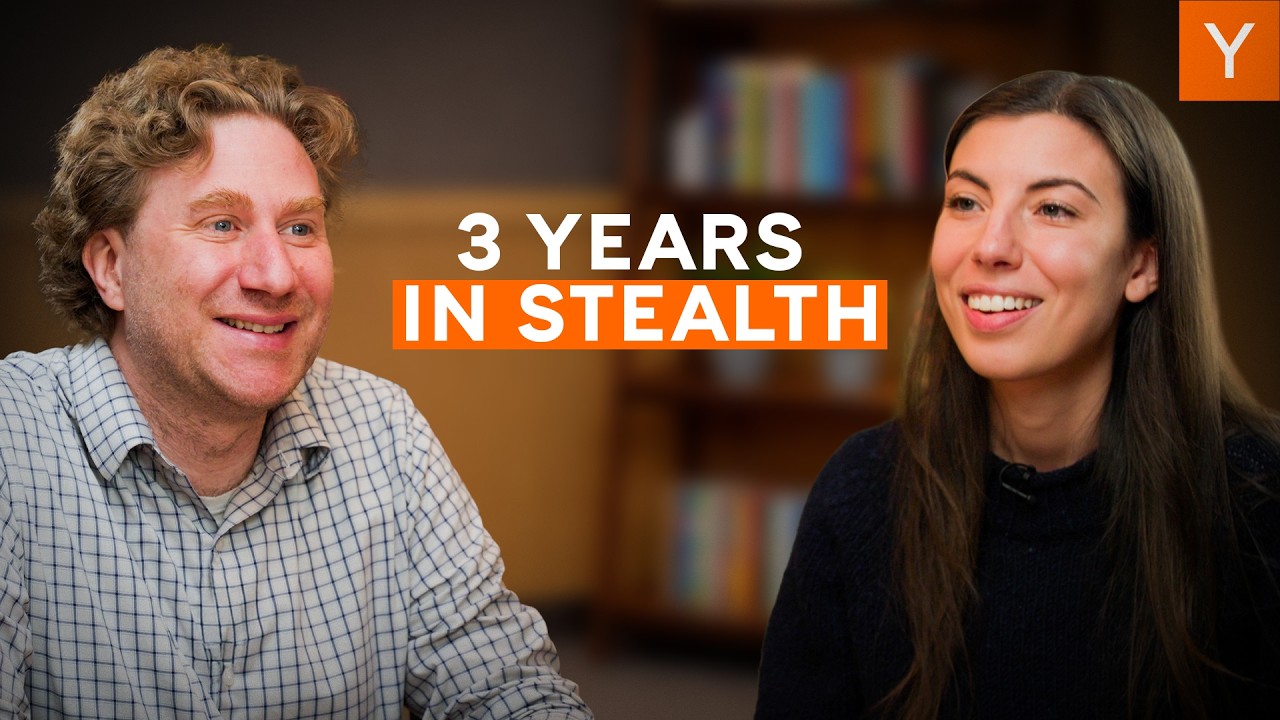
Variance: Emerging from Stealth to Revolutionize Risk & Compliance with AI Agents
Variance (W23) is publicly announcing its $21 million Series A funding, marking its emergence from a three-year stealth development period. The company specializes in building purpose-built AI agents for risk and compliance, automating critical functions such as content review, fraud detection, and identity verification for some of the world’s largest enterprises, including Fortune 500 companies and platforms like GoFundMe.
The Rationale Behind Operating in Stealth
Variance chose to build in stealth for three years due to the highly sensitive nature of its work. Their mission is to equip “the good guys” with advanced tools to combat “the bad guys” in an ongoing cat-and-mouse game. Marketing their specific use cases could inadvertently expose vulnerabilities or strategies, potentially increasing fraud and abuse. This strategic secrecy allows their clients to maintain a “secret weapon” against sophisticated adversaries, a dynamic that will likely see Variance remain somewhat “in the shadows” even post-Series A.
AI Agents in Action: Securing Digital Platforms
While users may not directly interact with Variance, its technology underpins many widely used platforms:
- GoFundMe: Variance AI agents are crucial for verifying fundraisers. They ensure donations go to legitimate causes and individuals, preventing funds from being diverted to sanctioned entities or fraudulent activities (e.g., military operations, fake crisis relief campaigns). This involves assessing behavioral signals, identity information, account history, and fundraiser content against GoFundMe’s terms of service.
- Crisis-Driven Fraud: A common fraud pattern involves exploiting major events or natural disasters. For instance, following a public tragedy like the “murder of Charlie Kirk” (as mentioned in the transcript), numerous fraudulent fundraisers may appear. Variance’s AI identifies genuine campaigns amidst a deluge of imposters by analyzing various data points.
- Identity & Business Verification: The agents perform complex identity reviews for marketplaces and gig economy platforms, verifying users based on selfies and driver’s licenses. They also handle KYB (Know Your Business) verifications for online businesses and financial institutions, mapping intricate corporate structures to identify shell companies, linked identities, adverse media, or connections to sanctioned countries. This process, traditionally manual and prone to error, is critical for compliance.
Technical Deep Dive: Variance’s AI Architecture
Variance’s AI agents operate on three core building blocks:
- Compliance Documents & Standard Operating Procedures (SOPs): These define what a company needs to verify at different stages of an entity’s lifecycle.
- Proprietary Tools: Variance has developed specialized tools that enable its AI agents to execute tasks.
- Data: A combination of internal and external data feeds fuels the agents’ decision-making. This includes connectivity to client’s internal data sources (pulling unstructured data) and access to over 100 global business registries, alongside the entire open web. The ability of AI agents to access and reason over the open web is highlighted as a critical enabler, mimicking how human analysts would research.
The “Bad Data” Challenge
A significant technical hurdle for Variance has been the “bad data” problem. Enterprises often store petabytes of unstructured data across 5 to 10 disparate systems, lacking consistent schemas. A particularly challenging aspect involves data hidden behind user interfaces (UIs) designed for human interaction. Variance’s solution includes developing agents capable of “spinning up a browser” and directly scraping information from these legacy, human-facing dashboards, effectively allowing the AI to “see” and interpret data as a human analyst would.
The Age of AI Agents: Why Now?
The current technological landscape, particularly the advancements in Large Language Models (LLMs) and agentic systems, has made Variance’s solution viable:
- Limitations of Legacy Systems: Previously, fraud and compliance systems relied on a patchwork of rigid rules engines, narrow classifiers, and slow, inconsistent human analysts. This created an inefficient feedback loop in a highly dynamic threat environment.
- AI Agents as a Self-Healing System: Variance’s AI agents overcome these limitations by:
- Closing the feedback loop for self-healing capabilities.
- Dynamically materializing features.
- Reasoning over unstructured data (text, images) based on SOPs, eliminating the need for countless specialized classifiers.
- Reducing reliance on human reasoning for many tasks. This creates a fully autonomous, self-healing system that significantly accelerates operations and enables companies to launch new products without compliance bottlenecks.
Advanced Threat Detection: Catching State-Sponsored Actors
Variance’s agents have demonstrated the ability to detect highly sophisticated, organized fraud rings. During elections, for example, they identified state-sponsored actors spreading specific narratives on a Fortune 500 client’s platforms. This was possible because the AI agents could access and reason over the contextual relationships between entities in vast data stores, materializing features on the fly and chaining reasoning steps. Such capabilities go beyond what isolated classifiers or human teams could achieve, even leading to the detection of physical threats and involvement of law enforcement.
A Lean, High-Output Team with AI Maximalism
Despite handling petabytes of data and making critical decisions for major companies, Variance operates with a lean team of 12 people, including only 5 software engineers. This is enabled by a culture of “AI maximalism”:
- Ownership and Autonomy: Engineers are given problems and empowered to solve them, often acting as “managers” of their own small teams of AI agents using tools like Cursor.
- Accelerated Output: This approach results in a software output equivalent to a 25-person team.
- Non-Technical Feature Development: Remarkably, even a non-technical customer success manager can autonomously ship simple feature requests by leveraging Cursor agents, bypassing the engineering team entirely. Variance found that while AI agents can triage 99% of cases, the remaining 1% (the most complex) still require human review, necessitating robust investigative dashboards.
Origins and Unwavering Conviction
Co-founders Karine Mellata (data engineer) and Michael (ML engineer) met at Apple, building the central fraud engineering system. Their symbiotic working relationship and shared vision for a more efficient, self-healing system led them to Y Combinator. Their first customer was IAC (parent company of brands like care.com, Angie, Ask Media Group), for whom they automated marketing content review that was previously handled by a large, slow BPO team. This pilot, conducted just before and during the emergence of GPT-4, validated their approach to automate complex, unautomatable tasks using LLMs.
Overcoming Adversity
The company faced a significant challenge in July 2023 when Karine was hit by a truck, sustaining severe injuries (broken spine, leg) that left her hospitalized and unable to walk for an extended period. This incident highlighted the “bus factor” risk for a 10-person startup where Karine was solely responsible for sales and customer relationships. Despite the immense stress and Michael’s initial fears about the company’s survival, their deep conviction in their mission and the problem they were solving drove them forward, reinforcing the need to scale leadership roles.
The Power of a Singular Vision
Variance’s journey is characterized by a strong, unwavering commitment to its initial hypothesis. Unlike many startups that pivot through various ideas, Karine and Michael possessed a clear “sense of duty” to apply their specific, rare skill sets to solve this particular problem. This deep conviction, fueled by firsthand experience with the problem at Apple and a belief in the evolving technological capabilities of LLMs and agentic systems, has been a driving force and resonates strongly with their enterprise customers.