Inside Stripe's AI Strategy with Will Gaybrick
Stripe's President of Product & Business, Will Gaybrick, discusses how AI is transforming Stripe from a payments company into a multi-product financial infrastructure platform. He highlights AI's role in boosting product development velocity through internal tools like "Stripe Minions," which generate thousands of pull requests weekly, enabling a "build everything" philosophy rather than cost-cutting. The conversation also explores the future of "agentic commerce," the potential return of micropayments enabled by stablecoins, and how Stripe empowers internal "founder-like agency" while maintaining high product quality in an increasingly AI-driven software landscape.
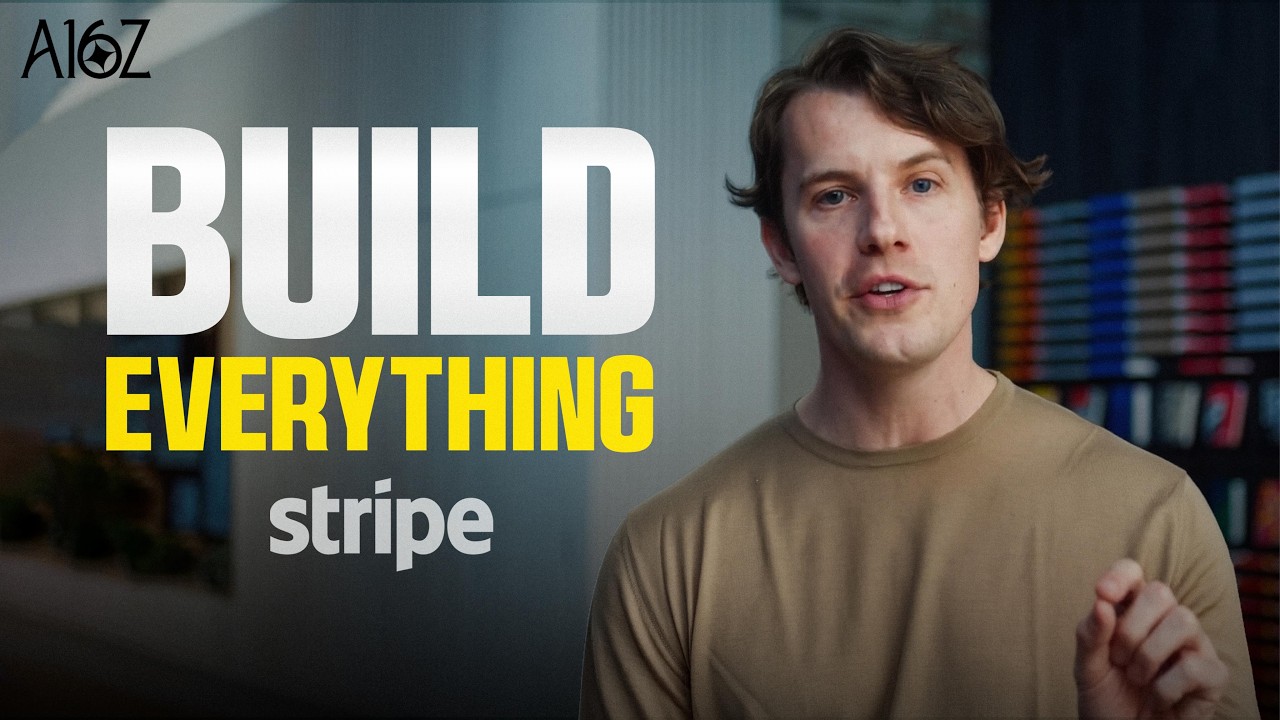
The discussion with Will Gaybrick, President of Product & Business at Stripe, explores Stripe’s evolution and its strategic embrace of AI to accelerate product development and shape the future of internet commerce.
Stripe’s Evolution: From Payments to Financial Infrastructure
Stripe has transitioned from a pure payments processor to a multi-product financial infrastructure platform. Its core mission is to reduce friction and increase agency for businesses, enabling them to operate globally and manage revenue more effectively.
Key examples of this evolution include:
- Fraud Mitigation: Stripe’s foundation model and network insights are used to combat free trial abuse, a growing issue with AI-native companies. For instance, 11 Labs blocks 2,000 free trial abusers daily using Stripe signals. This highlights the network effect of identifying abusive actors across Stripe’s ecosystem.
- Global Expansion: Stripe’s “managed payments” product acts as a merchant of record in over 100 long-tail geographies, handling tax calculation and remittance. This allows AI companies, which often deal in digital goods, to scale globally much faster.
- Product Strategy: Stripe aims to “win all the startups and then win them again.” Startups are seen as critical due to their ambition, growth potential, and high standards, which push Stripe to continuously improve. This strategy has led Stripe to serve both startups and a growing number of Fortune 500 companies.
The AI Cohort Explosion and Software Creation
Stripe has observed a significant acceleration in business creation and monetization, attributing it largely to AI:
- Rapid Growth: Sign-ups in the first half of the year grew 50% year-over-year. The 2026 cohort generates 50% more revenue than the 2025 cohort, which in turn generated 70% more than the 2024 cohort.
- Increased Opportunity: AI has opened up new possibilities for business creation (e.g., Suno, HeyGen), broadening the market opportunity landscape.
- Decreased Cost of Building: Agentic coding has significantly lowered the engineering effort required to build software, leading to an “explosion in new software creation.” Stripe Billing usage disproportionately reflects this trend.
AI-Driven Productivity and “Build Everything” Philosophy
Stripe’s internal philosophy contrasts with the common narrative of using AI solely for cost optimization:
- “Build Everything”: Rather than cutting costs, Stripe views AI productivity as an opportunity to ship more and address a backlog of user needs. The belief is that the best way to optimize cost structure is to grow revenue, and AI enables faster growth by building more. Will Gaybrick states, “our belief is that it’s just an opportunity to I’m being a little cheeky, but build everything.”
- Stripe Minions: An internal agentic coding system that automates code generation. In early 2024, Minions generated 1,200 pull requests (PRs) per week; this surged to 7,000 PRs per week recently, accounting for 30% of all PRs in a given week. This “one-shot” approach allows engineers to prompt an agent and let it handle the entire development cycle through testing and review, significantly compressing timelines.
- Jevon’s Paradox: Increased productivity from tools like Kai (an internal knowledge AI tool that boosted seller productivity by 20%) leads to a desire for more output, not less. Instead of reducing headcount, Stripe sees these tools as enabling more ambitious projects.
- Organizational Structure: To foster “founder-like agency,” Stripe is moving towards flatter and smaller teams. Engineers are empowered to act as product leaders, combining engineering, product management, and design functions. This mirrors the “injection molding” analogy, where patterns and templates (like markdown files for agents) allow for rapid, standardized code production.
Agentic Commerce: The Future of Transactions
The concept of agents engaging in commerce is a significant area of focus for Stripe, though still in early stages:
- Missing Primitives: A key bottleneck is the lack of standardized protocols for machine-to-machine payments. Stripe, with Tempo, is developing a machine payments protocol to allow services to indicate payment requirements (e.g., a 402 response indicating how to pay for content).
- Disappearing Checkouts: A less speculative, yet ambitious, form of agentic commerce involves checkout pages disappearing, even for human users. Services like Stripe Link and Shop Pay are already automating checkouts, and agent wallets (e.g., Link CLI) further enable seamless, agent-driven purchases.
- B2B Agentic Services: Stripe Projects facilitates agent-driven provisioning of B2B services (e.g., adopting Vercel or Browserbase through an agent). This informs investment theses for developer tools, anticipating agents as future “shoppers.”
- Return of Micropayments: For ephemeral, single-use tasks (e.g., AI composing a song), users may not want monthly subscriptions. Micropayments become essential for this “micro-consumption” economy, enabling agents to “slurp up a little data here” and pay for services on demand without creating full accounts.
Stablecoins and the Global Money Movement Platform
Stripe views stablecoins as a crucial component for a more efficient global financial system:
- Infrastructure: Stablecoins offer a “better platform for moving money” – faster, cheaper, and more global than traditional nationalized payment systems (e.g., UPI, Pix). They provide a “shelling point for the global economy,” solving political barriers by offering a universally accessible platform.
- Stripe Treasury Integration: Stripe Treasury now natively supports holding balances in stablecoins alongside fiat currencies (USD, EUR, GBP).
- Global Reach: While Stripe supports fiat in ~60 countries, stablecoins extend its reach to ~150 countries, bringing more people into the online economy and facilitating global business for AI companies operating with small teams across diverse geographies.
- Tempo Blockchain: Stripe’s own payments-specific blockchain aims to ensure privacy, high throughput, and stable, low transaction fees, addressing common issues with existing blockchains that prioritize trading.
The Token Economy and Scaling Taste
The discussion extends to the broader “token economy” and maintaining product quality in an AI-driven world:
- Tokens as Money: The increasing sophistication of attacks against platforms consuming “general purpose tokens” (e.g., on Cursor, Replit) blurs the line between tokens and dollars. Stripe feels a mandate to protect users in the token economy with the same rigor it applies to fiat money.
- Seamless Movement: The goal is to make moving between tokens and dollars as seamless and safe as moving between different fiat currencies. This also includes helping customers manage token usage for both operational expenses (building) and product efficacy (optimizing AI-driven products).
- Scaling “Taste” (Product Quality): With AI producing more software, maintaining high product quality (“taste”) is paramount.
- Top-down Mandate: Leaders must continuously emphasize quality.
- Product Usage: Employees, especially engineering managers (EMs), are encouraged to extensively use the products, often through simulated, PII-free accounts that replicate real-world user experiences (e.g., receiving disputes, processing refunds). This “living in” the product helps identify and address quality issues.
- Tooling: Providing engineers with better tools makes it easier to uphold high standards.
Stripe’s vision is to enable “the next Stripe to be built inside of Stripe,” fostering internal entrepreneurship and continuous innovation powered by AI.