Builders Unscripted: Ep. 4 - Pietro Schirano
Pietro Schirano, Founder & CEO of MagicPath, discusses his pioneering work with GPT-5.5 and Codex, transforming creative ideas into software and hardware solutions. He details using advanced AI for image-to-sound conversion, multi-agent workflows, resurrecting obsolete tech with new functionalities, and building his company, MagicPath, on the principle of humans directing AI agents. This interview provides deep insights into the creative potential and practical applications of cutting-edge AI for developers and entrepreneurs.
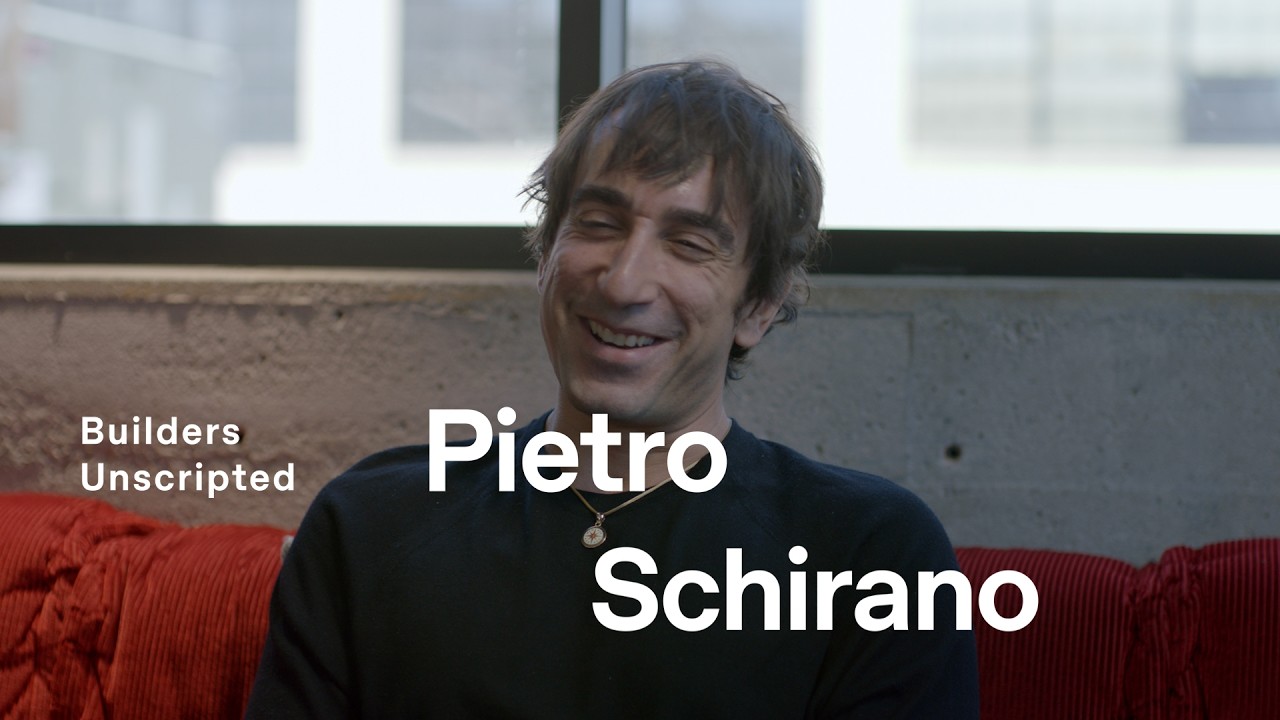
Pietro Schirano, Founder & CEO of MagicPath, discusses his experiences pushing the creative boundaries of AI models, particularly GPT-5.5 and Codex. He views AI as a new frontier for exploration, akin to historical explorers discovering new lands, allowing users to delve into the “latent space” of technology.
Initial Impressions and Creative Exploration with GPT-5.5
Schirano describes GPT-5.5 as a significant step change, enabling tasks previously considered difficult. His personal evaluation process for new models focuses on agentic behaviors, multi-modal capabilities, and the model’s ability to act as a creative director. He highlights a demo where GPT-5.5 successfully deconstructed an image into a harmonic sound and then reconstructed the image from that sound—a complex task involving cryptography and musicality, reminiscent of the movie “Contact.” This demonstrates the model’s advanced vision capabilities, no longer requiring explicit grid overlays for object recognition.
Evaluating New Models and Multi-Agent Codex Workflows
Schirano’s evaluation criteria for new models include:
- Instruction Following: How well the model adheres to commands, noting that consistency and helpfulness are key, as seen in the GPT-5 series.
- Task Execution: The model’s ability to actually perform the requested task.
- Agent Direction: The model’s proficiency in directing other agents, which he considers a complex task.
He uses a system of custom shortcuts with Codex (e.g., “Spawn” for multi-agents, “Agent” for goal-oriented persistence) to test these capabilities. Codex’s ability to handle long-running tasks is seen as crucial for unlocking broader utility. He emphasizes Codex’s excellence in debugging code, performing comprehensive reviews for potential bugs and edge cases. In terms of multi-modality, Schirano notes 5.5’s impressive ability to convert images into code, recommending the flow of generating an image and then asking the model to implement it, similar to the “Build Web Apps” plugin.
Icon Design with AI: A notable example is his creation of an app icon for his tool, “Odysseus.” He prompted Codex to design an icon featuring a Greek ship and a quill, which was generated perfectly in a single shot—a task that would have historically taken him many hours in design software.
Real-time Audio and Mind Extension: Schirano’s “Odysseus” app serves as an autocomplete writing tool that extends the user’s mind. It integrates real-time speech-to-text, allowing users to speak their thoughts, have them transcribed, and then have GPT models autocomplete sentences or continue writing. This seamless interplay between speaking, writing, and AI assistance creates a “second brain” experience, making interaction a natural extension of thought.
Reviving Obsolete Hardware with Codex
Schirano explores an intriguing application: repurposing old gadgets by integrating them with Codex. He sees this as a way to give new life to obsolete technology.
Doodle Jump Clone: He connected an old security control device to Codex, which successfully read its firmware and built a “Doodle Jump” clone game. Remarkably, Codex even discovered and leveraged undocumented vertical scrolling and analog stick sensitivities of the device, showcasing its deep understanding of hardware interactions from a simple USB connection.
Practical Work Application: For practical work, he had Codex build an app for the same device that vibrates when Codex completes a long task. This allows him to step away from his desk while working on unsupervised Codex sessions, providing a tangible signal of task completion.
From Doing to Directing: Founder Perspective and MagicPath
As founder of MagicPath, an “infinite canvas for agent and human to design and build together,” Schirano envisions a future where work shifts from “doing” to “directing” decentralized AI agents. MagicPath aims to be a common workspace where individual agents (with personalized contexts) can collaborate, acting as a “translation layer” and “equalizer” across product teams.
Impact on MagicPath Development: GPT-5.5 and Codex have been instrumental in MagicPath’s rapid development, enabling a small six-person team to achieve the velocity of a much larger engineering force. This acceleration allows for quicker iteration and direct feedback loops with beta testers, dramatically shortening the product development cycle.
Founder’s Role Evolution: Schirano acknowledges the internal conflict between his desire to constantly build and his responsibilities as a founder (fundraising, client relations). AI’s capabilities amplify this, as it empowers teams to build so much more. He personally uses Codex not just for coding but as an “everyday everything assistant”—organizing files, managing metadata, and even preparing notes for conversations.
Democratization of Building: Schirano believes AI democratizes the ability to build, providing access to incredible intelligence that can equalize opportunities globally, especially for those who might not have had the same resources or possibilities in the past. He sees AI as a powerful tool for humanity to reclaim time, enabling faster project completion and more personal time.