Episode 13 - The Thinking Behind Ads in ChatGPT
Asad Awan from OpenAI details the company's principled approach to introducing ads in ChatGPT. He explains how user trust, privacy, and control are prioritized, ensuring a strict separation between model answers and advertisements, and outlines a future where AI simplifies advertising for businesses.
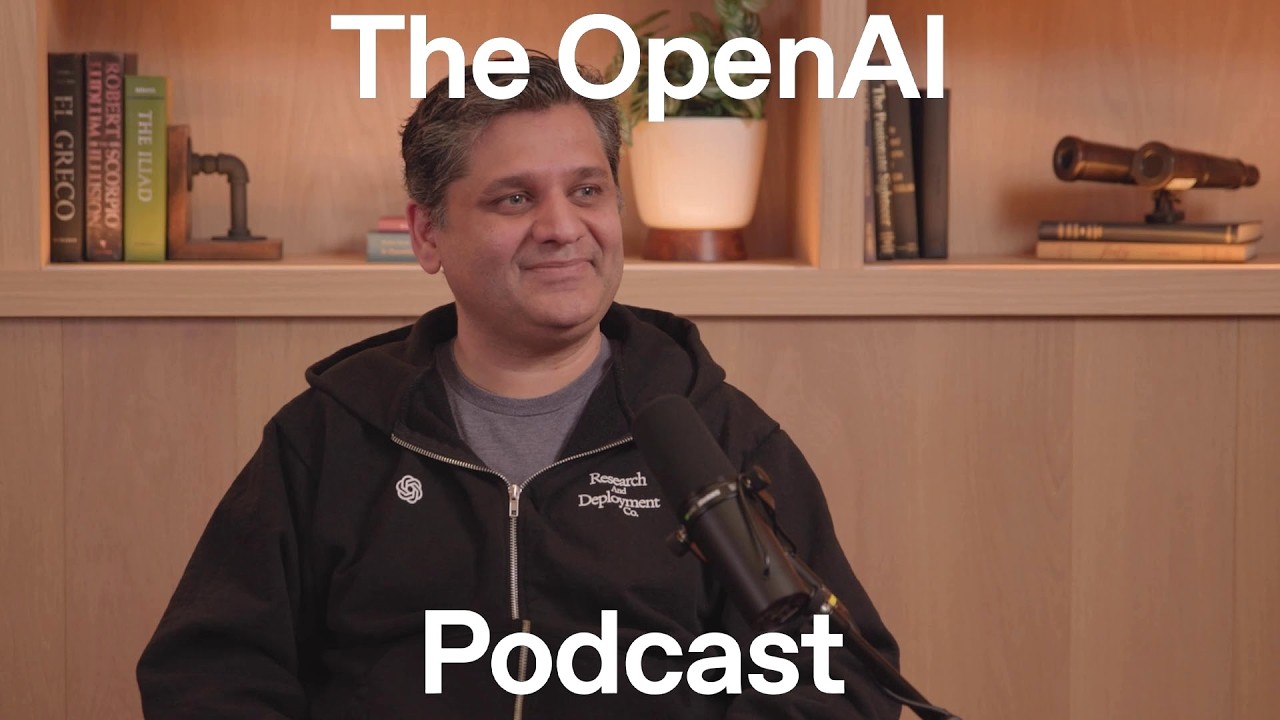
OpenAI’s approach to incorporating advertising into ChatGPT is rooted in its core mission to democratize access to AGI for all of humanity. Advertising is seen as the most proven business model to provide the best versions of AI models with high usage limits to the broadest possible audience on the free tier, preventing the service from becoming overly restrictive.
Guiding Principles for Ads in ChatGPT
To ensure the system is built on a foundation of trust, OpenAI has established several core principles for its advertising model:
- Independence of Answers and Ads: There is a strict separation between the model’s responses and any advertisements shown. The model has no knowledge of whether an ad is being displayed. This separation is both systemic (the model training and inference are independent) and visual, with ads appearing in a distinct banner so users can clearly differentiate between the model’s answer and promotional content.
- User Privacy is Paramount: Conversations within ChatGPT are private and are never shared with advertisers. OpenAI performs ad matching internally without exposing user conversations.
- User Control and Transparency: Users are given explicit control over their data. They can view the data used for ad personalization, clear their ad-related data, or turn off personalization entirely. For those who prefer no ads, upgrading to a Pro or Plus subscription is an available option.
- Incentives Aligned with User Value: The goal is not to maximize time spent on the platform but to provide user value. The system is designed to show a single, helpful ad rather than optimizing for impressions. This is guided by an internal rubric: User Trust > User Value > Advertiser Value > Revenue. An ad that is effective but “creepy” or erodes user trust is considered a failure, even if it generates a click.
The User Experience
Ads will be shown to users on the free tier, while Pro, Plus, and Enterprise users will have an ad-free experience. The design prioritizes a clear and conservative separation between the model’s output and the ad. While the format may evolve, the principle of clear visual distinction will remain constant.
Users retain agency over how ads interact with their conversations. If a user is interested in an ad, they must explicitly press a button like “ask ChatGPT about this ad” to bring the ad’s content into the conversational context.
Guardrails and Sensitive Conversations
OpenAI leverages its significant research in safety and policy to protect users. A robust system, built on rigorously defined policies, identifies sensitive topics such as health, politics, or violence.
- Conversations flagged as sensitive will not have ads.
- The data from these sensitive conversations is not used for any ad-matching purposes.
The system first determines if an ad is appropriate and helpful in a given context. If a high-quality, relevant match cannot be found, no ad will be shown.
A New Vision for Advertisers
The long-term vision is to transform the advertising experience, particularly for small and medium-sized businesses (SMBs). The complexity of modern performance marketing creates a high barrier to entry. The goal is to create an AI-powered system where advertising is as simple as writing a prompt.
A business owner could state their objective, such as, “My goal is to sell these shoes more in the Midwest,” and the AI would handle the campaign strategy, bidding, and execution. This would democratize advertising, allowing the best products to find their niche audiences without requiring a team of marketing experts.
The Future of Ads in an Agentic World
Looking ahead, advertising will become more conversational and agentic. A user might interact with an ad to understand a product better. Further in the future, an AI agent could work proactively on the user’s behalf, discovering new products, deals, or discounts based on learned preferences, with a marketplace enabling this discovery process. This evolution will be aligned with the overall evolution of the core AI product, always centered on the principles of trust, control, and utility.