Why half of product managers are in trouble | Nikhyl Singhal (Meta, Google)
Nikhyl Singhal, a seasoned product executive and founder, provides an unfiltered look at the massive transformation reshaping product management. He argues that the rise of AI is creating a chaotic but ultimately joyful renaissance for "builders" while rendering the traditional "information mover" PM obsolete. Singhal predicts that half of current PMs are at risk and outlines the new skills—judgment, pace, and an "obsolescence mindset"—required to thrive.
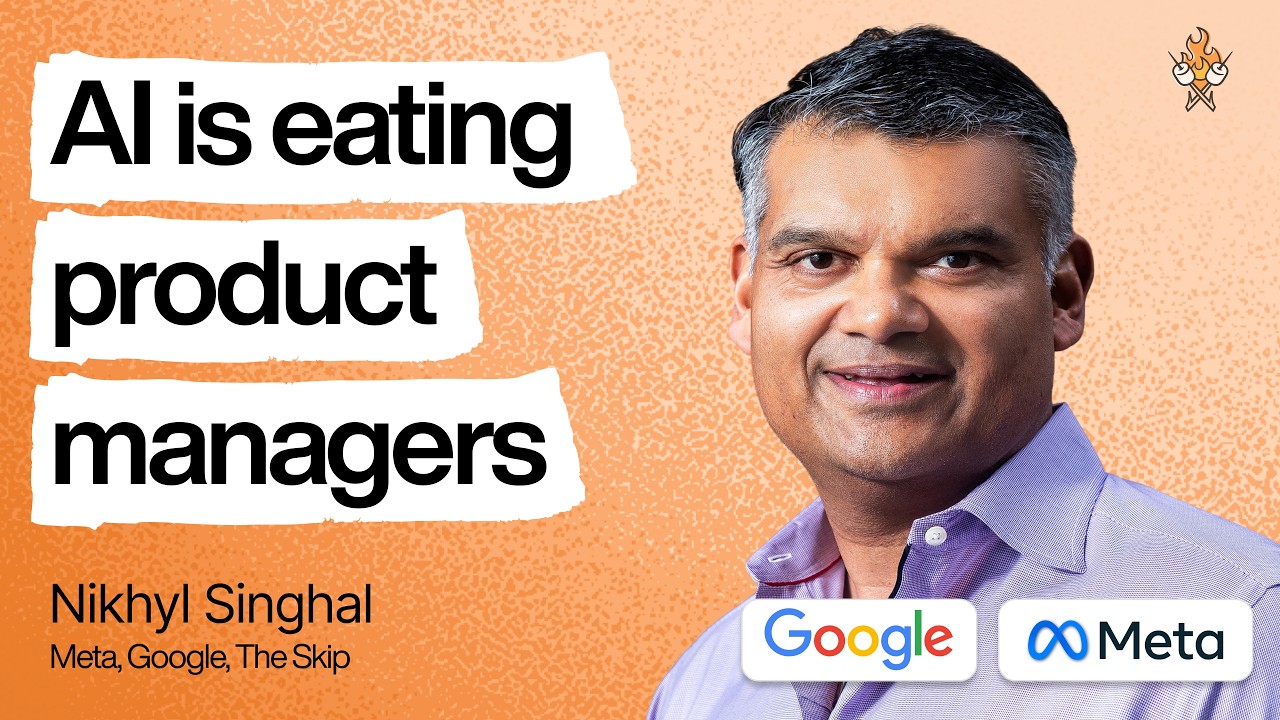
Nikhyl Singhal paints a picture of a product management industry in a state of profound stress and chaotic transformation, predicting the next two years will be one of the most tumultuous periods in its history. However, this upheaval brings a renaissance for a certain type of product manager, fundamentally shifting the skills, mindset, and even the joy found in the role.
The End of the “Information Mover” Era
Three years ago, during the Zero Interest-Rate Policy (ZIRP) era, the life of a product manager was often one of “smiling exhaustion.” The job largely consisted of moving information—framing updates for managers, navigating bureaucracy, and dealing with the stress of responsibility without direct authority. The core function was communication and alignment, often at the expense of actual building.
Today, that paradigm is collapsing. AI is automating the “mechanical parts of building product,” making the information-mover role a “dinosaur.” Singhal predicts that companies will undergo a massive shift, shedding tens of thousands of employees (e.g., letting go of 30,000) and rehiring a smaller, more potent workforce of AI-first talent (e.g., hiring 8,000).
The Great Divide: Builders vs. Non-Builders
The industry is splitting into two distinct camps, and this defines the current job market, where PM roles are paradoxically at a three-year high despite layoffs.
-
Builders Are Thriving: These are individuals who find joy in creating, prototyping, and being hands-on. For them, AI is a superpower. It removes the friction of relying on others, creating a direct connection between an idea and its execution. They are having the “time of their lives,” compensation is at an all-time high, and their opportunities are expanding beyond traditional product roles into founder, CEO, and even CHRO positions. Their work is becoming more joyful and less monotonous.
-
Non-Builders Are in Trouble: Singhal estimates that about half of the product profession falls into this category—those who were drawn to the role for its communication, team-building, and organizational aspects but “don’t love building stuff.” These individuals will struggle as their core functions are automated and the industry’s demand shifts entirely toward technical, hands-on contribution.
The New Skillset for a New Era
The skills that once defined a senior product manager are being flipped upside down. The old path of maturing from a builder to a manager who works “on the factory, not on the car” is no longer relevant.
- Judgment is Paramount: With the cost of testing and shipping changes plummeting, companies will see 10-100x more product iterations. The most critical skill becomes judgment: the ability to evaluate if a change is good or bad, how it fits into the larger system, and whether it creates a sustainable, differentiated product.
- The Obsolescence Mindset: Great engineers have always sought to obsolete themselves from any repetitive task. This mindset is now crucial for PMs. The goal is to use AI and code to automate your own workflows, from status reports to product review processes, thereby scaling your own impact.
- Modernity Over Brand: Your resume’s fancy logos matter less than ever. A candidate’s value is no longer measured by their experience at a large, established company. Instead, interviewers want to know: “What tools do you use? How modern are you?” Working for years in a slow-moving, non-AI-first organization can become a liability.
- Pace and “Fire in the Belly”: The new environment demands a higher pace and more agency. It requires finding a new reserve of energy to stay current and drive initiatives forward, akin to the first year in a new job or relationship.
Overcoming the Psychological Barriers to Change
Reinvention is difficult, and Singhal identifies key psychological blocks preventing many from adapting.
- The Exhaustion of “Power Years”: Mid-career professionals are already stretched thin, running an “equal disappointment algorithm” to balance demands from work, kids, aging parents, and their own health. The idea of starting over feels impossibly daunting.
- The Curse of Mastery: Those who were most successful in the old system find it hardest to change. Their well-honed skills have become a “shadow superpower,” making them reluctant to embrace a new world where their expertise is less relevant.
- The Moving Target: Change isn’t a one-time event; the tools and methods are evolving every few months, creating a feeling of being perpetually behind.
The key is to cross the mental threshold and embrace reinvention. This transition happens when you find your first “moment of joy”—a personal, often small, project where you use AI to build something that delights you. This experience is the antidote to burnout; it transforms the “work” of learning into joyful exploration and unlocks the energy needed to adapt.
Predictions and Final Advice
- The Chaos Will Settle: This intense period of change won’t last forever. In a couple of years, new norms and best practices will emerge, and the industry will reach a new, more stable equilibrium.
- Swallow Your Ego: Be willing to take a smaller role or a step back to be on the “boat that’s leaving the station.” Focus on the long-term “skip opportunity” by prioritizing learning and modernity over short-term status.
- A Temporary Setback for Diversity: The intense focus on pace and hiring from familiar networks may unfortunately lead to a temporary step back in diversity across age, gender, and ethnic backgrounds.
- The End of Bad Software: With access to powerful AI coding assistants, the baseline for software quality will rise dramatically. There will be less tolerance for buggy, poorly designed applications.