Scaling Cryopreservation with Until Co-Founder and CEO Laura Deming
Laura Deming, co-founder and CEO of Until, discusses the ambitious goal of making reversible cryopreservation a reality. She outlines the company's vision, starting with preserving human organs to revolutionize transplantation and progressing towards whole-body medical hibernation, allowing patients to "pause" biological time and await future cures. The conversation delves into the core scientific challenges, reframing cryopreservation as an engineering problem of heat transfer and managing ice formation, and explores why this promising field has been historically underfunded.
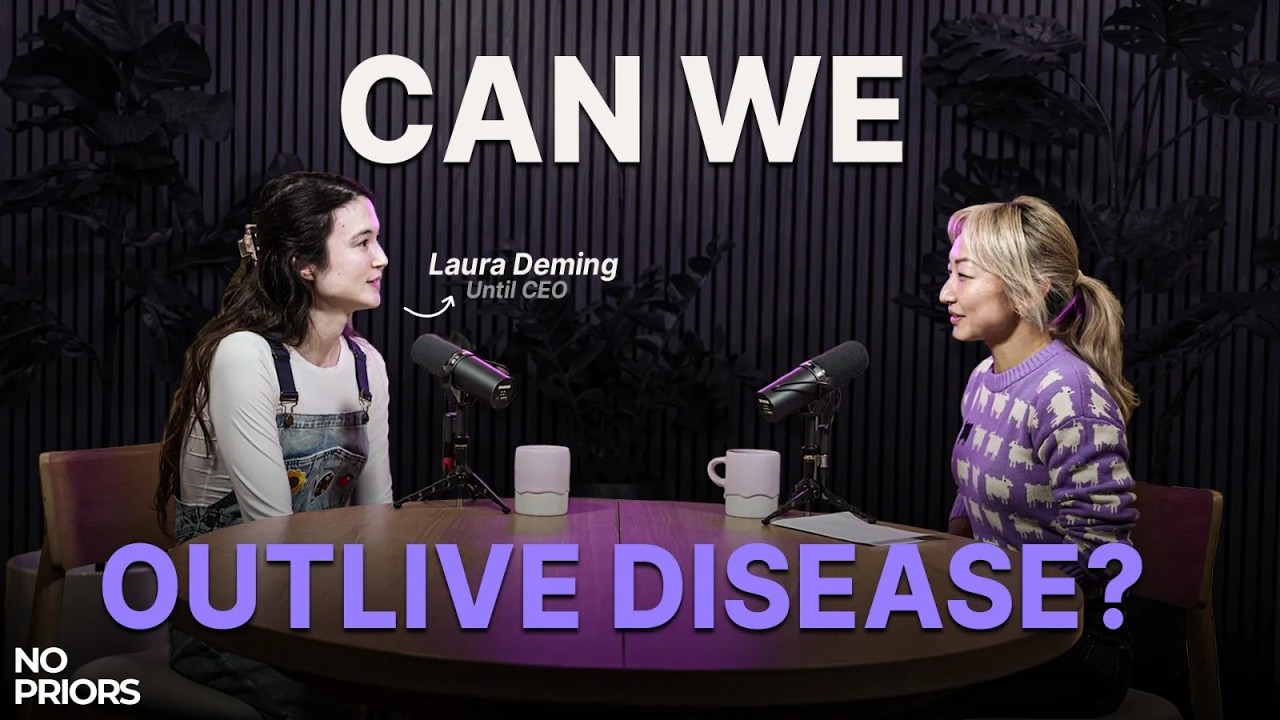
Laura Deming, formerly of the Longevity Fund and now co-founder and CEO of Until, is focused on the frontier of reversible cryopreservation—the ability to pause biological time. Her interest stems from identifying “social blindspots,” areas of science like longevity that are technically plausible but not widely pursued. For Deming, cryopreservation represents a “zero to one” problem that is technically delightful, socially impactful, and logically compelling.
Until’s Vision: From Organ Transplant to Medical Hibernation
Until’s long-term goal is to develop a new form of critical care: reversible whole-body cryopreservation for medical hibernation. The core idea is to “press pause” for patients with terminal illnesses, giving them the chance to survive until a critical cure becomes available.
What if you could take someone who is on their deathbed and find some way to hibernate them until the sort of critical cure for their disease comes online?
This vision is motivated by the tragic reality that a difference of a few months can determine whether a patient is eligible for a life-saving therapy or clinical trial.
However, the company’s near-term, practical focus is on reversibly cryopreserving single human organs. This addresses a major bottleneck in organ transplantation, where time is a critical limiting factor.
- The Problem: Organs are a precious resource, yet they expire quickly. This forces a high-stakes, last-minute logistical race involving private jets and surgeons on call. Patients must remain within a small radius of a transplant center, living in a state of constant readiness.
- The Solution: By successfully preserving organs, Until can eliminate time as a variable. This would allow for better patient-organ matching, scheduled surgeries, and reduced stress on the entire medical ecosystem. As one surgeon noted, “making time not a variable changes the whole paradigm.”
The Core Scientific and Engineering Challenges
The primary obstacle in cryopreservation is preventing damage from ice formation.
- Ice is the Enemy: Water expands when it freezes, which is “hard for your tissue to take without substantial damage.” The goal is to avoid ice formation as much as possible.
- A Stochastic Process: Ice formation is not instantaneous but occurs through random nucleation and extension. This process is probabilistic and happens within a specific temperature “danger zone” (roughly 0°C to -30°C).
- The Strategy: The key is to traverse this danger zone so quickly that ice crystals do not have time to form. Below a certain temperature, ice formation stops, and biological processes can be paused for extended periods.
This challenge is not theoretical. We already have proof of concept:
There are kids who were literally cryopreserved for 30 years as tiny embryos. And so the main question is not is this possible to do at all. It’s is it possible to scale up.
An Engineering Approach to a Biological Problem
Deming emphasizes that cryopreservation is uniquely positioned at the intersection of biology and engineering. Unlike many biological problems, you can trade engineering difficulty for biological difficulty.
- The Trade-off: To prevent ice formation, cryoprotective agents (CPAs) are used. However, these can be toxic. By improving engineering—specifically, by increasing the cooling and rewarming rates—you can spend less time in the “danger zone” and therefore use a lower, safer concentration of CPAs.
- Temperature as a Lever: Temperature is a powerful conceptual tool that links macroscopic control to nanoscale molecular motion. This allows for the application of physical and mathematical models in a way that is rare in biology, giving researchers significant leverage on the problem.
Until’s current research proceeds on two parallel tracks:
- Scaling up preservation and rewarming technologies to the human organ scale.
- Developing protocols for whole-rat reversible hibernation.
Why Hasn’t This Been Solved Before?
Despite its potential, cryopreservation has been an under-explored field. Deming suggests several reasons:
- “Antimimetic” Nature: The idea is often perceived as too much like science fiction, making it difficult to attract serious academic funding and talent.
- Emotional Polarization: People tend to either love the idea uncritically or dismiss it entirely, making rational, focused discussion difficult.
- Resource Scarcity: The field has historically struggled to attract the resources required to scale academic successes into robust technologies.
The ultimate unknown for whole-body preservation remains the brain. While the brain can withstand significant change, it’s unclear what level of fidelity is possible and what kind of injury it might sustain during a preservation protocol. This remains a major open question on the neuroscience side.