The Brutal Truth About Biotech: Why $2B Per Drug Is Killing Innovation
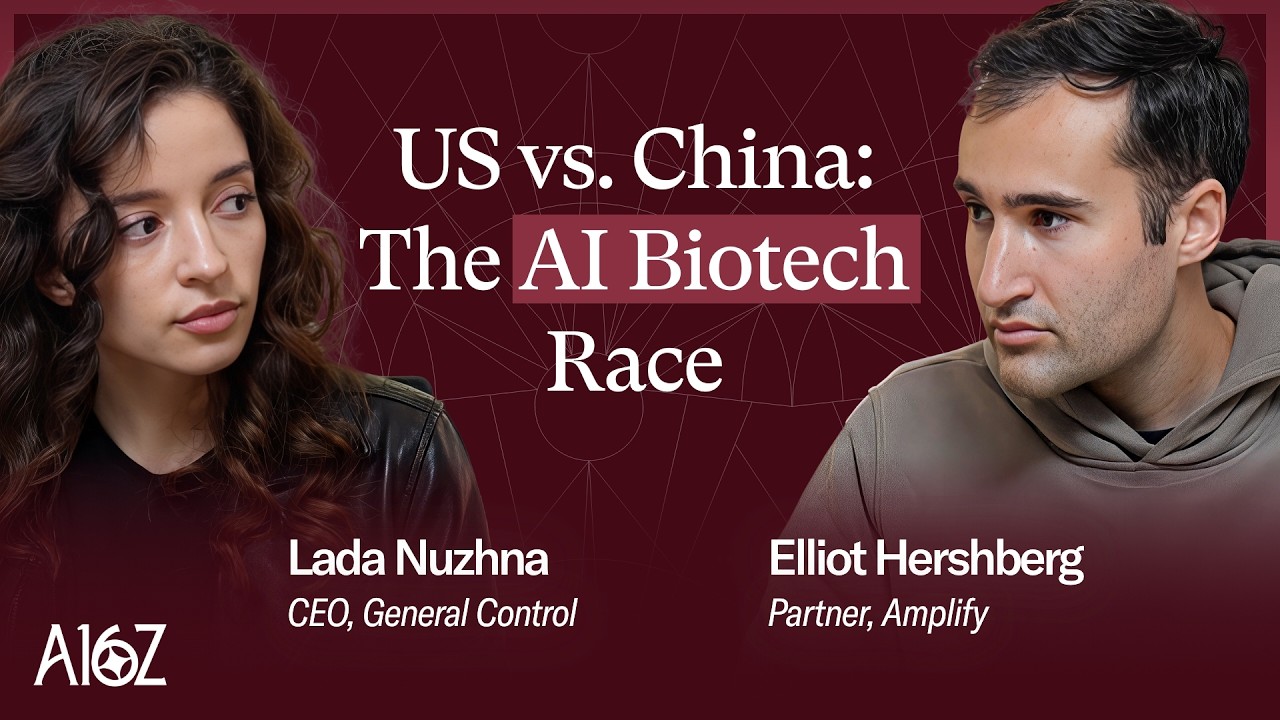
Venture capitalists Elliot Hershberg and Lada Nuzhna analyze the structural crises facing the biotech industry, from Eroom's Law driving drug development costs to $2.5 billion, to China's rapid, low-cost clinical trials outmaneuvering US startups. They argue that for American biotech to survive, it must shift from competing on commoditized platforms to inventing entirely new modalities and medicines that are impossible to create without bleeding-edge tools like AI, targeting massive opportunities like aging.
A Tale of Two Biotechs: Market Downturn vs. Scientific Progress
The biotechnology industry is currently defined by a stark disconnect. On one hand, the market is in a downturn, with a significant number of public biotechs trading at or below their cash balances and a near-total freeze on IPOs for a period. This financial reality creates a logjam from public markets down to early-stage investors, making it incredibly difficult to fund new ventures.
On the other hand, technological and scientific progress has never been more exciting. Advances in areas like zero-shot antibody design and virtual cell projects present enormous translational potential. This creates a tale of two worlds: a struggling market and an explosion of scientific possibility, representing a unique opportunity for founders and investors to bridge this gap.
The Three Horsemen of Eroom’s Law: Why Drug Development is Broken
The core challenge facing the industry is “Eroom’s Law”—Moore’s Law in reverse—which describes the exponential increase in the cost and time required to develop a new drug, now exceeding $2.5 billion per approval. This phenomenon is driven by several structural factors.
1. Regulation and Structural Inefficiency
Since the industry’s inception, regulations have almost exclusively become stricter, making development harder. A key driver of cost is the clinical trial process itself.
“When George Yancopoulos started Regeneron, it cost about $10,000 per patient in trial. That’s ballooned to $500,000. There’s no law of physics that requires it to be $500,000.”
This inflation isn’t just due to regulatory bodies like the FDA. The industry’s machinery, particularly the consolidated market of Clinical Research Organizations (CROs), creates inertia. These large providers, formed through decades of acquisitions, are not always incentivized to adopt more efficient, modern tools (like electronic tablets for trials), even when the FDA encourages it. This creates a lag between potential regulatory innovation and its implementation, entrenching a culture that assumes high costs and long timelines are unavoidable.
2. The China Challenge: Geographic Arbitrage on Speed and Cost
As drug discovery technologies become commoditized, competition shifts to speed and cost. China has emerged as a dominant force by creating enormous advantages in both areas. Through waves of deregulation, China has implemented policies like “implied approval” for Investigational New Drug (IND) applications and parallel reviews of trial components, drastically shortening timelines.
The most significant advantage comes from investigator-initiated trials (IITs), which can be 5-6x faster than the standard process and are particularly suited for high-risk, novel modalities like cell and gene therapy. This has shifted China from a “medicine printer” for existing US drugs to a leader in innovative fields like CAR-T and gene editing. The result is a fierce competitive dynamic where US startups can be beaten to the clinic with their own inventions, forcing a greater emphasis on secrecy and rethinking traditional academic sharing practices like publishing and presenting at conferences.
3. The Scientific Wall: Predicting Efficacy and Designing Molecules
The third major hurdle is fundamental biology. A high percentage of clinical trial failures occur in Phase 2, which is the first true test of a drug’s efficacy. This reflects our limited ability to predict how a biological mechanism will translate from preclinical models to humans.
Furthermore, there is a design limitation. While the industry is proficient at creating standard molecules like monoclonal antibodies, many complex diseases require more sophisticated approaches. There are numerous high-value targets on pharma’s “most wanted list” (e.g., p53) that have remained undruggable because we lack the tools to design molecules with the required specificity and desired product profile.
The Path Forward: Invention, AI, and New Battlegrounds
To overcome these challenges, the US biotech industry must fundamentally shift its strategy.
Inventing Our Way Out
The US cannot compete with China on speed and cost for commoditized technologies. The path forward is to invent our way out of the problem by focusing on creating entirely new modalities and technologies—growing the pie rather than fighting over existing slices. This means taking on higher technical risk to develop medicines that are literally impossible to make without new tools, similar to the revolutions sparked by recombinant DNA and immunotherapy.
The Role of AI in Tackling the “Impossible”
Artificial intelligence is not seen as a silver bullet to make the entire drug development process 4x cheaper, as most costs are locked in late-stage clinical trials and commercialization. Instead, AI’s primary value is in tackling the other two “horsemen”:
- Predicting Efficacy: By leveraging human data, AI models could improve our understanding of biology and increase confidence in new targets, addressing the high Phase 2 failure rate.
- Designing Novel Molecules: AI and molecular machine learning can help express complex biological ideas in molecules, enabling the creation of polyspecific drugs or therapies for previously undruggable targets. This raises the ambition of what is possible and is critical for developing medicines that are superior to the already-effective drugs on the market (the “better than the Beatles” problem).
The GLP-1 Revolution: A New Blueprint for Success
Drugs like Ozempic and Mounjaro (GLP-1s) have given the industry its “mojo back.” Their success has demonstrated several key lessons:
- Massive Markets are Viable: They proved that betting on enormous indications like obesity—once considered a failed market—can pay off.
- Patient Behavior Can Change: They shattered the assumption that patients would not tolerate weekly injectables for a chronic condition.
- A New Commercial Model: Their sheer scale is forcing companies like Eli Lilly to explore direct-to-consumer models, potentially breaking the traditional payer system.
The Ultimate Frontier: Tackling Aging
The next great frontier for biotech is aging. While significant incentive and regulatory hurdles exist—the US multi-payer system disincentivizes preventative medicine—the opportunity is massive.
- The Science: We will likely be able to treat aging before we fully understand or can measure it. The strategy involves targeting multiple age-related diseases simultaneously, with GLP-1s being a potential first-in-class “aging drug” if they show efficacy in conditions like Alzheimer’s.
- The Approach: The first wave of aging therapies will need to be extremely safe, likely small molecules with modest effect sizes. Over time, more advanced modalities like gene therapies and editors will follow as the risk-benefit profile becomes clearer.
The Next Iconic Biotechs: Rebundling the Stack
The next wave of iconic, trillion-dollar biotech companies will likely emerge from two areas:
- New Modalities: History shows that massive value is created by unlocking new types of medicines (e.g., recombinant DNA, monoclonal antibodies, mRNA). The future belongs to companies that invent the next foundational modality.
- Platform Rebundling: There is a significant opportunity in “rebundling” the stack by creating composite platforms that integrate genomics, synthetic biology, AI/modeling, and novel delivery technologies. In this model, the platform is the product, enabling the creation of highly personalized medicines like patient-specific cancer vaccines, where the lines between diagnostic, software, and drug are blurred.