Level Up: Choosing The Technical Leadership Path • Patrick Kua • GOTO 2025
Patrick Kua explores the essence of technical leadership, emphasizing its critical role in overcoming organizational misalignment and accidental complexity, drawing from real-world examples. He introduces a "Trident Model" for career growth, differentiating technical leadership from individual contribution and management. The talk highlights compelling reasons for engineers to embrace leadership, such as shaping team environments, influencing product direction, and solving complex "people-system" problems. Finally, Kua provides a practical five-step recipe for aspiring leaders to start demonstrating impact through ownership, sponsorship, and delivering tangible value.
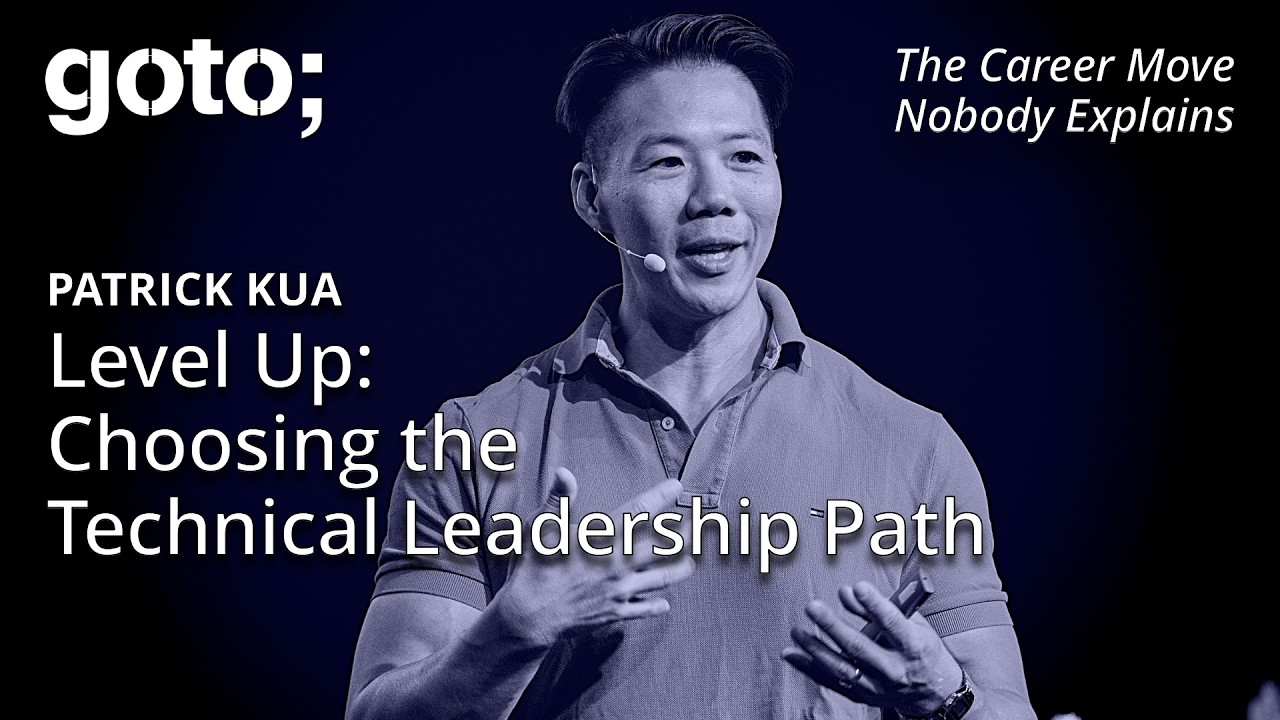
Patrick Kua, with 25 years in technology, including roles as CTO and consultant, presents on the technical leadership path, aiming to provide wisdom for career decisions and increasing impact. He argues for the crucial role of technical leadership in managing complexity and fostering alignment within technical teams and organizations.
Exploring Technical Leadership
Kua opens with an anecdote about a telecommunications company’s failed social media app project. This ’train wreck,’ resulting from acquiring eight different companies and attempting to integrate them with hard deadlines and large budgets, highlighted a severe lack of technical alignment. This misalignment led to functional bugs, increased complexity, inconsistent user experiences, and significant delays, ultimately causing the project’s failure. Kua emphasizes that these are opportunities for individual contributors and technical leaders to improve software shipping and solve customer problems more effectively.
Drawing on Fred Brooks’s No Silver Bullet, Kua differentiates between essential complexity (inherent to the problem) and accidental complexity (introduced by how we build systems, tools, and processes). He explains that technical leadership is key to minimizing accidental complexity, preventing systems from becoming brittle over time due to entropy.
Kua defines technical leadership as “the act of aligning a group of people in a technical context.” This alignment is typically around tools, libraries, frameworks, and, most importantly, how these tools are applied. Examples of misalignment include differing pull request review standards or multiple implementations for common functionalities like sending email notifications. Technical leaders foster alignment at both team and organizational levels, navigating the challenge of determining the appropriate granularity for alignment. Effective technical leadership leads to high-performing teams that work as a seamless unit, making future changes easier and investing in long-term system health, not just current features.
To better describe career paths beyond the traditional “two-track model” (individual contributor and management), Kua proposes a Trident Model, which includes:
- Technical Leadership: Roles like architect, tech lead, or lead engineer, focusing on aligning teams and systems. Their accountability is for the team’s outcomes and systemic improvement, not primarily individual code output.
- Individual Contributor: Engineers focused on hands-on coding and solving specific technical problems.
- Management: Roles like engineering manager or director, focused on managing the “system of bureaucracy,” budgets, timelines, and personnel.
Technical leaders, while still engaged in technical topics, spend less time coding and more time creating alignment, growing team capabilities, mediating conflicts, and managing technical debt in collaboration with business stakeholders. This role is about optimizing the “system of people” to solve problems effectively.
Reasons for Becoming a Technical Leader
Kua addresses common frustrations engineers face, such as boredom with repetitive tasks or frustration with existing leadership and processes. Technical leadership offers opportunities for significant personal and professional growth:
- New Skill Development: Engaging with challenges like negotiating with business stakeholders on technical debt or mediating team conflicts, which build valuable “leadership skills” beyond pure technical proficiency.
- Shaping the Environment: The ability to influence and create the team environment one desires to work in.
- Increased Influence and Impact: Gaining a “seat at the table” in planning and strategic discussions, allowing for greater influence on product direction and problem-solving at an organizational level.
- Growing Others: Moving from a “maker” to a “multiplier” mindset, where success is measured by the team’s collective outcomes and the growth of individual team members. This involves helping people take on complex problems and work together effectively.
- Solving Complex Systems Problems: Shifting from optimizing technical code to optimizing the “system of people” – navigating power dynamics, competing goals, and evolving ways of working (e.g., AI enablement). This presents a continuous, challenging problem with no single optimal solution.
Kua advises that “what got you there won’t get you to the next step,” stressing the need to invest in leadership skills. He outlines three key areas for technical leaders: Leadership, Development, and Architecture, suggesting that aspiring leaders must diversify their personal development to build capabilities in areas they may have previously underinvested in (e.g., communication, negotiation, feedback, coaching).
How to Get Started: A Five-Step Recipe
For those aspiring to technical leadership, Kua offers a practical five-step recipe:
- Look for Areas of Misalignment and Neglect: Pay attention to recurring problems in retrospectives (e.g., broken builds, inconsistent processes, outdated tools) that no one is addressing. These represent opportunities for improvement.
- Choose to Own the Issue: Take personal accountability for solving a identified problem. This involves accepting the risk that comes with initiating change but committing to doing your best to improve the situation.
- Seek Sponsorship: Secure explicit permission and backing from a manager, tech lead, or even higher-level stakeholder. This provides a safety net and legitimizes your efforts, especially when tackling issues not explicitly assigned.
- Finish What You Start and Deliver Value: Demonstrate progress by breaking down large problems into small, incremental steps. Focus on showing small wins weekly and completing tasks to build trust and prove your approach.
- Celebrate and Repeat: Make sure your contributions are recognized. Inform your manager and document your achievements. This increases the likelihood of future requests for time and resources being approved, fostering a cycle of improvement and leadership demonstration.
Kua concludes by asserting that anyone can implement this recipe and demonstrate technical leadership, emphasizing that formal titles should reflect existing contributions rather than precede them.