Dreamer: the Agent OS for Everyone — David Singleton
David Singleton, former Stripe CTO, introduces Dreamer, an "operating system" for consumer-friendly AI agents. He demos building a conference app in minutes using natural language, and details the platform's architecture, developer ecosystem, and monetization model for tool builders.
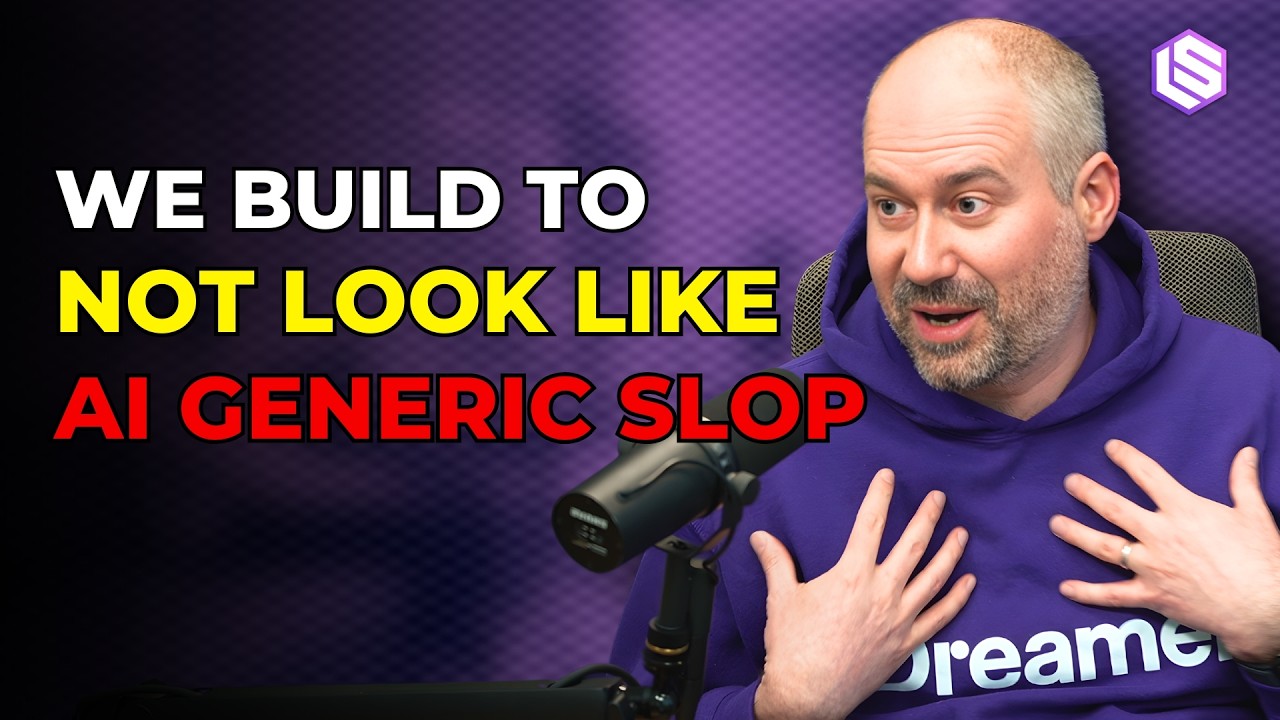
David Singleton, the former CTO of Stripe, has launched Dreamer, a new platform designed to allow everyone, regardless of technical background, to discover, build, and use AI agents and “agentic apps.” The vision is to create an ecosystem analogous to the early days of Android and its app store, but for the emerging world of AI agents.
The Dreamer Platform: An “Operating System” for Agents
Dreamer is architected as a cohesive system, described as being “a bit like an operating system,” to ensure that agents are not only powerful but also private, secure, and able to work together effectively.
- The Sidekick: At the core of the platform is a personal agent called the Sidekick. It acts as the “kernel” or “traffic cop” of the system. It gets to know the user, builds a memory of their preferences, and mediates all interactions between different agents and tools. This is crucial for security, as agents don’t interact directly but rather make requests through the Sidekick, which enforces user permissions and interests.
- Gallery: An “app store” where users can find and install agents built by the community for various use cases, from personal productivity and information management to fun, bespoke applications. Any app from the gallery can be forked and customized using natural language.
- Tools: The foundational layer of the platform, providing agents with high-quality data and the ability to take action. This includes first-party integrations with Google Search and Gmail, as well as high-quality, live data feeds for sports (F1, MLB) and integrations with financial services via partners like Attain Finance.
Building on Dreamer: Natural Language to Deployed App
Dreamer’s primary innovation is enabling app creation through a simple conversation with the Sidekick in the Agent Studio.
- Natural Language Development: Users describe what they want to build in plain English. For example, Singleton demonstrated building a personalized AI Engineer conference schedule app in approximately 25 minutes. He instructed the Sidekick to fetch schedule data from a JSON file, create a searchable interface, and add an intelligent “Guide Me” feature that builds a custom schedule based on the user’s selected interests (e.g., agents, code generation, reasoning).
- The Build Process: The Sidekick follows a robust three-step, iterative process:
- Plan: It first devises a plan to achieve the user’s goal using the available tools and data.
- Build: It generates the necessary code.
- Test: It then executes the code, perceives the output, and enters a loop to fix bugs. This ensures that the first build is functional most of the time.
- Pro-Developer Experience: While designed for consumers, Dreamer provides a powerful IDE and CLI for engineers.
- Full Code Access: Developers can access the generated TypeScript code, which was chosen over Python for its strong typing, making it easier for coding agents to detect and fix errors.
- Integrated Tooling: The IDE includes access to prompts, static files, versioning (a custom system, not Git), and detailed workflow logs showing every trigger and LLM call.
- Managed Infrastructure: Every agent is automatically provisioned with its own multi-user SQLite database. The platform handles hosting, authentication, and multi-user data permissions by default, abstracting away significant backend complexity.
An Open Ecosystem and Monetization
A key goal for Dreamer is to create more value for its participants than it captures for itself, fostering a vibrant ecosystem.
- Tool Builders Get Paid: Developers can publish their own tools to the platform. Dreamer pays these builders based on the usage of their tools, creating a direct monetization flywheel.
- Builders-in-Residence Program: Inspired by Lego’s “Master Builders,” this program pays creative people to work with the Dreamer team to build novel agents and explore the platform’s capabilities.
- $10,000 Tool Prize: To bootstrap the ecosystem, Dreamer is offering a $10,000 prize for the best tool added to the platform by mid-April 2024.
Technical and Company Philosophy
- Abstracting LLMs: Dreamer operates as a routing layer or “agent lab,” automatically selecting the best model for a given task from providers like OpenAI and Anthropic. This abstracts complexity from the user and ensures they always benefit from the state-of-the-art without managing API keys or model selection.
- Memory and Personalization: The Sidekick continuously builds a memory of user facts and preferences. This allows agents to provide highly personalized experiences. The team has iterated through various memory techniques, including RAG with vector databases, and settled on a simpler, highly effective system they continue to invest in.
- Building with Tiny Teams: The core Dreamer product was built by a team of about six engineers. Singleton is a strong believer in small, high-talent-density teams that can remain nimble. The company heavily “dogfoods” its own product, using agents for marketing, operations, and processing its waitlist.
- Hiring in the Age of AI: The hiring process has shifted to focus on an engineer’s ability to work effectively with coding agents. Interviews now involve collaborative projects where candidates are evaluated on how they prompt, review, and chain together AI tools to build products.