Building Cyber Defense for the Agentic Era
Kevin Mandia, founder of Mandiant and CEO of Armadin, discusses how AI is revolutionizing cybersecurity. He explains that machine-speed attacks necessitate autonomous defenses, detailing Armadin's approach of continuous AI-driven red teaming to find zero-days and build real-time defense mechanisms. The conversation also explores the transformation of the SOC, the demise of traditional pentesting, and the challenges of building a company at AI speed.
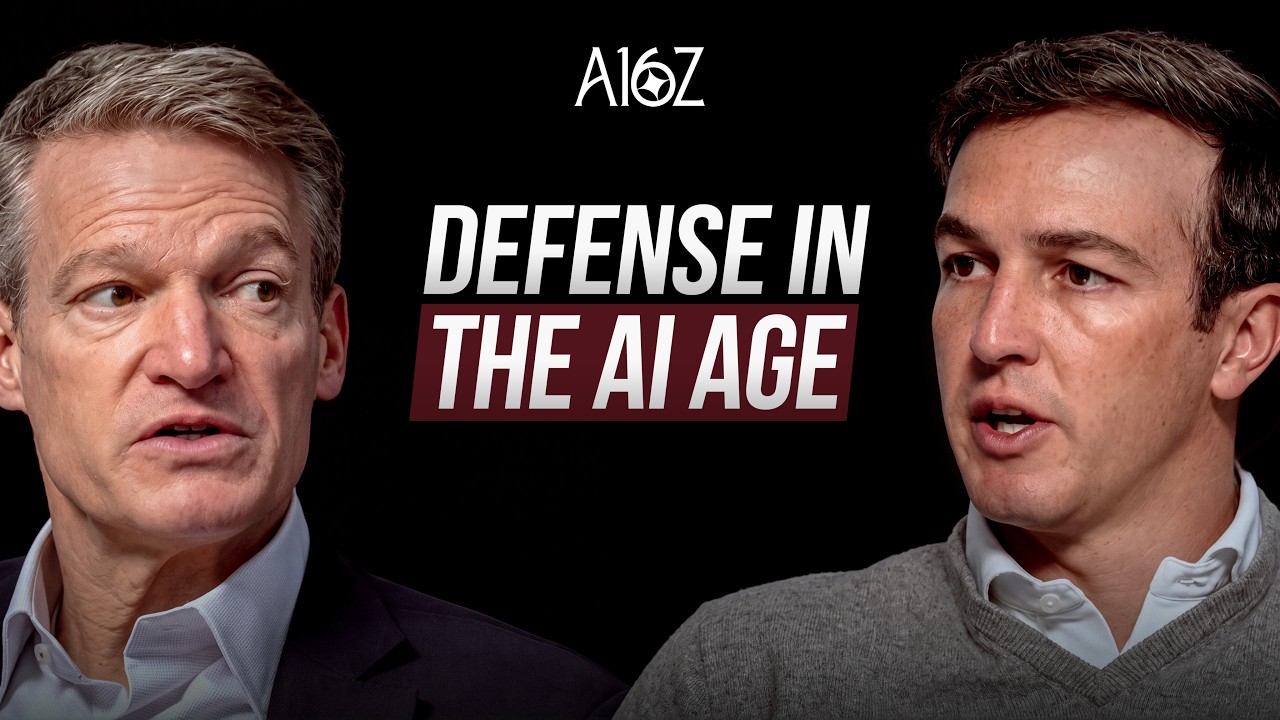
Kevin Mandia, founder and CEO of Armadin, explains his return to the cybersecurity field, driven by the profound shift AI is bringing. He posits that AI represents a “tsunami” that will fundamentally alter every aspect of cybersecurity.
The AI Shift and Mandia’s Return
Mandia describes feeling compelled to re-enter the cybersecurity landscape after a 30-year career, having witnessed the initial ideas for Armadin from co-founders David Slater, Travis Lam, and Evan Peña. He recognized their generational talent and the critical need for what they were building, believing that AI would render previous security paradigms obsolete. His motivation was to contribute to this pivotal shift rather than observe it from the sidelines.
Armadin’s Mission and Approach
Armadin’s core mission is to leverage frontier AI models for offensive cybersecurity to continuously test and secure customer networks. The vision is two-fold:
- Armadin Red: To become the world’s best at finding exploitable risk by continuously attacking customer networks with AI agents. The goal is to discover vulnerabilities, including zero-days, before adversaries do. Since January 2024, Armadin has identified over 90 zero-days in production environments of Fortune 500 companies through black-box testing.
- Armadin Blue: To build autonomous defensive capabilities. This involves taking the insights from
Armadin Red—the knowledge of exploitable risks—and translating them into real-time, automated compensating controls. This creates a “force field” to defend against AI-driven attacks.
Mandia emphasizes that effective defense requires a robust offense. Just as a top-tier sports team’s defense improves by practicing against a formidable offense, organizations need continuous, sophisticated attacks to train and harden their defenses.
The Nature of AI Attacks
AI introduces a new dimension to cyberattacks, fundamentally changing their economics:
- Scale: Unlike human attackers who typically pursue one path due to limited resources, AI can simultaneously probe thousands of paths into a network, exploring far more attack vectors.
- Speed: AI operates at machine speed, performing tasks in microseconds that would take dozens of humans significant time and effort. This speed makes human-in-the-loop detection and response increasingly untenable.
- Effectiveness: AI excels at structured tasks like finding vulnerabilities in code, which is a structured language and process. Mandia believes AI is already highly effective in this domain.
- Democratization: AI will lower the barrier to entry for attackers. Less technically skilled individuals or groups will be able to launch sophisticated attacks, making them appear far more capable than they are. This will also complicate attribution, making it harder to discern if an attack originates from a nation-state, a criminal group, or an individual.
- Future Trajectory: The full potential of AI attacks is yet to be seen, primarily due to the current cost and availability of anonymous GPU access for criminal elements. Once these become more readily available, the volume and sophistication of AI-driven criminal activity are expected to surge.
Nation-State Attacks vs. AI Drone Swarms
Mandia draws a distinction between traditional nation-state tactics and emerging AI-driven approaches:
- Nation-State (Traditional): Often akin to a “sniper round”—highly targeted, surreptitious, and focused on deep penetration for espionage against specific entities.
- AI (Future): More like a “drone swarm”—potentially sloppier and louder, but far more comprehensive and effective in its ability to overwhelm defenses. Nations will need to adapt their doctrines, balancing precision (sniper) with overwhelming force (swarm) depending on mission objectives and desired level of surreptitiousness.
The Demise of Traditional Pen Testing
Mandia contends that traditional penetration testing is obsolete in the AI era:
- Limitations of Old Methods: Traditional pen tests often rely on scanning for known vulnerabilities, producing extensive lists of CVEs without verifying actual exploitability. They rarely involve adaptive, learning technologies and struggle with custom applications or logic flaws.
- Armadin’s Evolution: Armadin moves beyond this by actually carrying out exploits and verifying remote code execution, eliminating false positives. Its AI agents can find logic flaws in custom applications and exhaustively test all network routes. This is a true “red teaming” approach, continuously pushing the boundaries of defense—a capability previously cost-prohibitive for most organizations.
- Zero-Day Discovery: Armadin’s success in finding numerous zero-days in black-box production environments underscores the inadequacy of older methods. Increasingly, Armadin’s AI agents are autonomously discovering these vulnerabilities.
The Imperative of Autonomous Defense
For Mandia, the future of cybersecurity is intrinsically linked to autonomous defense:
- Need for Speed: Human involvement in the detect-and-respond loop is too slow to counter machine-speed attacks. Responses must be automated and instantaneous.
- Armadin Blue’s Role: By continuously identifying exploitable risks, Armadin can inform existing defense platforms (EDR, firewalls) to deploy compensating controls rapidly. This acts as a “field dressing” to stop an attack before it escalates.
- Inevitable Automation: Autonomous defense will become a de facto standard, driven by the capabilities of defensive platforms themselves, regardless of explicit requests from CISOs.
The Future of the Security Operations Center (SOC)
Mandia foresees a radical transformation of the SOC:
- Automation is Key: The true north for any CISO should be effective autonomous security. AI will govern prevention, detection, and response. Any process relying on human speed in these areas is doomed to fail.
- Shrinking Windows: The window for human intervention in detection and response will continuously shrink, eventually becoming negligible. The focus will shift almost entirely to prevention and immediate, automated lockdown.
- Beyond Human Scale: When an AI-driven attack successfully breaches a network, its proliferation speed is “shocking,” making human reaction impossible. Defenses must be designed for immediate, autonomous containment.
- Current State of Enterprise Vulnerability: Enterprises are in a period of intense risk. There’s a desperate race both for attackers to establish footholds and for defenders to patch every potential entry point. While AI currently advantages offense, the long-term goal is for autonomous AI defense to surpass human capabilities. CISOs and product teams are actively engaged in “war room” efforts to fortify their systems, accelerated by events like the “Mythos moment” which highlighted the reality of AI on offense.
Lessons from the Hugging Face Incident
The Hugging Face incident serves as a crucial learning experience:
- Underestimation: There’s a tendency to underestimate adversary and model capabilities. Innovators often prioritize development over security, leading to vulnerabilities that experienced security professionals could foresee.
- Securing AI Agents: Building secure AI agents requires deep domain expertise. Armadin’s approach involves multiple layers: secure hypervisors, host-based lockdown, proxies, passive monitoring of every prompt, extensive validation, and deterministic rules to prevent unintended actions.
- Balance of Control: The challenge lies in leveraging AI’s intelligence and creativity without allowing it to perform harmful actions. This requires sophisticated classifiers and human-in-the-loop interventions for ambiguous situations. Overly deterministic rules can stifle AI’s potential.
- Transparency and Logging: Model providers must evolve their logging and auditing capabilities to ensure accountability and forensic analysis when AI systems go rogue. Armadin logs every action of its agents for full traceability.
- Performance of Models: In offensive cybersecurity, Mandia notes that both open-weight and advanced closed models have shown similar capabilities in finding vulnerabilities, with the primary differentiators being speed and cost.
Building a Company at AI Speed
Building Armadin in the AI era presents stark differences compared to Mandiant’s founding:
- Funding and Growth: Unlike Mandiant’s self-funded, slower growth model, Armadin requires significant funding and rapid growth to capture the market opportunity. The goal is to exceed growth rates seen by companies like Wiz, which achieved $100M ARR in 18 months.
- Scaling and Process: Hyper-speed growth demands institutionalized processes and scalable leaders immediately. Relying solely on “grit, gut, and moxy” is insufficient. The challenge is maintaining process and stability amidst rapid expansion.
- Continuous Training: Product development moves so fast (new features every two weeks) that sales teams require continuous training to stay current, a departure from traditional annual sales kickoffs.
- Differentiation: In a crowded market, differentiation is paramount. IP lifespan is short, meaning focus must be on go-to-market execution, securing key enterprise customers, and ensuring their ecstatic satisfaction. Building a strong brand as a “seal of approval” is critical.
- Team Structure: Armadin prioritizes co-located engineering teams to foster rapid collaboration and decision-making.
- Opportunity: Despite the challenges, the current era offers a “tailwind of a lifetime” in cybersecurity, as every industry and tech stack undergoes a fundamental transformation driven by AI. Every existing security solution will likely be re-evaluated and potentially replaced within the next two years.