Securing AI Agents with Zero Trust
This post explores how to secure modern agentic AI systems by applying the core principles of Zero Trust. It details the unique attack surfaces of AI agents, such as prompt injection and model poisoning, and outlines a comprehensive security architecture including non-human identity management, AI firewalls, and the critical role of human oversight.
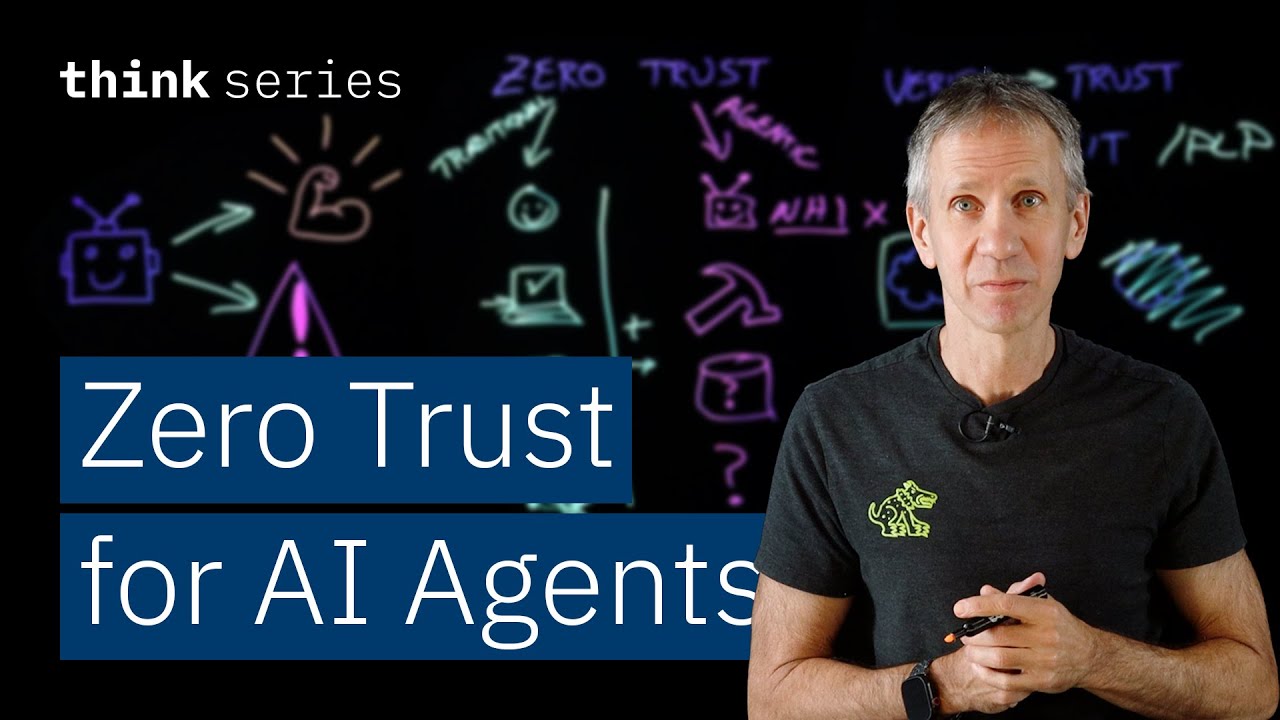
The emergence of agentic AI—systems that not only think but also act by calling APIs, moving data, and creating sub-agents—introduces a new paradigm of capabilities and, consequently, a new set of attack surfaces. To secure this new ecosystem, it is essential to repurpose the core principles of Zero Trust, moving beyond the marketing hype to implement a robust security framework.
Core Zero Trust Principles Revisited
Zero Trust is not a product but a security model built on several key principles that are more relevant than ever in the age of AI. It shifts the security paradigm from perimeter-based defenses to a more pervasive and resilient strategy.
- Never Trust, Always Verify: Trust is not granted by default; it must follow verification. Every access request, whether from a human or a machine, must be authenticated and authorized.
- Just-in-Time Access: The principle of “Just in Case” is replaced with “Just in Time.” This enforces the principle of least privilege, granting access rights only when needed and for the minimum duration required.
- Pervasive Controls: Security is not a hard shell around a soft center. Instead, controls are distributed throughout the system, protecting data, devices, networks, and applications from the inside out. Micro-segmentation is a key technique here, isolating network segments to prevent the lateral spread of threats.
- Assumption of Breach: This is arguably the most critical aspect of Zero Trust. Security architecture should be designed with the assumption that an attacker is already present within the network, application, or database. This mindset forces a more rigorous and proactive approach to defense.
The Threat Landscape of an Agentic System
An agentic system can be conceptualized as a loop of sensing, thinking, and acting. An attacker has multiple vectors to compromise this system:
- Direct Prompt Injection: Malicious inputs can be crafted to break the context of the AI, causing it to perform unintended actions.
- Data and Model Poisoning: Attackers can manipulate the policy, preference information, or even the underlying training data to corrupt the AI’s reasoning process.
- Interface Attacks: By inserting themselves between the agent and the tools it calls (APIs, databases, other agents), attackers can intercept or manipulate actions.
- Credential Theft: Gaining access to the credentials used by the agent allows an attacker to create new accounts, escalate privileges, or impersonate the agent.
A Zero Trust Architecture for Securing AI Agents
Applying Zero Trust principles to an agentic environment requires extending traditional security controls to cover the unique components of AI systems.
1. Secure Non-Human Identity (NHI) Management
Agents operate using non-human identities, which can proliferate rapidly.
- Unique Credentials: Every agent, and every sub-agent it creates, must have unique credentials.
- Dynamic Credentials: Avoid static, hardcoded credentials (e.g., API keys in code). Instead, use a vaulting system to dynamically check credentials in and out.
- Just-in-Time Privileges: Enforce JIT access and role-based access control (RBAC) to ensure agents have only the minimum necessary permissions.
2. Vetted Tools and Data
The integrity of an agent’s actions depends on the integrity of its components.
- Tool Registry: Maintain a registry of verified and secured APIs, tools, and data sources. This ensures the agent is built with “pure ingredients.”
3. Inspection and Enforcement
Continuous monitoring is crucial for detecting and blocking threats in real-time.
- AI Firewall/Gateway: Deploy a specialized firewall to inspect all inputs and outputs. This layer can detect and block prompt injection attacks, prevent sensitive data leakage, and identify improper API calls.
4. Traceability and Monitoring
To understand and respond to an agent’s behavior, you need a complete and unalterable record of its actions.
- Immutable Logs: Log all system actions to an immutable ledger. This provides a traceable record to understand “why it did what it did” and prevents attackers from covering their tracks.
- Comprehensive Scanning: Utilize a suite of scanning tools for networks, endpoints, and now, AI models themselves to proactively identify latent vulnerabilities.
5. Human in the Loop
Despite their autonomy, agents must remain under human control.
- Kill Switch: An operator must have the ability to immediately terminate an agent that is behaving erratically or maliciously.
- Throttles: Implement rate limits and controls to prevent unintended consequences, such as an agent making thousands of purchases in a minute.
- Canary Deployments: Test new agents in a controlled, isolated environment to observe their behavior before full deployment.
Agentic AI multiplies both power and risk. A correctly implemented Zero Trust framework provides the essential guardrails to ensure these autonomous systems remain aligned with our intent, not an attacker’s. Every agent must continuously prove who it is and justify what it wants to earn our trust.