Can Your AI Use Sensitive Data Safely? 5 Capabilities You Need
Sensitive data gives AI its greatest value and its greatest risk. This piece walks through five foundational controls for using that data safely in AI systems, agents, and RAG pipelines: visibility across systems, automated classification, data residency and sovereignty governance, identity-based access control, and continuous audit evidence.
Machine-speed controls for sensitive data
AI can leak data at machine speed. Decades of controls were built to keep humans away from sensitive data, but now that data is handed to machines that process it continuously, so the controls around it have to operate at machine speed too.
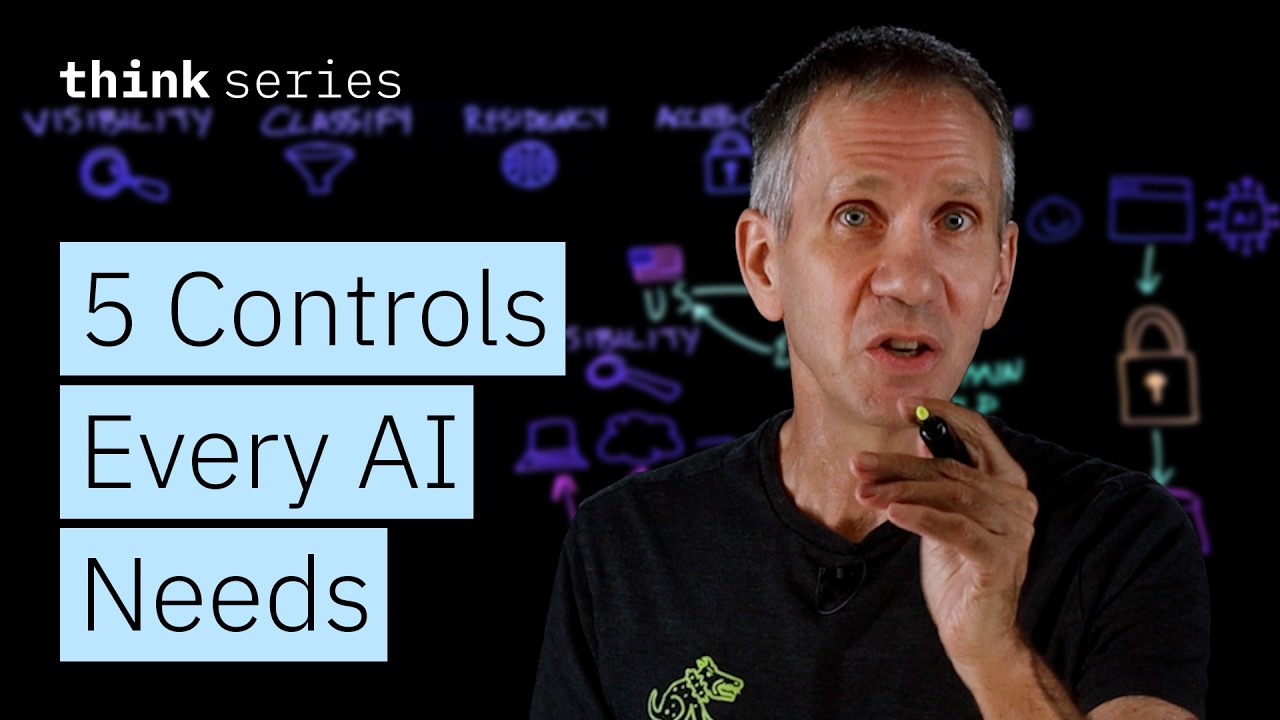
The core tension is that the data that makes AI most useful is often the most sensitive: customer records, personally identifiable information, personal health information, and financial data. The choice looks like a dilemma: throw the digital crown jewels at AI for the best results, or play it safe and accept bland, generic outputs. A third path exists, optimizing meaningful outcomes without giving away the keys to the kingdom, but it requires homework first. Five foundational controls make it possible: visibility, classification, residency and sovereignty governance, access control, and evidence.
Visibility: you cannot protect what you cannot see
Most organizations lack a single view of where their sensitive and regulated data lives. The problem is compounded because data is the lifeblood of AI and it never sits still. It moves across on-premises systems, servers and endpoints, SaaS and hosted cloud platforms, and networks in flight. Securing it means tracking that movement and knowing who is using the information and why. The goal is one view across all systems and every part of the organization, so the risks being taken are visible and the downside can be mitigated.
Classification has to be automated and continuous
Once data is seen, it must be identified and classified by sensitivity level. Without that step, there is no way to know whether a control is proportionate to the value of the data. Too much control blows the budget and stifles innovation; too little invites fines and erodes customer trust. Governance that only arrives after AI has consumed the data and the data has moved leaves you playing catch-up. Manual tagging is slow, error-prone, and full of gaps, so classification needs to be automated: a capability that reads the data itself and classifies it continuously as data enters and leaves the system. It must happen early and often, before the data reaches AI systems, so that damage is prevented rather than discovered.
Residency, sovereignty, and localization
Location matters as much as the system holding the data. Three related concepts need to be kept distinct:
- Data residency: where the data is physically stored, on which system and in which geography.
- Data sovereignty: which laws and governmental authority apply to the data.
- Data localization: the legal requirement that certain data be stored and processed within a particular country or region.
Consider a US company storing data in a German data center. The residency is Germany, and because the data resides there, German and European Union law, including GDPR, may apply. Jurisdiction follows the physical location. Cloud providers make this murkier. When a US-owned provider operates a data center in Germany, whether US law could compel that provider to disclose the data becomes a question with no obvious answer. A simple way to hold it together is that residency asks “where is my data?” and sovereignty asks “whose laws control my data?”
Storage location does not guarantee processing location, and in cloud environments the locations involved may not be exposed as metadata, so they are easy to miss. The bottom line is that organizations need enforceable controls over where data lives and how it crosses jurisdictions, and the legal team needs to agree with the approach.
Access control and the four As of IAM
As AI adoption grows, so does the number of users, applications, and models touching sensitive data. Access must be governed, with clear rules about who can reach what and under which conditions. Access control sits within identity and access management, which can be understood through four As:
- Administration: creating, provisioning, deprovisioning, and tearing down accounts through approval workflows, while applying the principle of least privilege so each identity holds only the access it needs.
- Authentication: establishing who someone is, using multifactor authentication, passkeys, and similar technologies.
- Authorization: deciding what an authenticated identity is allowed to do. This is the harder question, addressed through role-based access control and conditional access.
- Audit: going back to verify that the other three were carried out correctly.
Audit is what leads to the fifth control, evidence.
Evidence for auditors and regulators
Auditors and regulators want real evidence, not assumptions. Rebuilding lineage and data movement records by hand after the fact is painful and unreliable. Continuous evidence showing where data moved, where it lives, and which AI workloads used it is far better. The process has four steps: capture data movements through automated logging, store them in an immutable audit trail (immutable meaning they cannot be altered, because a record that can be changed can no longer be trusted), analyze reports of the activity, and prove it to auditors. Auditors will ask where the data is, who accessed it, what they did with it, and which AI used it. As the saying goes, auditors live on data, so keeping them well fed with evidence is what keeps the organization off the menu.
Trustworthy AI depends on trustworthy data
Trustworthy AI rests on trustworthy data, and that depends on five things working together: seeing the data and knowing where it goes, identifying it and knowing its sensitivity and required protections, constraining it so it complies with company policy, national law, and industry regulation, controlling access so only the right people reach it, and proving all of it to auditors. When these controls are in place, sensitive data stops being a compliance exposure that keeps leaders up at night and becomes a strategic AI asset, one that unlocks the value hidden in the organization’s data.