Should you let OpenClaw pen test your system? Plus: Cybersecurity for ephemeral software
IBM security experts discuss the implications of using AI agents like OpenClaw for penetration testing, the challenges posed by AI-generated ephemeral software, and the strategic allocation of security budgets in an era of rapidly growing ransomware threats.
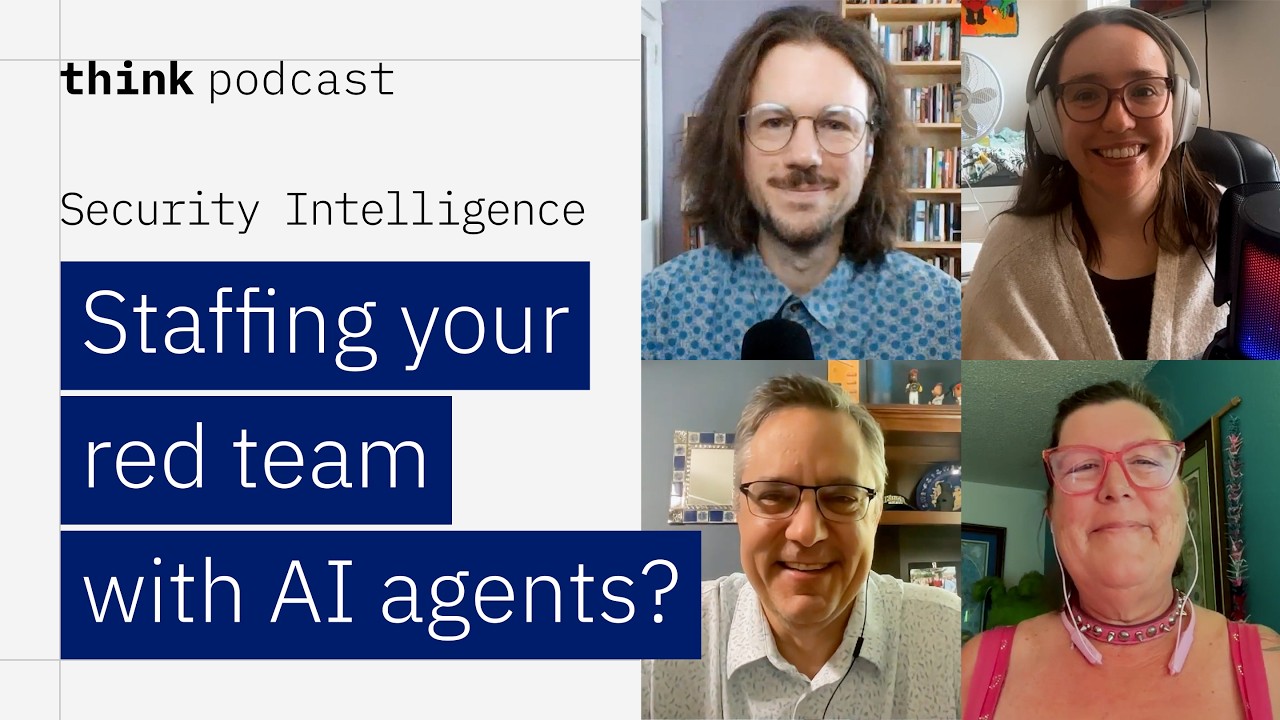
AI Agents as Penetration Testers: The OpenClaw Experiment
The discussion begins with Sophos’s experiment of letting the open-source AI agent OpenClaw act as a red team operator on a legacy on-prem network. The experiment, which yielded 23 actionable findings, serves as a practical example of integrating AI into security workflows.
The panelists agree that engaging with this technology is not optional, but essential. As Dave McGinnis puts it, “this cat is not going back in the bag.” The consensus is that defenders must learn to use these tools to stay ahead of attackers, who will inevitably adopt them. This involves hands-on experimentation in contained environments to understand the necessary guardrails and controls.
A key challenge highlighted is the inherent friction between an AI agent’s objective and its safety guardrails. Sophos noted that OpenClaw often “refused to cooperate due to concerns around malicious use,” which can hinder productivity. Kimmie Farrington, from a detection engineer’s perspective, describes privileged agents like OpenClaw as a “nightmare” due to the massive attack surface they present and the difficulty in blocking them once deployed.
The conversation emphasizes the need for a “human in the loop” approach. While AI can make processes like pentesting faster and more efficient, Claire Nuñez argues that a human is still essential for nuanced, multi-dimensional analysis that AI currently cannot replicate. Dave McGinnis offers a memorable characterization of the duality of these tools:
> AI agents are the most helpful insider threats we’ve ever had.
For organizations looking to start, the advice is to begin now. Security teams are well-positioned for this, being accustomed to data overload and possessing a naturally “paranoid” mindset. Initial applications can focus on augmenting tasks like risk review for policy changes or moving towards autonomous threat investigation.
Cybersecurity in the Age of Instant Software
The panel explores Bruce Schneier’s concept of a future dominated by “instant software”—applications generated by AI on-demand, used briefly, and then discarded. While this could theoretically reduce the window for exploiting known vulnerabilities, the panelists express significant skepticism.
Kimmie Farrington and Claire Nuñez both predict that instead of being ephemeral, this software will create a “serious graveyard of dead vibecoded apps.” Users will generate a tool, find it useful, share it, and it will persist in its original, potentially vulnerable state, leading to massive unmanaged risk and “shadow IT.”
The conversation shifts to using AI to “shift left,” building more secure code from the start. Kimmie Farrington points out the irony in this:
> We talked about how vibe coding is potentially full of holes and full of vulnerabilities, but we want AI to fix itself… how come we can’t just tell the vibe code to make it with secure code?
Dave McGinnis argues that the ultimate solution isn’t just better code but a fundamental shift towards “always on, ambient, predictive, protective defenses.” Human-speed response is no longer viable. The future requires an autonomous security ecosystem that can predict and prevent threats at machine scale, quarantining suspicious new applications before they can cause harm. In this model, human experts transition from console operators to providing high-level domain expertise and context to the AI systems.
Ransomware Growth vs. Security Spending
The final segment addresses a CipherCue report indicating that ransomware incidents are growing three times faster (30%) than security spending (10%). The panelists largely dismiss the direct comparison as “confusing” and potentially “bogus.”
Claire Nuñez makes a critical point that the efficacy and efficiency of spending are far more important than the raw dollar amount. A higher budget does not automatically equate to a better security posture.
> You can spend $1,000 on a dress and it could still look really bad on you if you style it poorly.
The focus should be on strategic investment. Dave McGinnis advises organizations to “not overcomplicate it” and invest in areas where AI can deliver tangible results now. A prime example is autonomous threat investigation, using AI to handle the voluminous Tier 1 and Tier 2 SOC work. This frees up significant budget and human capital for more complex tasks.
He outlines a strategic path to autonomy:
- Start with a core area like autonomous threat investigation.
- Expand to adjacent domains like Identity Threat Detection and Response (ITDR).
- Bridge into improving the broader, often complex, identity program.
- Layer a “continuous controls governance” system on top to provide a real-time, comprehensive view of the organization’s security posture.