Ben & Marc: Why Everything Is About to Get 10x Bigger
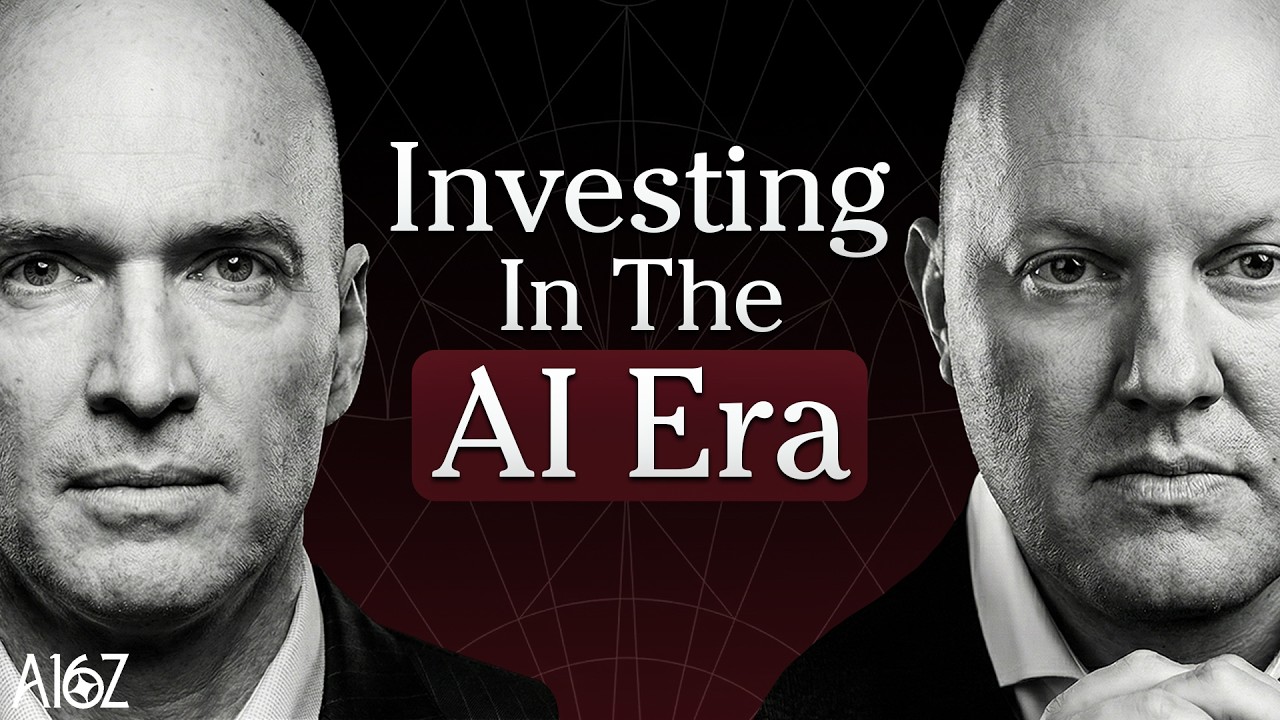
a16z co-founders Marc Andreessen and Ben Horowitz discuss the shift to a decentralized media ecosystem, their investment thesis on supply-driven markets, and the transformative impact of AI. They detail the a16z model of leveraging reputation as a core asset to turn inventors into CEOs and explain why AI represents a fundamental reinvention of computing that will unlock unprecedented growth.
The media and information ecosystem has fundamentally shifted over the past decade toward a more “uncontrolled,” “anarchic,” or “liberated” environment, depending on one’s perspective. This decentralization marks a significant departure from the era of centralized media gatekeepers. Key catalysts for this change include Elon Musk’s acquisition of Twitter and, notably, the principled stand of platforms like Substack, which have consistently defended free speech under immense pressure.
The Power of Supply-Driven Markets
A core investment thesis behind platforms like Substack is the concept of a “supply-driven market.” Traditional market sizing often fails because it analyzes existing demand dynamics. However, a fundamental technological or economic shift on the supply side can unlock massive, previously invisible latent demand.
The hypothesis for Substack was that providing an effective monetization mechanism for writers would bring high-quality content into existence that previously had no viable economic model. This new supply, in turn, would create its own demand, proving that the market for thoughtful, deep content was far larger than it appeared. This principle is not unique to media; long-form podcasting’s success similarly defied the conventional wisdom that consumers have short attention spans.
This pattern repeats across technology:
- Cloud vs. On-Premise: The market for cloud software proved to be at least 10 times larger than the on-premise software market it replaced. The advice given to Databricks was to stop underselling their potential and aim to be 10x bigger than Oracle, a prediction bolstered by the rise of AI.
- Ridesharing vs. Taxis: The market for Uber and Lyft was not limited to the existing taxi market; it expanded transportation options for everyone.
- GPUs vs. Gaming: The market for GPUs was initially perceived as being for gamers, but a supply-side technology shift unlocked enormous new markets in scientific computing and AI.
The most common mistake in investing is to incorrectly map the market for a new technology onto the market for the thing it replaces. A significant technological change almost always unlocks a much larger market, a trend expected to dominate investing for the next 30 years.
AI: The Reinvention of the Computer
Artificial Intelligence represents a foundational paradigm shift, described as the “reinvention of the computer.” The new AI-native computer is profoundly more capable than the previous generation, making it a universal problem-solver applicable to nearly every challenge, from curing cancer to eliminating financial fraud.
This transformation means our entire way of life and work is poised for change. For entrepreneurs, the barrier to moving from an idea to a functional, high-quality product is dramatically lower, which will lead to a proliferation of new ventures. For investors, this justifies larger fund sizes, as the scope of what can be built has expanded exponentially.
This new era also changes the rules of company building. Historical data and established patterns become less reliable guides. As Ben Horowitz notes, “history is a bad guide.” The mythical man-month, a long-held principle in software engineering, is being challenged as AI allows companies to “throw money at a problem” and accelerate technological development in ways that were previously impossible.
The a16z Flywheel: Reputation, Culture, and Support
In a world where technology is advancing rapidly, the firm’s role extends far beyond capital. The goal is to help brilliant inventors become confident, effective CEOs. This is a psychological and operational challenge, as founders are often inundated with bad advice that can lead to a “vicious confidence cycle.”
The a16z platform is designed to create a “virtuous confidence cycle” by giving founders a “power boost.” The firm’s core compounding competitive advantage is its reputation. This reputation, built over years, is intentionally designed to be “borrowed” by portfolio companies. It acts as a slingshot, giving them immediate credibility with customers, recruits, downstream investors, and regulators, allowing them to build their own momentum far more quickly.
This model is sustained by several key pillars:
- A Written Culture: The firm operates on a written culture document that every employee must sign. A central tenet is being “dream builders, not dream killers.” The focus is on supporting anyone attempting to build the future, regardless of whether the firm invests.
- Organizational Design: To avoid the pitfalls of becoming a large, slow-moving company, a16z is structured as a collection of autonomous, focused teams (e.g., Crypto, American Dynamism, Apps). These groups operate like small, agile companies while leveraging the power and brand of the broader firm.
- The Art of Venture: At its core, venture capital is the art of backing individuals with a dream in a domain with asymmetric payoffs—a high chance of failure but disproportionate returns on success. This process is more art than science, requiring an ability to assess intangible human qualities. The most crucial traits in a founder are being an original thinker and having enough charisma to inspire people to follow them.
The Future is Bright with “Zoomers”
There is immense excitement for the “Zoomer” generation of founders. Having grown up online and as AI natives, they are incredibly well-informed and technically capable. More importantly, they are seen as pragmatic, determined, and unapologetic about their ambition to build great things, free from the moral hesitations of the previous generation. They represent the most competent and capable generation of founders yet, poised to fully leverage the new paradigm of AI.