Human Neurons are 1M x Energy Efficient than Digital AI Processors | Dr. Ewelina Kurtys | FinalSpark
Dr. Ewelina Kurtys of FinalSpark explains their pioneering work in building biocomputers from living human neurons, which are up to one million times more energy-efficient than traditional silicon chips. The conversation covers the technology of reprogramming skin cells into neurons, the company's growth strategy, and the profound ethical and philosophical questions, such as potential 'Matrix' scenarios, that arise from merging biology with AI.
The Mission: Solving AI’s Energy Crisis with Biocomputing
The primary driver behind FinalSpark’s research is the massive and exponentially increasing energy consumption of modern digital AI models. To build a better model today, one simply has to spend more money on energy. FinalSpark proposes a revolutionary alternative: using living human neurons as processors. These biological processors are approximately one million times more energy-efficient than their digital counterparts, presenting a potential future for AI that is sustainable and powerful. The long-term vision is to develop these biocomputers over the next 10 years, creating a new hardware paradigm for artificial intelligence.
The Technology Behind Neuron-Based Processors
FinalSpark’s approach combines neuroscience, biology, and engineering to create a new type of computer.
- Neuron Sourcing: Human neurons are sourced ethically and efficiently by reprogramming human skin cells into stem cells, which can then be differentiated into any cell type, including neurons. This method allows for the generation of a large supply of neurons.
- Architecture: The core of the system involves arranging neurons in 3D structures, each containing about 10,000 neurons. These structures are placed on electrodes, which allows for sending electrical input signals and receiving the neurons’ electrical responses (output). The fundamental challenge is to understand and program the relationship between these inputs and outputs.
- Learning and Programming: The team is experimenting with both electrical and chemical signals, such as the neurotransmitter dopamine, to influence neuron behavior and facilitate learning. The next major milestone, projected for 2-3 years post-investment, is achieving “learning in vitro.” This involves teaching the neurons simple tasks, like image recognition, by rewiring the connections between them, mirroring the learning process in the human brain.
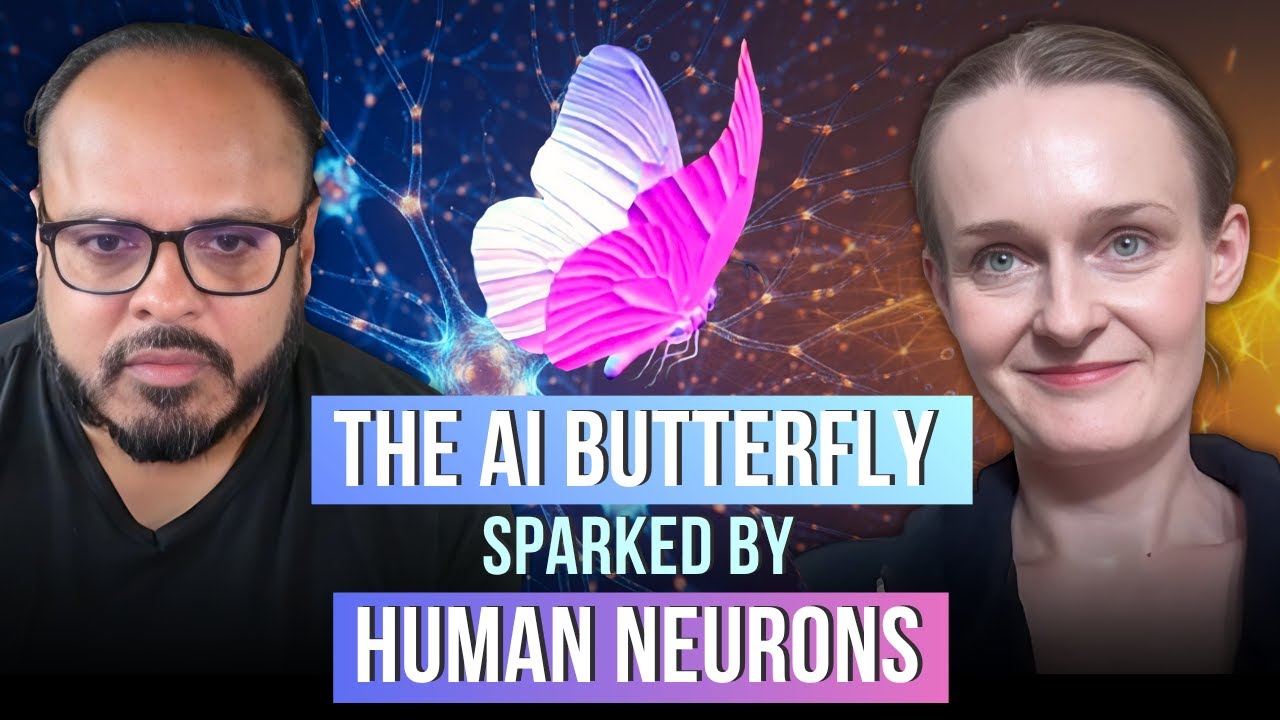
- The Butterfly Demo: A current practical demonstration of the technology is a web application where users can control a digital butterfly. The user’s input via a mouse sends signals to the neurons in the lab. If the neurons’ collective electrical activity surpasses a certain threshold, the butterfly moves, demonstrating a basic level of control and processing by the living neurons.
Commercial Strategy and Growth
Founded in 2014, FinalSpark has been primarily self-funded by its founders. The company is now seeking $50 million in investment to scale its research and development team, which is crucial for solving the complex technical challenges of biocomputing.
The commercial strategy for this deep-tech venture differs from typical SaaS companies. The focus is less on immediate marketing and more on fundamental R&D. The belief is that once the technology works and can offer computational power that is 10 or 100 times cheaper, the value proposition will be so compelling that it won’t require extensive marketing.
Currently, FinalSpark offers remote access to its laboratory as a tool for scientists and clients worldwide. Subscribers can conduct fundamental research on signal processing in neurons, getting familiar with the hardware of the future.
The Future of AI: A Biological Revolution
Dr. Kurtys posits that biocomputing isn’t just an incremental improvement but a “total revolution” for AI. While digital AI sees small, gradual changes, using living neurons represents a complete shift in hardware. This technology is especially promising for applications where processing speed is not the most critical factor, such as generative AI.
It is not expected that biocomputing will completely replace digital silicon chips. Instead, the future will likely feature a greater variety of specialized chips and technologies tailored to different use cases, with bioprocessors occupying a significant role.
Ethical Considerations and Philosophical Questions
The conversation addressed the dystopian concerns that arise from this technology, such as creating a “Matrix scenario” where humans could be harvested for biomatter. While acknowledging these are valid concerns, Dr. Kurtys frames them as philosophical questions that engineers and scientists alone cannot answer. She emphasizes that the goal is pragmatic: to create better, more energy-efficient technology. However, she agrees with the necessity of ensuring that AI is developed responsibly and remains aligned with human interests and objectives, a sentiment shared by many leaders in the field who have signed statements on AI risk.