Are AI Agent Identities Really Unique? AI's Role in Digital Workflows
Grant Miller explores the complex and evolving nature of AI agent identities within organizations, posing five critical questions about their classification, governance, and role alongside human employees.
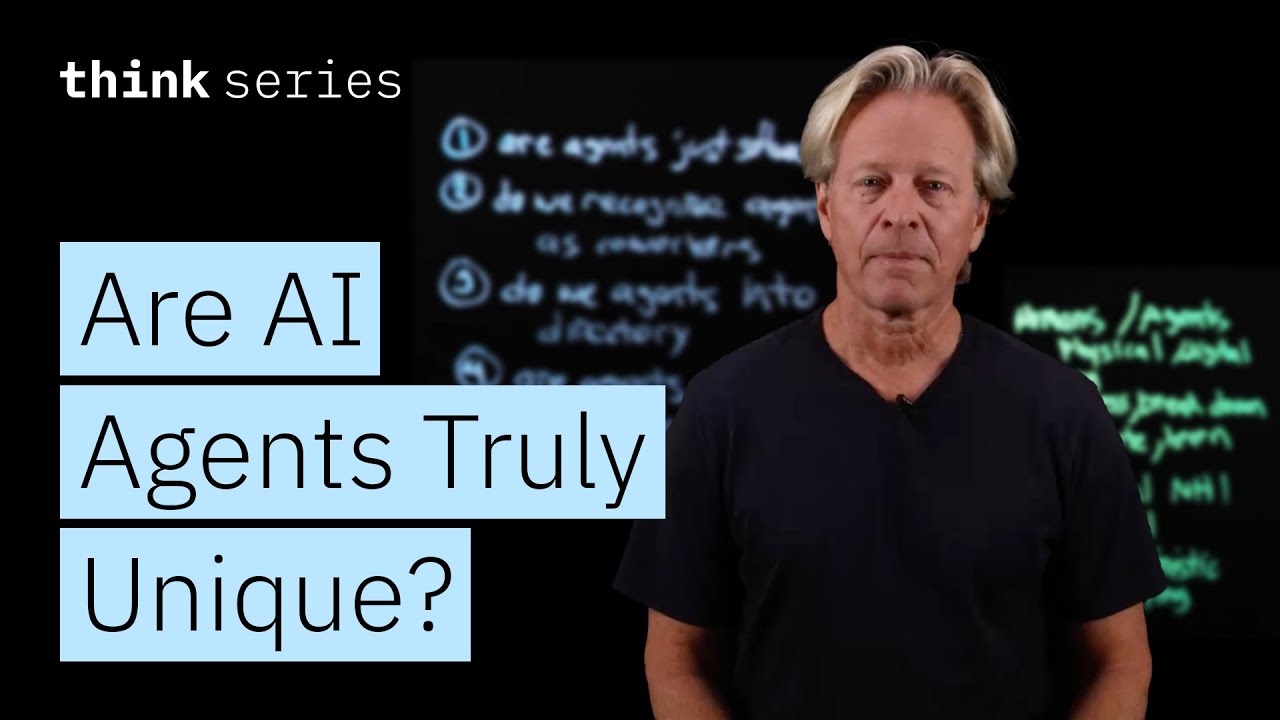
Foundations: Comparing Human, Non-Human, and AI Agent Identities
In modern organizations, identities are managed differently based on their nature. Understanding these distinctions is crucial for contextualizing the role of upcoming AI agents.
-
Human Identities: Possess a physical existence, belong to specific organizational units (departments, business units), and follow a distinct process for performing tasks:
- Assess: Understand the assigned task.
- Break Down: Deconstruct the task into manageable steps.
- Execute: Perform the steps.
- Learn: Reflect on the outcome to improve future performance.
-
Traditional Non-Human Identities (NHIs): These are digital entities, like service accounts or applications. Their task execution is deterministic and unvarying; they perform precisely as programmed without deviation or learning.
-
AI Agents: While digital like NHIs, agents are designed to mimic the human operational flow. They belong to an organization and are engineered to:
- Assess: Analyze a prompt or request.
- Break Down: Orchestrate a flow and determine the necessary steps.
- Execute: Perform the orchestrated flow.
- Learn: Evaluate their performance accuracy and undergo retraining to improve.
This ability to assess, execute, and learn makes agents behave more like humans than traditional software, which raises fundamental questions about their identity and place within the enterprise.
Five Key Questions on the Future of AI Agent Identities
As we integrate these sophisticated agents into our workflows, several unresolved questions emerge regarding their management, role, and governance.
1. Are Agents Just Software?
While technically agents are software running on IT systems, their capacity for learning, assessment, and quasi-autonomous task handling suggests they are more than traditional applications. They are beginning to operate in ways that mirror human cognition. The core question is whether we should treat them with the same governance models as conventional software or if their unique capabilities demand a new classification.
2. Should We Recognize Agents as Coworkers?
If an agent supplements a human team, such as a customer support department, by performing similar or identical tasks, should it be considered a coworker? This is not about granting them HR status but about how we perceive and integrate them into team structures and workflows. When agents function as a virtual extension of a workforce, the line blurs, prompting us to reconsider their role within the organizational hierarchy.
3. Should an Agent Be in the Corporate Directory?
Stemming from the “coworker” concept, this question addresses the practical side of identity management. Should an AI agent have an entry in an enterprise directory like Active Directory? This has significant implications for governance, access control, and security. If agents are performing tasks similar to humans, a directory entry could be a logical step for managing their permissions and entitlements, but it also represents a major shift in identity management paradigms.
4. Are Agents Persistent or Ephemeral?
Unlike a human worker who has a persistent physical existence, an agent is software that can be provisioned and de-provisioned on demand. This raises a strategic question:
- Persistent: Should an agent always be “on” and waiting for a task, consuming IT resources (CPU, network, data) continuously?
- Ephemeral: Should an agent be spun up only when needed to perform a specific task and then spun down?
The choice has direct cost and resource management implications. An ephemeral model might be more efficient, but a persistent one could be necessary for certain real-time functions.
5. Is Our Current Identity Governance and Administration (IGA) System Enough?
The potential scale of AI agents could overwhelm existing IGA frameworks. Projections suggest that the number of agents in an organization could be a significant multiple (from 5x to 45x) of the number of human employees. This explosion in identities would create an immense burden on current governance processes, which are built around human-scale approvals, entitlement reviews, and annual validations. The question is whether our current IGA systems can handle this volume and velocity or if we need a fundamentally new approach to govern a large, potentially ephemeral, digital workforce.