Inside The Startup Launching AI Data Centers Into Space
Starcloud launched the first NVIDIA H100 GPU into orbit, a first step towards building massive AI data centers in space. Their vision is to leverage continuous solar power and zero-water cooling to overcome Earth's energy and resource limitations for large-scale compute.
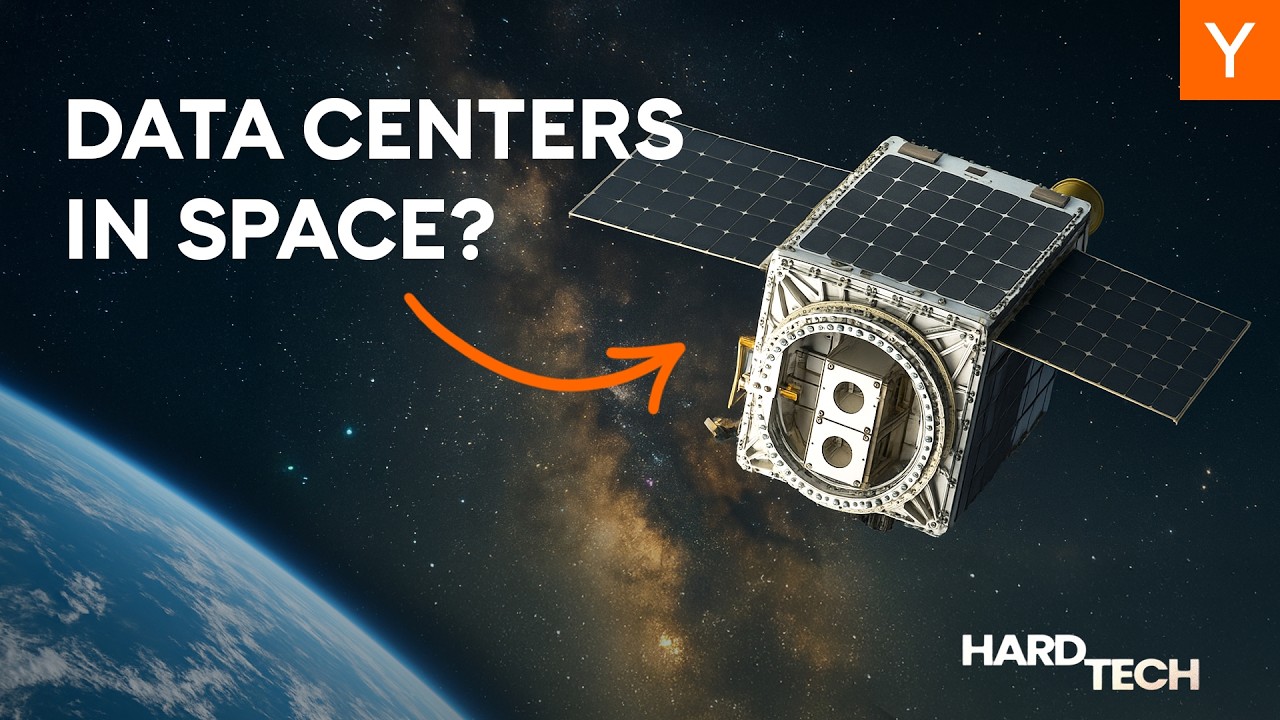
Starcloud is pioneering the development of orbital data centers, aiming to shift the paradigm of large-scale AI compute from Earth to space. The company recently achieved a major milestone by successfully launching a satellite, StarCloud-1, carrying an NVIDIA H100 GPU—the first time a data-center-grade GPU of this power has operated in orbit. This prototype is over 100 times more powerful than any computer previously operated in space and serves as a crucial proof-of-concept for the company’s ambitious vision.
The Terrestrial Constraint Problem
The core motivation behind Starcloud’s mission is the growing unsustainability of Earth-based data centers. The demand for energy driven by AI and general electrification is creating an immense burden on terrestrial power grids. Furthermore, these facilities consume vast quantities of fresh water for cooling, primarily through evaporation. This practice is causing significant environmental strain, depleting rivers and lakes in certain regions. Starcloud’s approach addresses these key limitations:
- Energy: Orbital data centers in a sun-synchronous orbit have access to continuous, uninterrupted solar power.
- Cooling: Instead of water, they use large, deployable radiators to dissipate heat via infrared radiation into deep space, requiring zero fresh water.
- Scalability: Freed from land and grid constraints, the potential for scaling is almost limitless.
The Orbital Solution and Core Technology
Starcloud’s long-term goal is to build massive, 40-megawatt data centers in orbit, each weighing around 100 tons and designed to fit within a single Starship payload bay. By moving the infrastructure to space, they can provide a more efficient and environmentally friendly solution for any compute workload that doesn’t require extremely low latency.
A primary technical challenge, and a point of skepticism from critics, is the dissipation of heat in a vacuum. The solution lies in Starcloud’s core intellectual property: the design and construction of very large, low-cost, and low-mass deployable radiators. Co-founder and CTO Ezra Feilden, who has a PhD in engineering and a decade of experience designing deployable structures for NASA missions, leads this effort.
StarCloud-1: The First Step
The first satellite, StarCloud-1, is a 60kg prototype built to validate the company’s foundational technology in the harsh environment of space. Its primary mission is to prove that Starcloud’s thermal management and radiation-shielding techniques can effectively support state-of-the-art terrestrial hardware. Over the next few months, the team will run a series of demonstrations on the orbiting H100, including:
- Running Google’s Gemini model.
- Fine-tuning a model in space for the first time.
- Training a model from scratch in orbit.
The company’s ability to go from founding to a tested, on-orbit satellite in just 15 months—a process that has taken other startups years—is a testament to the focused execution and complementary expertise of its founding team. Adi Oltean brings 20 years of experience from Microsoft’s data center division and SpaceX, while Ezra Feilden provides deep satellite design expertise.
Company Origins and Future Roadmap
The idea for Starcloud evolved from an analysis of space-based solar power. The founders calculated that beaming solar power from space to Earth would only become economically viable when launch costs fall to approximately $50/kg. They realized that losing 95% of the energy during transmission was the key bottleneck. This led to a pivotal question: “What if instead of sending the power down to Earth, you sent the data centers up?”
This new model proved far more feasible, with a break-even launch cost of around $500/kg—a figure much closer to today’s launch capabilities. After being accepted into Y Combinator on their third attempt, the accelerator encouraged them to pursue this grander vision.
Starcloud is already planning its next mission, scheduled for 2026. This second satellite will be at least 10 times more powerful than the first, featuring NVIDIA’s next-generation Blackwell architecture and high-bandwidth optical terminals for 24/7 connectivity. This is the next step towards a future where, within a decade, most new large-scale data centers could be built in space.