How to Become an Ethical Hacker: Skills, Certifications, & Advice
Cybersecurity experts Jeff Crume and Patrick Fussell outline the essential skills, mindset, certifications, and career paths for aspiring ethical hackers, offering practical advice for breaking into the field of penetration testing and red teaming.
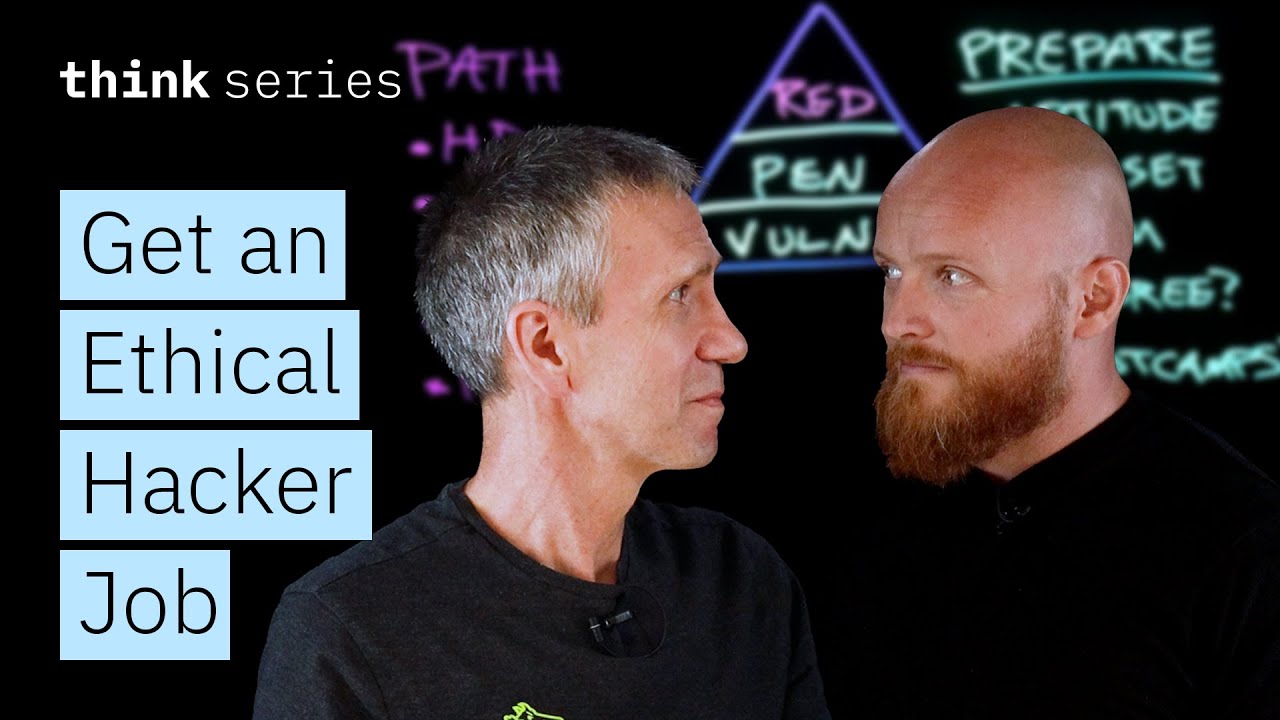
The Path to Becoming an Ethical Hacker
An ethical hacker’s career path is often a journey of continuous specialization. Patrick Fussell, an expert in the field, began his IT career in a college help desk role, which provided a crucial foundation in fundamental computer operations, customer interaction, and understanding system vulnerabilities. This experience sparked an interest in optimizing and improving systems beyond their initial design.
His career progressed through several distinct stages, each adding a deeper layer of specialization:
- Military Service: Provided exposure to DoD information assurance and instilled a mindset of offense and defense, with many cybersecurity concepts and terms being derived from military terminology.
- Security Analyst: This “jack of all trades” role involved a broad range of responsibilities, from vulnerability scanning and analysis to IT audits and risk assessments, serving as a foundational InfoSec position.
- Penetration Tester: Focusing purely on penetration testing, this role allowed for a deeper dive into a specific aspect of ethical hacking.
- RED Teaming: The current role involves adversarial simulation, representing a further specialization built upon years of penetration testing experience. This career progression mirrors a conceptual triangle, moving from broad vulnerability testing to focused penetration testing, and finally to advanced adversarial simulation.
The Hacker’s Mindset and Aptitude
Beyond technical skills, a specific mindset is critical for success in ethical hacking. The ideal candidate is not just playing a game but is a disciplined professional.
- Innate Curiosity: A core trait is an inquisitive nature—the desire to understand how things work by taking them apart and reassembling them in new ways to achieve different objectives. This passion drives the persistence needed to solve complex problems.
- Discipline and Ethics: While the work can be engaging, it requires immense discipline. An ethical hacker must understand and respect boundaries, operating responsibly within legal and ethical limits.
- Teamwork: The stereotype of the “lone wolf” hacker is inaccurate in a professional context. Modern cybersecurity is a team effort. Collaboration is essential for tackling complex challenges and delivering value to clients. You must be able to work with and learn from others on your team.
Education, Certifications, and Building Capability
While there is no single required path, a combination of education, hands-on experience, and certifications is crucial for demonstrating capability to potential employers.
Formal Education vs. Practical Skills
A college degree, particularly in Computer Science, can provide a strong theoretical foundation and a significant advantage. However, it is not a strict requirement. The ultimate measure of a candidate is their ability to “walk the walk”—to demonstrate true, hands-on capability. Alternative paths like bootcamps can teach core skills, but they are most effective when paired with the right aptitude and passion. A degree can also be pursued later in a career to overcome potential glass ceilings.
Key Certifications for an Ethical Hacker
Certifications are a standardized way to validate your knowledge and skills for employers. Different certifications are valuable at various career stages.
-
Foundational Certifications:
- Network+ / CCNA: These demonstrate a core understanding of how networks function, which is a prerequisite for understanding how to exploit or defend them. They show an interest in the underlying technology, not just in hacking.
- Security+: A good entry-level certification that provides the foundational terminology and concepts needed to advance in the field, often serving as a stepping stone towards the CISSP.
-
Specialized Hacking Certifications:
- Certified Ethical Hacker (CEH): A well-known certification that provides a shared knowledge base and language around the tools and methodologies of ethical hacking.
- Offensive Security Certified Professional (OSCP): Highly regarded for its hands-on approach. It requires candidates to prove their practical skills in a live environment, demonstrating a fundamental understanding of exploitation techniques.
- Certified Information Systems Security Professional (CISSP): Considered a “gold standard” in cybersecurity, it is a more advanced certification that requires five years of professional experience and covers a broad range of security concepts.
Career Advice for the Long Term
The field of cybersecurity is constantly evolving, requiring a commitment to continuous growth.
- Be a Lifelong Learner: If you enjoy learning, you are in the right field. If you get comfortable, you will soon be uncomfortable. You must stay curious and continuously update your skills to keep pace with new technologies and threats.
- Anticipate What’s Next: Keep an eye on emerging technologies like AI. Adversaries will leverage these tools for attacks, and defenders must understand them just as well, if not better, to build effective defenses. When you see a new technology emerging, “run to the light” and learn it.
- Never Be the Smartest Person in the Room: Surround yourself with people who are more knowledgeable. This fosters learning, collaboration, and collective growth, reinforcing the importance of teamwork.
- Build Your Network: A job is often found through your professional network. Focus on building credentials and gaining experience through internships. This allows people to observe your work and act as credible references, which is far more effective than simply asking for a job.