Ethical Hacking in Action: Red Teaming, Pen Testing, & Cybersecurity
Explore the core tasks of ethical hacking, from vulnerability scanning to red teaming. This guide covers engagement structure, hacker methodologies, key frameworks like MITRE ATT&CK, and the essential tools for cybersecurity professionals.
The Reality of Ethical Hacking
Contrary to the popular image of a rogue agent causing chaos, the life of an ethical hacker is structured, methodical, and report-driven. The core principle is: “We hack for fun, but we get paid to deliver a report.” The ultimate goal is to work with clients to enhance their security posture by identifying and understanding vulnerabilities. This requires not only a hacker’s mindset but also a strong ethical framework and meticulous documentation.
The Ethical Hacking Pyramid
Ethical hacking activities can be visualized as a pyramid, with each level representing a deeper and more complex form of engagement.
- Vulnerability Scanning: The foundation of the pyramid, this involves automated testing to get a broad overview of all potential vulnerabilities across a system.
- Penetration Testing: This level introduces a skilled tester who uses tools to actively exploit vulnerabilities and understand their real-world impact.
- Adversarial Simulation (Red Teaming): At the apex, red teaming replicates the perspective and actions of a real-world threat actor, testing an organization’s complete defense mechanism—people, processes, and technology.
Structuring an Ethical Hacking Engagement
Every engagement is carefully planned and operates within a defined structure, typically broken down into two main areas: goals and rules of engagement.
1. Goals
- Macro Goals: At a high level, the objective is to help a client understand their ability to detect and prevent a real-world attacker.
- Micro Goals: These are specific, scenario-based objectives tailored to the client. For a bank, a micro-goal might be to simulate a threat actor attempting to transfer funds between accounts. This helps define the scope and methodology of the test.
2. Rules of Engagement
Ethical hackers operate under strict constraints, unlike their malicious counterparts.
- Statement of Work and Time: Engagements are time-bound. A vulnerability scan might take 20-40 hours, a penetration test 40-80 hours, while a full red team simulation could last from two to four months or longer. A significant portion of this time is dedicated to reporting.
- Limitations: Clients often set limitations based on business needs. For example, an e-commerce company would prohibit any activity that could disrupt their systems during a peak holiday season.
- Blue Team Interaction: The engagement defines how the ethical hackers (the Red Team) interact with the client’s internal security team (the Blue Team). In many red team scenarios, the Blue Team is deliberately kept unaware to realistically test their detection and response capabilities.
- Referee Team: A neutral “referee” team, aware of the test, manages the flow of information between the red and blue teams, ensuring the engagement proceeds safely and effectively.
Perspectives: Architect vs. Hacker
Security can be approached from two distinct viewpoints:
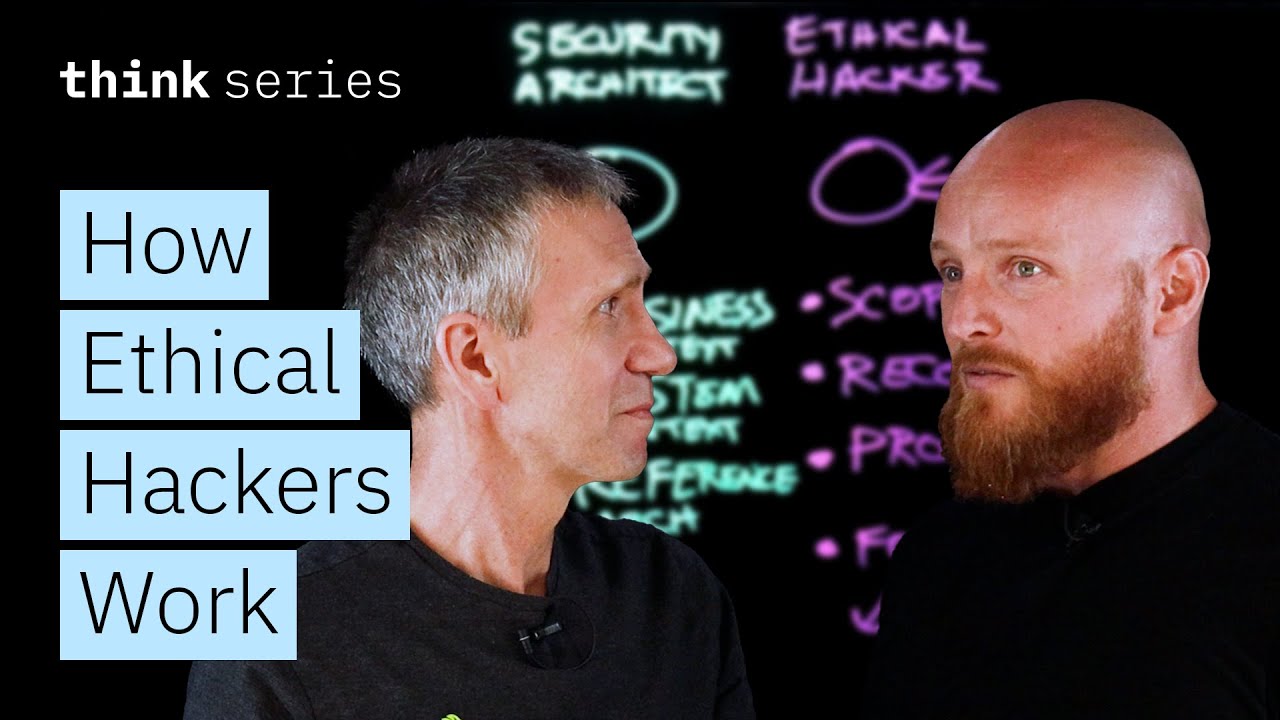
- The Security Architect (Inside-Out): This role focuses on a “whiteboard” approach, analyzing the system from the inside. They use business context diagrams, system diagrams, and reference architectures to conduct a “premortem” analysis, identifying where weaknesses might exist before an attack happens.
- The Ethical Hacker (Outside-In): This role simulates an external attacker. The process begins with reconnaissance—gathering publicly available information from sources like social media, employee review sites (Glassdoor), and even the dark web for leaked credentials. This is followed by active probing to find entry points, with the goal of establishing a foothold inside the target network.
Frameworks and Tools of the Trade
TTPs and the MITRE ATT&CK® Framework
An attack is often described by its TTPs (Techniques, Tactics, and Procedures). The MITRE ATT&CK® framework is a globally accessible knowledge base of adversary tactics and techniques based on real-world observations. It provides a common language for cybersecurity professionals to describe, detect, and defend against threats. For an ethical hacker, it can serve as a checklist to ensure comprehensive testing across various attack categories.
Essential Tools by Specialization
The tools used vary depending on the level of the engagement pyramid.
- Vulnerability Scanning: Automated tools like Nessus and Qualys are industry standards for identifying and classifying vulnerabilities.
- Penetration Testing: Testers use a variety of tools, including network scanners like Nmap (which has been continually developed for decades) and web application proxies like Burp Suite.
- Red Teaming: The tools are often more conceptual. A key concept is Command and Control (C2), which refers to the software and infrastructure used to maintain communication with a compromised system from outside the network. However, some of the most critical tools for a red teamer are surprisingly mundane: PowerPoint and Word. Clear, professional communication and documentation are paramount for conveying findings and progress to the client and referee team.