How Crosby is Building an AI Law Firm on Deal Velocity not Billable Hours
Ryan Daniels and John Sarihan of Crosby discuss their innovative approach of building an AI-first law firm instead of a traditional legal software company. They detail how integrating lawyers and AI engineers creates a unique feedback loop for automating contract negotiations, moving from billable hours to per-document pricing to achieve deal velocity, and their vision for AI agents that can simulate entire negotiations.
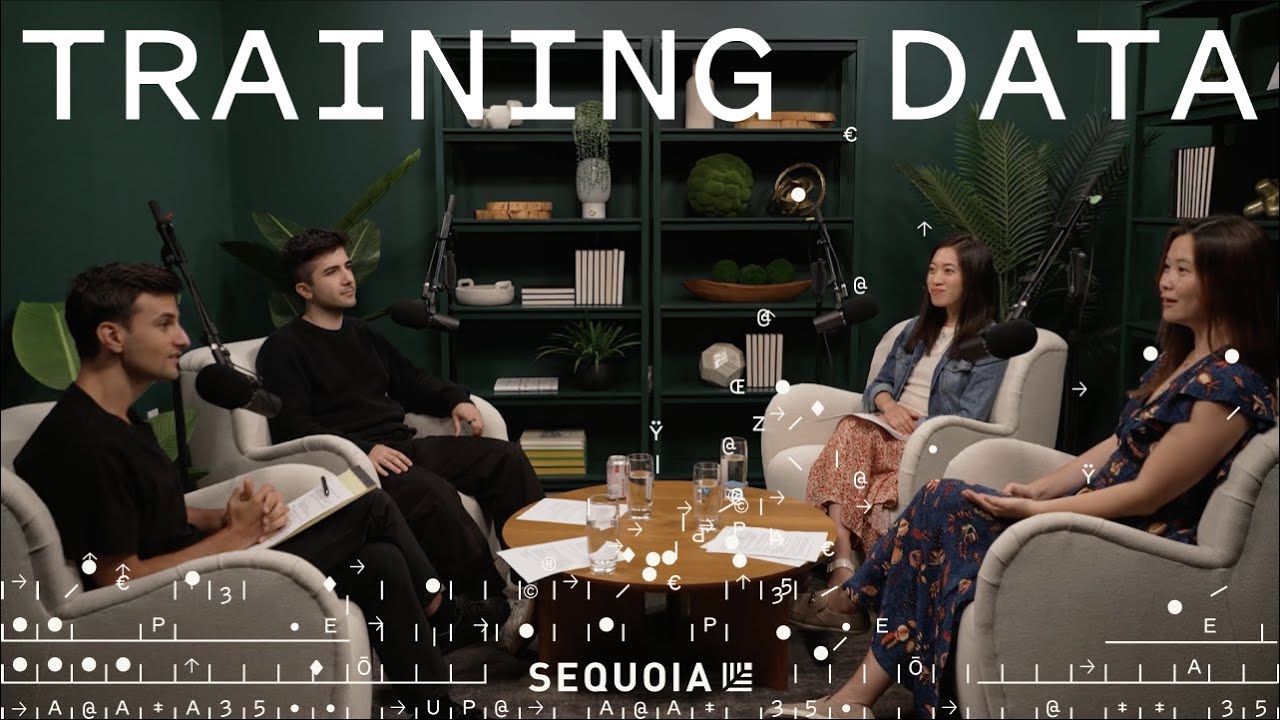
Founders Ryan Daniels and John Sarihan are building Crosby as an AI-first law firm with a focused mission: to automate human negotiations, with contracts being the primary medium. Their core thesis is that by structuring the company as a law firm—rather than a software vendor—they can create a uniquely powerful environment for innovation.
Building a Law Firm, Not Legal Tech
The decision to build a services company was structural and deliberate. Traditional law firm partnerships are not designed to invest in speculative, long-term technology. By creating a new corporate structure, Crosby can pair domain experts (lawyers) directly with engineers, fostering rapid iteration cycles.
This model creates a feedback loop that is far richer than standard software evaluations. With lawyers and engineers sitting side-by-side, the team can instrument every step of the contract review process. They measure metrics like turnaround time and the number of human touchpoints, allowing them to pinpoint the highest-value opportunities for automation.
Furthermore, legal services are what economists call a “credence good”—a service whose quality is difficult for a non-expert to judge. By operating as a law firm, Crosby provides the necessary layer of human expert oversight and assurance, building trust with clients who want the benefits of AI without sacrificing the safety of a lawyer’s review.
The Human-AI Collaboration Model
Crosby’s operational model is designed for maximum collaboration. The current workflow functions as a sophisticated human-in-the-loop system:
- Paralegal Agent: An initial AI agent acts like a paralegal, handling intake and routing contracts to the appropriate human lawyer.
- AI-Assisted Review: AI excels at tasks like summarizing complex contracts and, crucially, generating thoughtful explanations for proposed changes. A well-explained redline is more likely to be accepted by the counterparty, which reduces the number of back-and-forths and accelerates the negotiation.
- Lawyer-Driven Nuance: The lawyers drive the process, intervening on the most complex and nuanced edits. They provide the “taste-based,” visceral judgment that models currently struggle with. For example, AI models may see terms like “reasonable” and “commercially reasonable” as similar in embedding space, but they carry substantively different legal weight.
The long-term vision is to build out a hierarchy of specialized agents that mirror a law firm’s structure, from a junior associate agent to a senior partner agent, each handling progressively more complex tasks.
Rethinking the Legal Business Model
A foundational decision for Crosby was to eliminate the billable hour. This immediately aligns the firm’s incentives with the client’s. Instead, they charge on a per-document basis. This model forces Crosby to become proficient at predicting the complexity and expected duration of a negotiation from the outset.
The primary value proposition for customers like Cursor and Clay is deal velocity. The traditional legal process is a bottleneck in fast-paced sales motions. By reducing contract turnaround times to under an hour, Crosby directly accelerates its clients’ growth. This is achieved not only by speeding up individual reviews but also by strategically predicting which terms to concede and which to contest, thereby minimizing the total number of negotiation turns.
Under the Hood: The AI Stack and Agent Orchestration
The team leverages foundation models from partners like OpenAI, Anthropic, and Google, but recognizes their limitations. General models lack the specific, high-quality data needed for legal contract work, as most of this data is not in the public domain.
The path to higher accuracy involves two key strategies:
- Context Engineering: The most effective way to improve performance is to provide the models—and the human lawyers—with the right context at the right time. This includes business-specific information, details from past negotiations, and the client’s risk profile.
- Per-Customer Fine-Tuning: The founders believe that per-customer fine-tuning and evaluation are high-leverage activities to get from 90% to 99.99% accuracy. Aligning a model to a single, internally consistent lawyer or a specific customer’s playbook is more effective than aligning it to a noisy, generalized dataset where even two expert lawyers might disagree.
This approach has cultivated a culture where lawyers are encouraged to “cook”—they actively write prompts, create detailed process maps, and contribute to the automation of their own workflows.
The Future: Simulated Negotiations and a “Golden Age” for Law
Crosby’s ultimate vision is to have AI agents that can represent each party in a negotiation. These agents, armed with a deep understanding of their respective party’s preferences and risk tolerances, could simulate the entire negotiation process. They would produce an auditable record of the back-and-forth, presenting a nearly-final agreement to the humans as a starting point. The goal is not adversarial, but collaborative—to become the platform that gets parties to an agreement faster.
Looking at the broader legal industry, the founders predict that AI will completely automate the legal work for which the alternative is currently nothing. This includes services for individuals, such as negotiating leases or handling child support payments, a market massively underserved by the current legal system. This represents net-new market creation, not the replacement of corporate lawyers. For existing lawyers, this technology unlocks immense leverage, heralding a “golden age” where they can focus on the most strategic work and serve more clients than ever before.