Block CTO Dhanji Prasanna: Building the AI-First Enterprise with Goose, their Open Source Agent
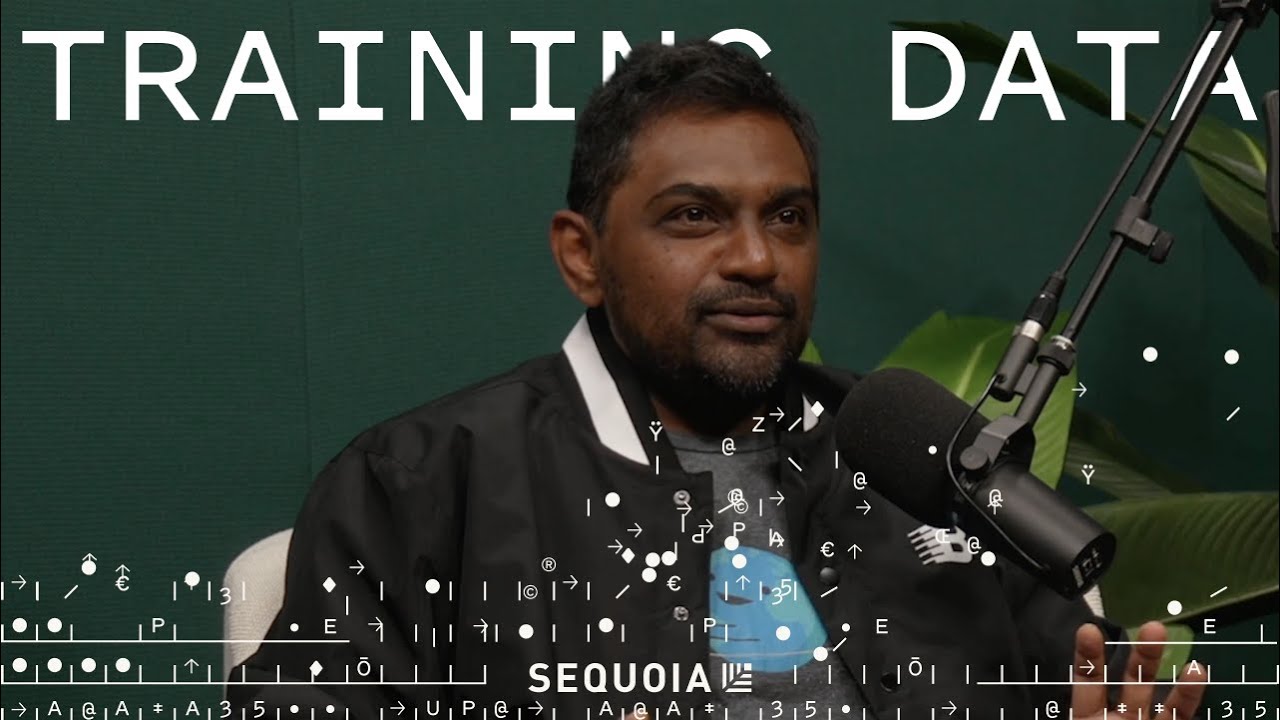
Dhanji Prasanna, CTO of Block, discusses the company's AI transformation, centered on their open-source agent, Goose. He details how Goose leverages the Model Context Protocol (MCP) to automate complex workflows, saving engineers 8-10 hours weekly. Prasanna also explains Block's strategic shift to a functional organizational structure to accelerate AI adoption and shares his vision for the future, where swarms of smaller AI models will outperform today's monolithic LLMs.
Block has always operated as a technology company first, embracing new technologies to better serve customers. AI is viewed not as a threat, but as a powerful new technology to be wielded, much like the company has done with everything from its first card reader to blockchain.
The key distinction from past machine learning efforts, which were traditionally focused on risk, fraud, and spam detection, is the advent of generative AI and deep learning. This shift opens up possibilities across every single vertical and function within the company, moving far beyond classification and clustering.
Organizational Transformation for AI
To accelerate AI adoption, Block progressively unwound its General Manager (GM) structure, which had siloed business units like Square and Cash App. The company transitioned to a centralized, functional organizational structure. This change was crucial for driving engineering and technical excellence, unifying policies, and creating a strong springboard for enterprise-wide AI initiatives. While the GM structure served its purpose in giving business units autonomy and focus in a previous era, the current seismic shifts in technology require deep, singular organizational focus to succeed.
Goose: The Open-Source AI Agent
The core of Block’s internal AI transformation is Goose, a general-purpose, open-source AI agent. It was conceived as the “arms and legs” for an LLM, which is otherwise just a “brain in a jar.” Goose bridges the gap between the generative capabilities of models and the practical, digital systems used every day.
Core Architecture and Philosophy
- Model Context Protocol (MCP): Goose was an early adopter of MCP, a protocol that creates formalized wrappers for existing tools and capabilities. This allows Goose to connect to and orchestrate workflows across all of Block’s systems, from Gmail and Google Docs to Snowflake and Square’s payment APIs.
- Pluggable LLM Providers: Goose is model-agnostic and can use any LLM capable of tool calling. It supports major providers like Anthropic’s Claude family and OpenAI’s GPT models, as well as open-source models. A system called “tool shim” was developed to adapt text-generation-only open-source models for tool use with MCP.
- Learning by Doing: The approach with Goose has been to “not overengineer it.” Rather than building extensive scaffolding to make tools “Goose-friendly,” the team lets Goose learn from doing things. It often figures out how to use tools in surprising and more efficient ways than a human engineer might anticipate. This capability is rapidly improving with each new LLM release.
- Autonomy and Safety: Goose is designed to be autonomous, with an agent loop that allows it to back up and try another approach if it hits an obstacle. For safety, it operates with the same access controls and permissions as the user, limiting its blast radius. It also features a laddered safety structure, from a “human-in-the-loop” mode that requires approval for every action to a fully autonomous mode.
Practical Applications and “Vibe Coding”
Goose is used by both technical and non-technical employees to build software, a practice referred to as “vibe coding.”
- Non-Technical Use Cases: Sales and finance professionals have used Goose to build treasury dashboards and reporting tools. Other creative uses include turning a Figma design into a functioning website and creating a custom travel map application for a trip to Paris.
- Technical Use Cases: The initial version of Jack Dorsey’s decentralized chat application, Bit Chat, was built using Goose. The Goose team itself is a primary user, with the “vast majority” of Goose’s own code being written by Goose.
- Headless Goose: A version of the agent runs in the CI/CD pipeline to automatically find and attempt to fix code vulnerabilities, submitting a pull request for human review.
- Proactive Assistance: In one advanced use case, an engineer has Goose monitoring their communications. The agent proactively develops features discussed in Slack conversations and opens PRs, or automatically reschedules meetings based on calendar and communication context.
Productivity and Impact
Block tracks a primary metric: “manual hours saved by Goose.”
- Engineers currently report saving 8 to 10 hours per week using Goose and other AI tools.
- The company is on track to hit its target of 25% of manual hours saved by the end of the year. The key to unlocking this value has been focusing on automating workflows and eliminating the drudgery—the “work about the work.”
The Future of AI: Swarm Intelligence
The future of AI-driven development may not lie with single, monolithic large language models. A more promising direction is “swarm intelligence”—leveraging hundreds or even thousands of smaller, cheaper, and more specialized models (SLMs) working in concert.
“The competition may not be as open source model X as good as closed model Y, but can you leverage open source model X because it’s small enough and it’s cheap enough to run 50, 60, 500, a thousand copies of? And that accumulated capability is greater than any single large language model.”
This concept, a key research area at Block, could involve hierarchical swarms where a larger model handles high-level planning while smaller models execute specific tasks. It poses the question: “can an infinite number of ants build a spaceship?”
The industry is just beginning the “utility phase” of AI. The companies that will succeed are those that stay the course, focus on applying AI to their core mission, and understand how to unlock real value for their customers.