Tokenless

Interactive discovery

Explore the topic map

Follow the connections between themes, people, and ideas across the Tokenless archive in an interactive topic modeling map.

Machine Learning

View All
Frontier results, on device - RL Nabors, Arize

Frontier results, on device - RL Nabors, Arize

RL Nabors discusses the significant costs associated with using frontier AI models, covering security, latency, and financial implications. She introduces a framework for right-sizing AI solutions by leveraging smaller, task-specific models and Small Language Models (SLMs). The framework details how to prove task feasibility, establish success criteria with golden datasets, conduct capability evaluations (using tools like Phoenix), and select the most appropriate "Small And Good Enough" (SAGE) model. Nabors further demonstrates how prompt engineering, particularly few-shot prompting, and post-processing can close performance gaps with larger models, while advocating for continuous regression evaluations to maintain performance integrity. The overarching message is to "prototype big, deploy small" to optimize AI deployments.

Research to Reality: Bringing Frontier ML Research to Production - Vaidas Razgaitis, Higharc

Research to Reality: Bringing Frontier ML Research to Production - Vaidas Razgaitis, Higharc

Vaidas Razgaitis, Senior Research Engineer at Higharc, shares three tactical tips to accelerate the transition of novel AI/ML research into production-ready features. He emphasizes addressing the critical handoff challenge between ML researchers and software engineers through structured documentation (Research Prototype Taxonomy Document), a well-organized monorepo utilizing decoupled microservices, and a systematic approach to code decomposition and PR review. These strategies aim to improve legibility, maintainability, and delivery speed for ML-driven products.

Uncertainty-Guided Data Augmentation for Engineers | Deep Dive - Yongmin Kwon

Uncertainty-Guided Data Augmentation for Engineers | Deep Dive - Yongmin Kwon

This session details a data-efficient method for training engineering surrogate models by using uncertainty quantification (UQ) to guide geometric data augmentation. Instead of random deformations, the approach lets the deep ensemble model identify its own knowledge gaps (epistemic uncertainty), then uses Free-Form Deformation (FFD) to generate new shapes specifically in those uncertain regions. This ensures every expensive simulation run yields maximally informative data, significantly improving model accuracy for a fixed computational budget across domains like structural mechanics and aerodynamics.

Artificial Intelligence

View All
How Nuclear Will Unlock Energy Abundance with Valar Atomics Founder Isaiah Taylor

How Nuclear Will Unlock Energy Abundance with Valar Atomics Founder Isaiah Taylor

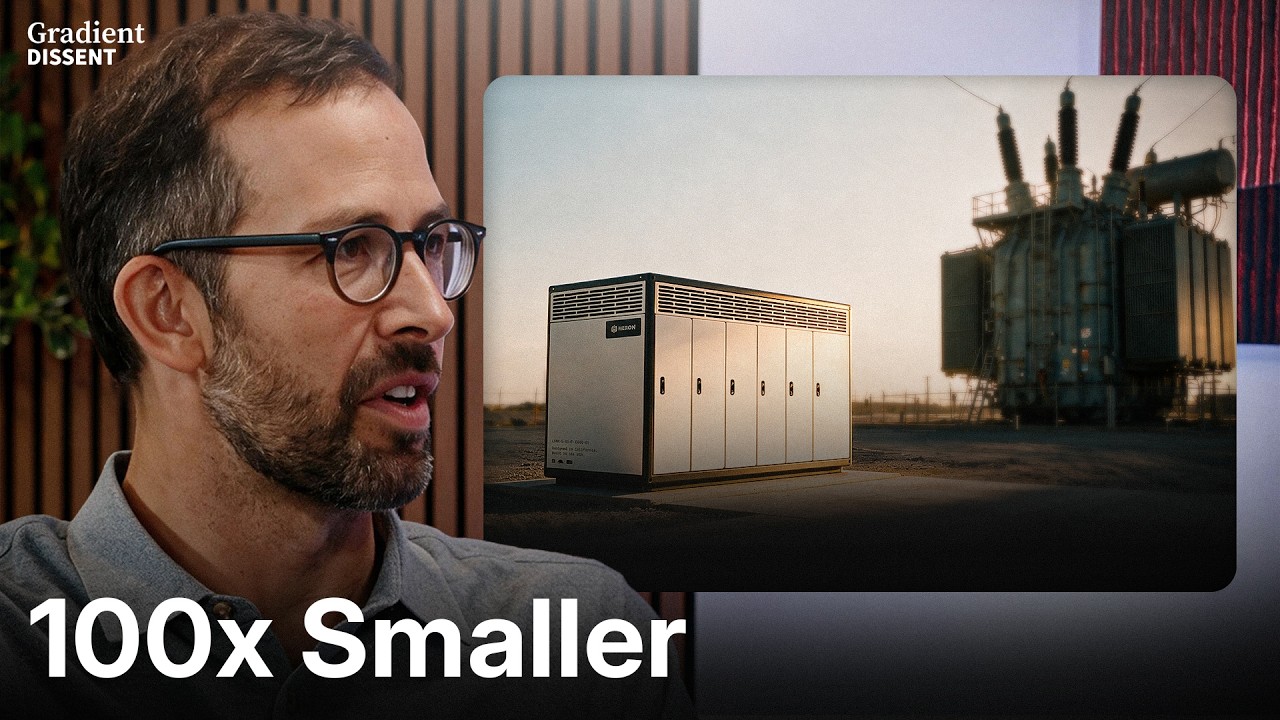
Valar Atomics founder Isaiah Taylor discusses how his company is rapidly advancing nuclear energy through hardware iteration, manufacturing, and a unique regulatory pathway. He explains their intrinsic safety philosophy, the strategic importance of vertical integration for speed and cost reduction, and their venture-backed approach to building gigasites. Taylor highlights how the demand for AI compute is a major driver for nuclear, showcasing their direct powering of an NVIDIA Blackwell chip, and casts a compelling vision for a future of "hyper-technoindustrialism" enabled by abundant, cheap atomic energy.

The Platform Engineer’s Handbook • Ajay Chankramath & Kaspar von Grünberg • GOTO 2026

The Platform Engineer’s Handbook • Ajay Chankramath & Kaspar von Grünberg • GOTO 2026

This conversation with Ajay Chankramath, author of 'The Platform Engineer’s Handbook,' delves into why practical, code-first guidance is essential for building Internal Developer Platforms. He argues that developer adoption failures stem from a "product discipline gap," not a technology one, emphasizing developer experience as a first-class outcome. The discussion covers the book's arc from foundations to enterprise-grade features and its focus on 100% open-source, vendor-agnostic tooling. Crucially, it highlights how agentic AI raises the stakes for platform engineering, requiring new IDP layers for agent context, memory, and guardrails, asserting that these must be built, owned, and operated internally for safe and productive AI adoption.

Ex-Google Cloud AI Boss: Your Data Is the Real Moat

Ex-Google Cloud AI Boss: Your Data Is the Real Moat

Andrew Moore, CEO of Lovelace AI, discusses YottaGraph, a rapidly growing, automatically constructed knowledge graph designed as a context engine for enterprise AI agents. He highlights Lovelace's differentiation from public knowledge graphs by focusing on integrating private enterprise data, the engineering challenges of entity resolution and fast multi-hop reasoning, and the critical importance of graph amendability and auditability for mission-critical applications. Moore also touches upon the future of computer science education, advocating for product management skills and emphasizing the strategic importance of domestically developed open-weights models.

Technology

View All
Are Your Tests Slowing You Down? • Trisha Gee • GOTO 2025

Are Your Tests Slowing You Down? • Trisha Gee • GOTO 2025

Trisha Gee delivers a compelling talk on Developer Productivity Engineering (DPE) for testing, dissecting common pain points in writing, troubleshooting, and running tests. She advocates for strategic use of IDEs, advanced tooling like build caches and predictive test selection (leveraging ML), and a disciplined approach to test design to overcome these challenges, emphasizing that good tests serve as crucial living documentation.

The new post-quantum cryptography executive order. Plus: What is Q-Day, really?

The new post-quantum cryptography executive order. Plus: What is Q-Day, really?

This episode delves into Q-Day, the anticipated future when quantum computers can break public key cryptography, and the U.S. Executive Order accelerating the transition to post-quantum cryptography. Experts discuss why Q-Day is a gradual process rather than a sudden event, the critical importance of "crypto-agility" as a long-term strategy, and the necessity for organizations to begin immediate discovery and planning to secure data against "collect now, decrypt later" threats. The discussion also touches upon the broader, transformative benefits of quantum computing beyond just security.

Plenary Talk 3​: Challenges and research opportunities for global hyperscale services

Plenary Talk 3​: Challenges and research opportunities for global hyperscale services

Jim Kleewein's talk outlines the immense challenges and critical research opportunities in building and operating global hyperscale services like Microsoft 365 and Azure. He emphasizes that at this scale, traditional approaches fail, necessitating a "new golden age of applied research" across areas like continuous availability, data management, security, and sustainability. Kleewein also discusses AI's powerful but limited role, stressing the ongoing need for human expertise, and highlights the ethical imperative to prevent failures that can have life-or-death consequences.


Recent Post

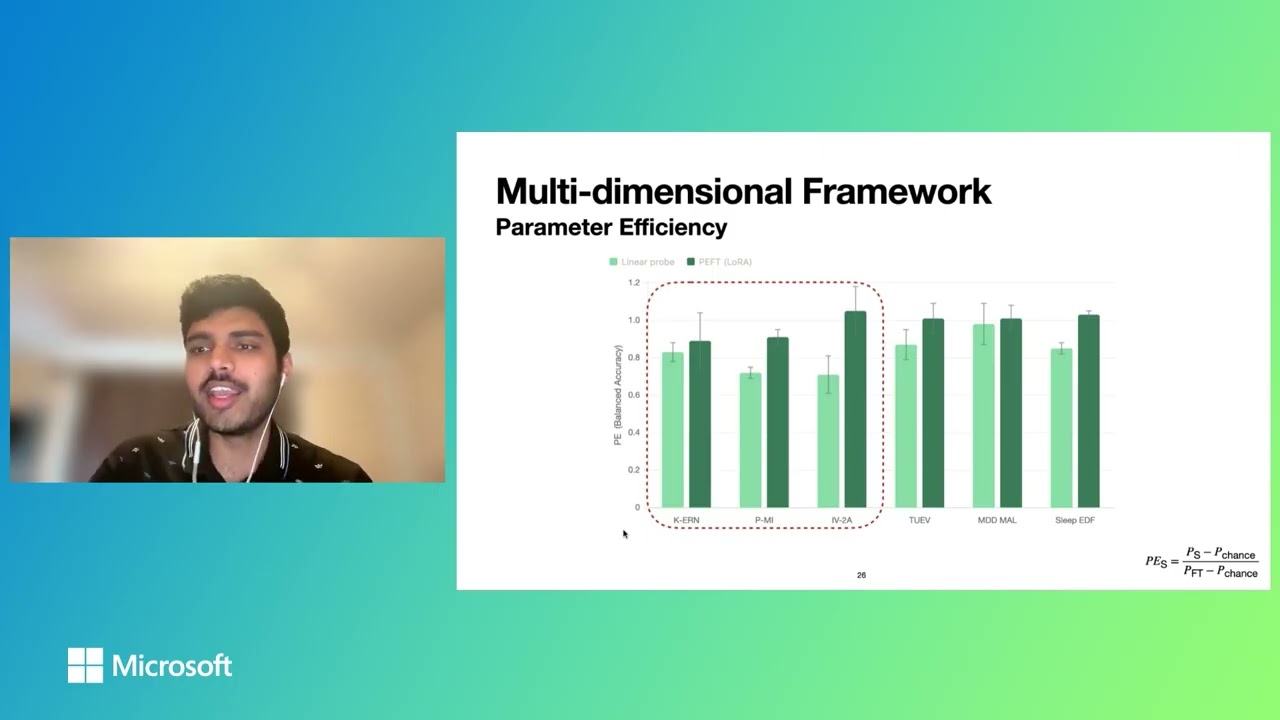
Fuzzy Extractors are Practical

Fuzzy Extractors are Practical

Amey Shukla from the University of Connecticut presents a novel system for biometric key derivation that closes the long-standing gap between the theory and practice of device-level authentication. The talk introduces a practical fuzzy extractor system, "Zeta then Lock," which, combined with an integrated machine learning feature extractor, achieves 105 bits of entropy with a 92% true accept rate for iris biometrics, overcoming the "more errors than entropy" problem that plagued previous designs.

The AI Space Podcast-Live!: 2026 AI Market Outlook & Playbook | Panel Discussion + Q&A | Dallas, TX

The AI Space Podcast-Live!: 2026 AI Market Outlook & Playbook | Panel Discussion + Q&A | Dallas, TX

In this live podcast episode, a panel of AI founders and investors unpacks the '2026 AI Market Outlook & Playbook.' They share practical strategies for startups to achieve real-world traction, focusing on the shift from experimental AI to outcome-driven agentic systems. Key topics include building multimodal experiences, the importance of a proprietary 'validation layer,' mastering customer pain points for growth, and the ethical responsibility of building the next generation of AI.

Building Agentic AI systems with AWS Serverless • Uma Ramadoss • GOTO 2025

Building Agentic AI systems with AWS Serverless • Uma Ramadoss • GOTO 2025

Uma Ramadoss from AWS explains the core concepts of Agentic AI, differentiating it from standard AI workflows. The session covers how to build agentic systems on AWS using services like Bedrock and Step Functions, and open-source frameworks like Strands SDK, emphasizing practical architecture, context enrichment, and the importance of verification.

AlphaGenome author roundtable

AlphaGenome author roundtable

A summary of the Google DeepMind team's discussion on AlphaGenome, their unified DNA sequence-to-function model. It covers the scientific motivation, the engineering breakthroughs in processing long DNA sequences at high resolution, the addition of complex biological modalities like splicing and contact maps, and the future direction of the research.

The newest AI malware vs. 40 years of hacker culture

The newest AI malware vs. 40 years of hacker culture

A discussion on the diverging priorities of CEOs and CISOs, the emergence of AI-generated malware like VoidLink, the critical balance between data protection and service resilience, strategies for disrupting cybercrime supply chains, and a reflection on the 40-year-old "Hacker Manifesto".

Beyond AI implementation: Introducing JDLA's initiatives

Beyond AI implementation: Introducing JDLA's initiatives

This presentation by the Japan Deep Learning Association (JDLA) details Japan's strategy for accelerating AI adoption. It covers the government's strong pro-AI stance driven by demographic challenges, the critical need for corporate AI governance, and the rise of physical AI in robotics. JDLA's core initiatives are highlighted, including the G- and E-Certificate programs for talent development, which are increasingly becoming corporate standards, and the establishment of the AI Robot Association (AIROA) to build a foundational data infrastructure for robotics.

Stay In The Loop! Subscribe to Our Newsletter.

Get updates straight to your inbox. No spam, just useful content.