Tokenless

Interactive discovery

Explore the topic map

Follow the connections between themes, people, and ideas across the Tokenless archive in an interactive topic modeling map.

Machine Learning

View All
Guardians of the State: An Air-Gapped AI Fortress for Consumer Data — Rachna Srivastava, DFPI

Guardians of the State: An Air-Gapped AI Fortress for Consumer Data — Rachna Srivastava, DFPI

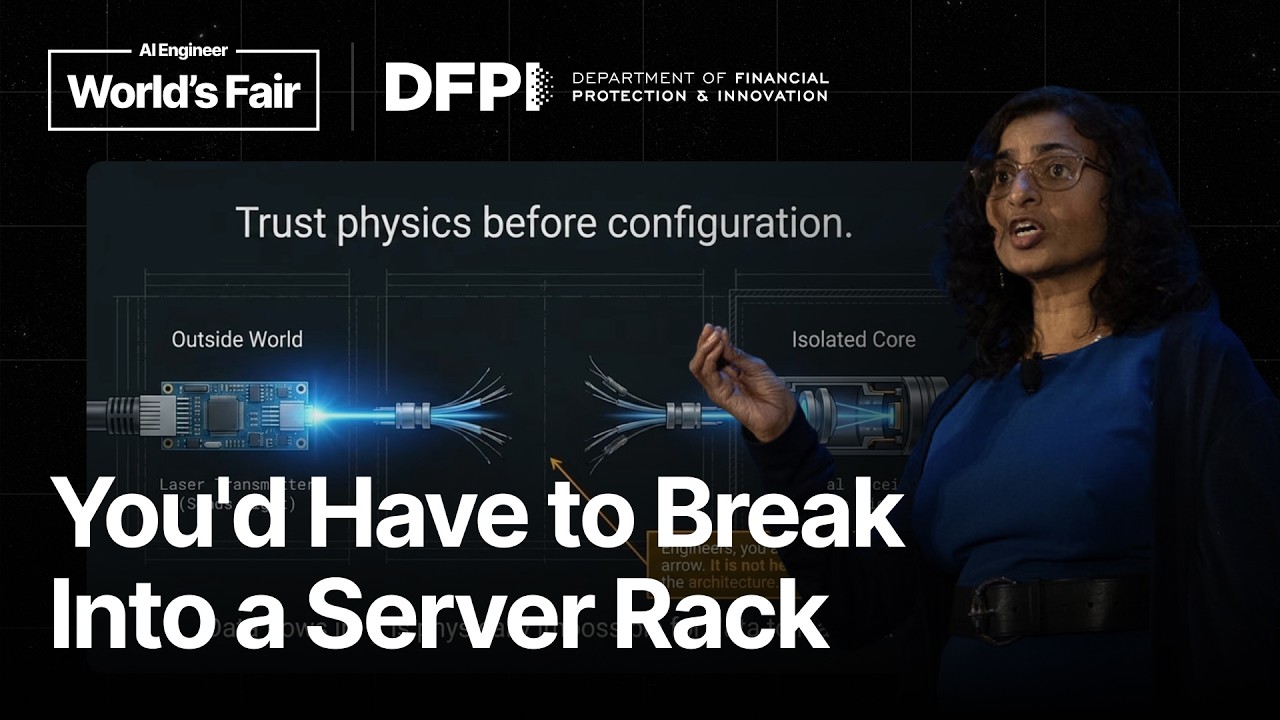
Rachna Srivastava discusses building a legally defensible AI system for financial fraud detection, emphasizing that generative AI has eroded traditional trust. Her team at DFPI engineered an offline, hardware-secured data pipeline using Kafka, Spark, and semantic routing to ensure explainability, reproducibility, and auditability. They implemented a one-way data diode for secure learning and Apache Iceberg for time-travel queries, asserting that "trust is a physical property" built into the system's core.
Invited Research Talk: Measuring Generalization in EEG Foundation Models

Invited Research Talk: Measuring Generalization in EEG Foundation Models

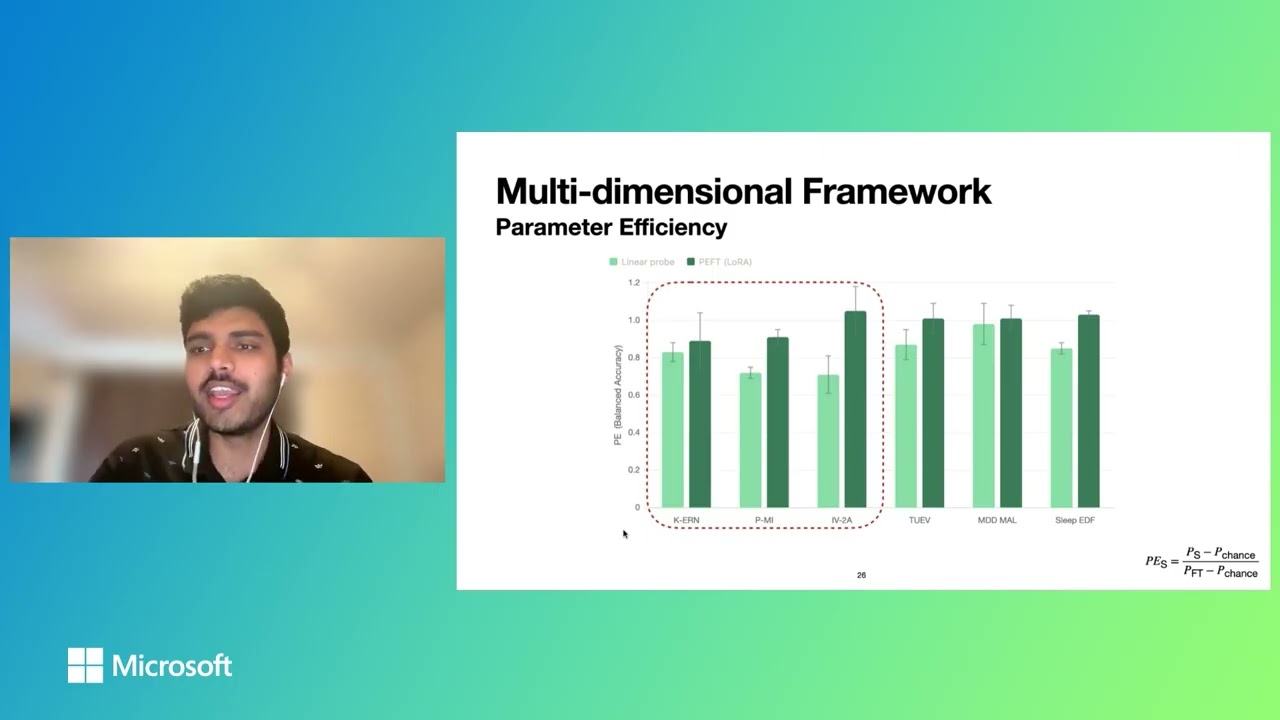
This talk presents a multi-dimensional evaluation and interpretability framework for EEG foundation models. It reveals that current models often fail to outperform supervised baselines for BCI tasks, lack robustness to sparse channels, and exhibit an aperiodic low-frequency bias, making them better at capturing subject-specific rather than task-specific information. The analysis highlights critical deficiencies and suggests future directions for pre-training objectives and data collection to improve generalization.

Can LLMs Write Fast Multi-GPU Kernels? — Simran Arora, Together AI

Can LLMs Write Fast Multi-GPU Kernels? — Simran Arora, Together AI

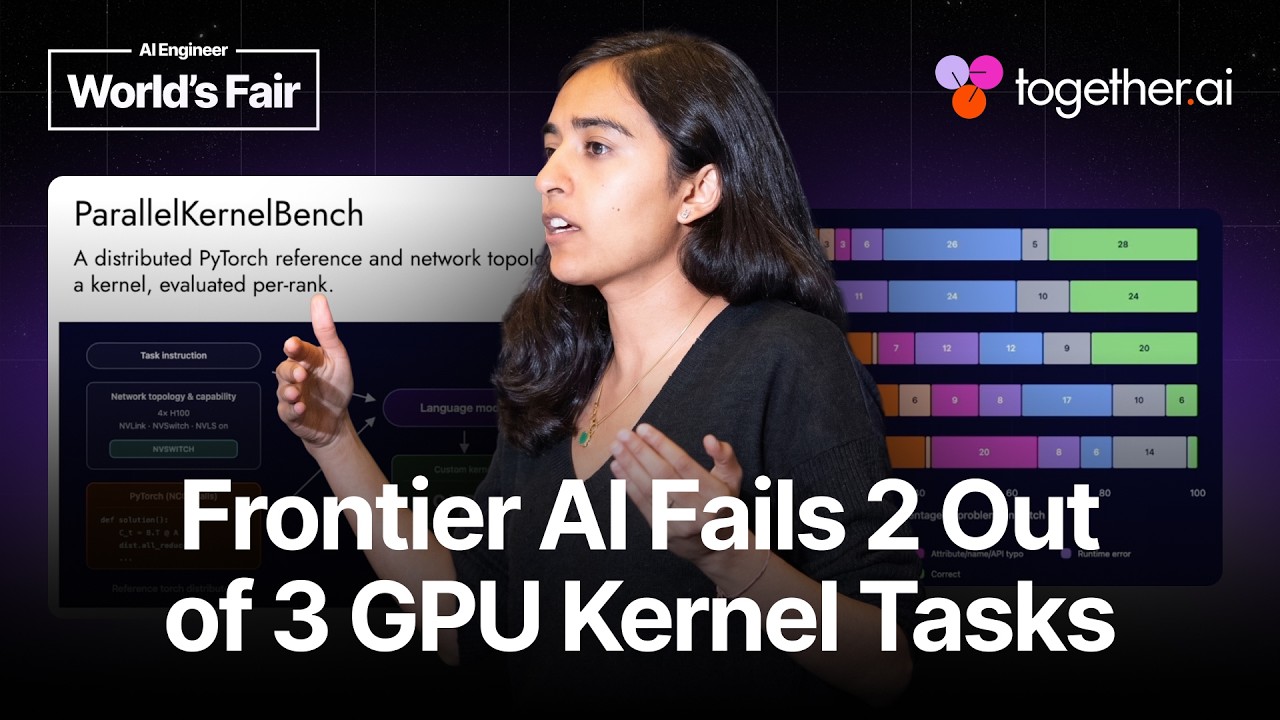
Simran Arora discusses the critical bottleneck shift in large AI workloads from GPU compute to inter-GPU communication. Her team's solution, ParallelKittens, offers a set of primitives to optimize multi-GPU kernels by leveraging fundamental transfer mechanisms and compute-communication overlapping. They introduce ParallelKernelBench, a benchmark to evaluate AI models' ability to generate such kernels, revealing that while models can handle syntax, they struggle with deeper reasoning about communication patterns and hardware trade-offs.

Artificial Intelligence

View All
AI-Native Organisations Run on Skills: How to Structure and Scale Them — Imad Touil, QuantumBlack

AI-Native Organisations Run on Skills: How to Structure and Scale Them — Imad Touil, QuantumBlack

Imad Touil explores the critical need for governing AI skills within organizations, asserting that skills represent the true repository of enterprise know-how. He contrasts simplified coding agent loops with complex, real-world product lifecycles, demonstrating how ungoverned skills lead to technical debt—including duplication, quality degradation, security risks, and lack of discoverability. Proposing a microservices-inspired approach, Touil outlines a centralized skills platform and human-led governance model essential for achieving deterministic workflows, boosting productivity, and mitigating risks in AI-native enterprises.

Your Code Has Bugs. Lean4 Has Proofs: Formal Verification for Engineers — Varun Pant, AWS

Your Code Has Bugs. Lean4 Has Proofs: Formal Verification for Engineers — Varun Pant, AWS

Varun Pant introduces formal verification as the solution to reliably validate AI-generated code, proposing a division where humans define specifications and machines handle code and proof. He details Lean's role as a unified language for code and proof, exemplified by an AI rewriting zlib with 32,000 lines of proof, and AWS's Cedar using Lean specs with Rust production code reconciled by 100 million nightly tests. The talk also covers deductive verification with solvers and future cross-language verification with Strata, aiming for "provably correct" software.

How to Get Your Org to Adopt Coding Agents (Without Shipping Garbage) — Eyal Blum, Figma

How to Get Your Org to Adopt Coding Agents (Without Shipping Garbage) — Eyal Blum, Figma

Figma's internal AI agent adoption journey faces challenges like reduced developer agency, skepticism from senior engineers, and communication inefficiency. Solutions include investing in verification, using a testing pyramid for agent review, prioritizing detailed planning over prompting, engaging skeptics to build AI safety roadmaps, and implementing attention-aware communication by clearly marking AI-generated content.

Technology

View All
Platform Engineering for Developers, Architects & the Rest of Us • Daniel Bryant • GOTO 2025

Platform Engineering for Developers, Architects & the Rest of Us • Daniel Bryant • GOTO 2025

Daniel Bryant discusses platform engineering for software developers and architects, emphasizing treating platforms as internal products with developers as customers. He outlines a three-layered architecture, the evolution from monolithic systems to microservices, and the importance of 'golden bricks' over 'golden paths' for composability. Key takeaways include API-first design, minimizing cognitive load, avoiding leaky abstractions, and measuring success through frameworks like DORA and DevEx to achieve speed, safety, and scale.

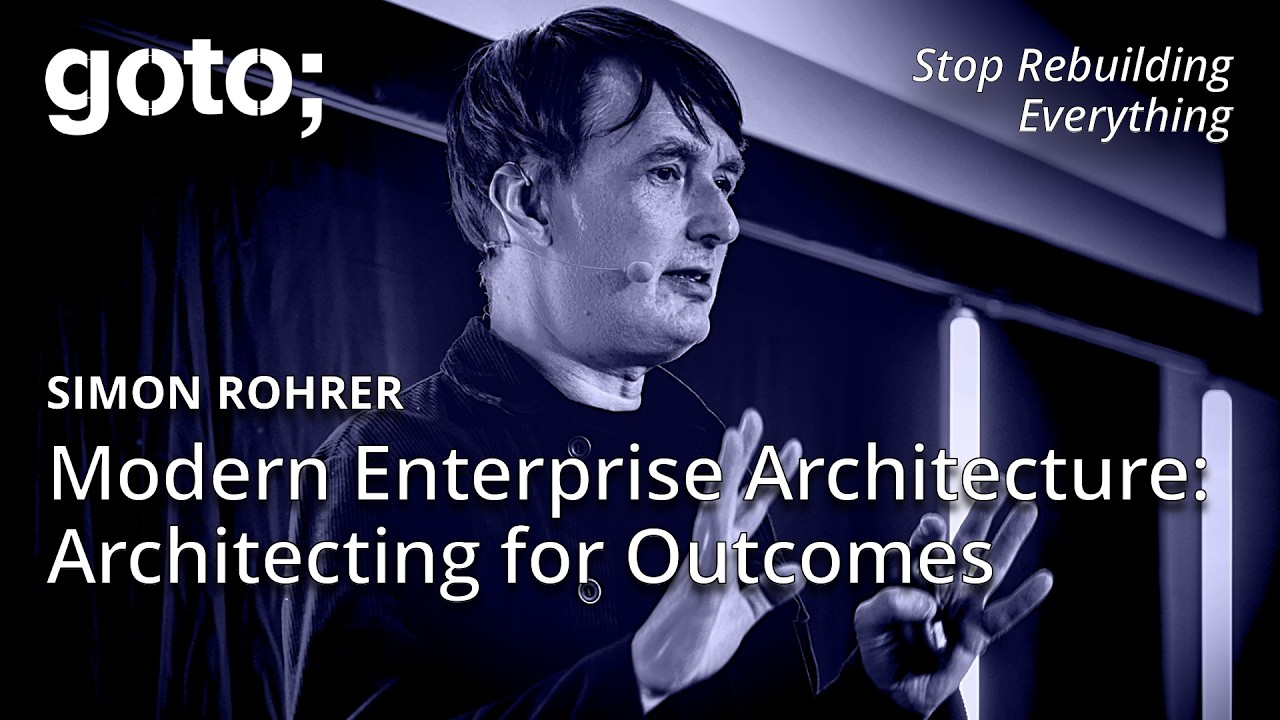
Modern Enterprise Architecture: Architecting for Outcomes • Simon Rohrer • GOTO 2025

Modern Enterprise Architecture: Architecting for Outcomes • Simon Rohrer • GOTO 2025

Simon Rohrer challenges traditional Enterprise Architecture (EA) principles, proposing a modern approach focused on outcomes, continuous evolution, and socio-technical alignment. He outlines five key tenets: Aligning Value, People & Technology; achieving Better Value Sooner, Safer, Happier; implementing Continuous Conversational & Automated Governance; scaling DevOps across the enterprise; and fostering Evolutionary Enterprise Architecture.

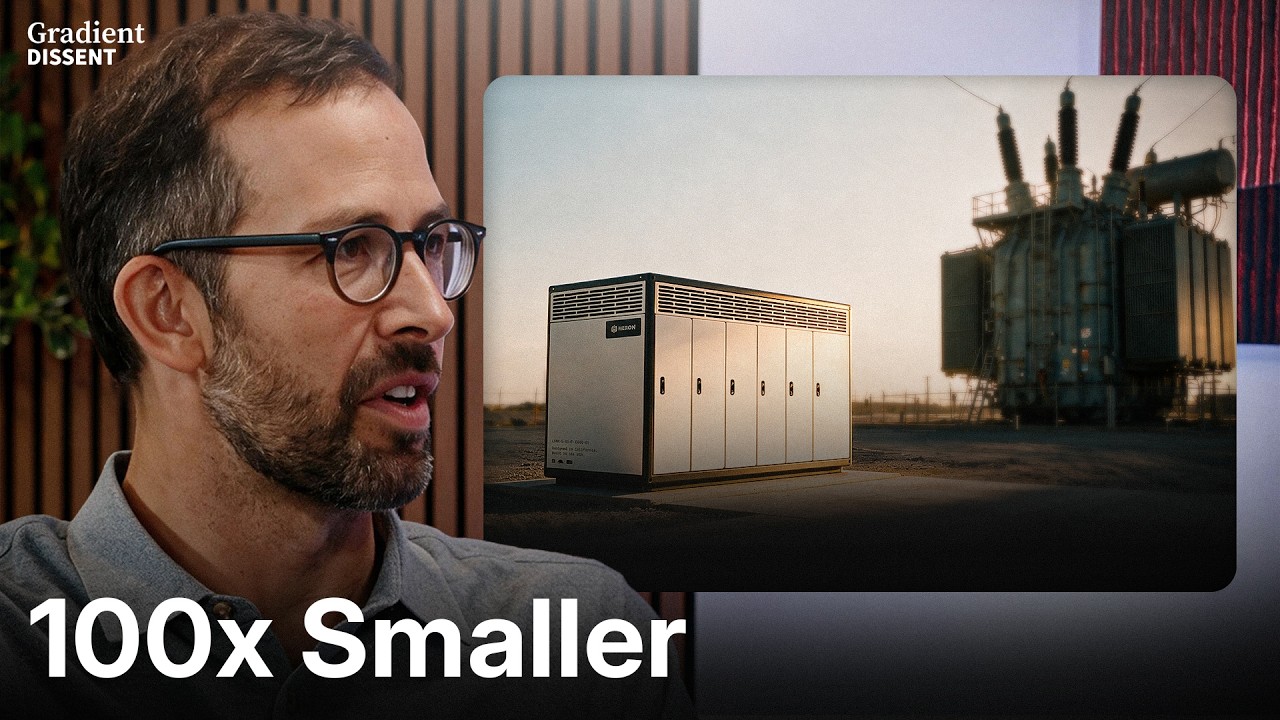
Elon's Former Battery Chief on Making Transformers 100x Smaller | Drew Baglino, Heron Power

Elon's Former Battery Chief on Making Transformers 100x Smaller | Drew Baglino, Heron Power

Drew Baglino, former Tesla Powertrain & Energy head and now CEO of Heron Power, reveals why the current electricity grid is inadequate for the explosive growth of AI data centers. He explains how Heron Power's wideband gap power semiconductors will revolutionize grid-to-chip infrastructure, cutting power losses by half, shrinking massive transformers by 100x, and transforming data centers into grid-positive assets for a more efficient and sustainable energy future.


Recent Post

Scaling and the Road to Human-Level AI | Anthropic Co-founder Jared Kaplan

Scaling and the Road to Human-Level AI | Anthropic Co-founder Jared Kaplan

Jared Kaplan, co-founder of Anthropic, explains how the discovery of predictable, physics-like scaling laws in AI training provides a clear roadmap for progress. He details the two main phases of model training (pre-training and RL), discusses how scaling compute predictably unlocks longer-horizon task capabilities, and outlines the remaining challenges—memory, nuanced oversight, and organizational knowledge—on the path to human-level AI.

Privacy-First Research with OpenSAFELY • Eli Holderness & Hannes Lowette

Privacy-First Research with OpenSAFELY • Eli Holderness & Hannes Lowette

OpenSAFELY offers a new paradigm for medical research by bringing analysis code to sensitive patient data, rather than exporting the data itself. This interview explores its secure, privacy-preserving platform, its custom DSL `ehrql`, and how this model enforces reproducible, hypothesis-driven science while navigating the complexities of real-world clinical data.

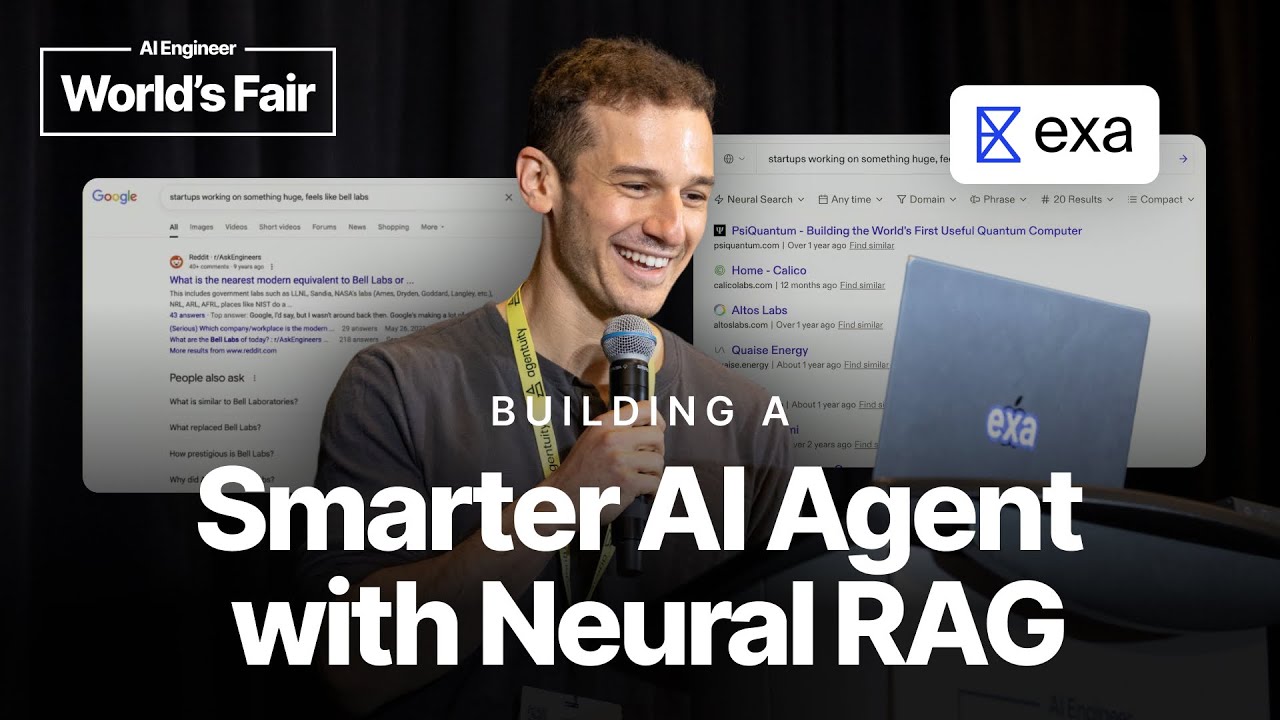
Building a Smarter AI Agent with Neural RAG - Will Bryk, Exa.ai

Building a Smarter AI Agent with Neural RAG - Will Bryk, Exa.ai

Will Bryk, CEO of Exa, explains why traditional keyword-based search is insufficient for AI agents and introduces a new paradigm of neural, semantic search. He demonstrates how a hybrid approach, combining neural for discovery and keyword for precision, enables AI agents to perform complex, multi-step information retrieval tasks that were previously impossible.

909: Causal AI — with Dr. Robert Usazuwa Ness

909: Causal AI — with Dr. Robert Usazuwa Ness

Researcher Robert Ness discusses the practical implementation of Causal AI, distinguishing it from correlation-based machine learning. He covers the essential role of assumptions about the data-generating process, key Python libraries like DoWhy and Pyro, the intersection with LLMs, and a step-by-step workflow for tackling causal problems.

[Full Workshop] Building Metrics that actually work — David Karam, Pi Labs (fmr Google Search)

[Full Workshop] Building Metrics that actually work — David Karam, Pi Labs (fmr Google Search)

This workshop, led by former Google product directors, introduces a methodology for building reliable and tunable evaluation metrics for LLM applications. It details how to create granular 'scoring systems' that break down complex evaluations into simple, objective signals, and then use these systems for model comparison, prompt optimization, and online reinforcement learning.

How I became a StoryTeller (and how YOU can too)

How I became a StoryTeller (and how YOU can too)

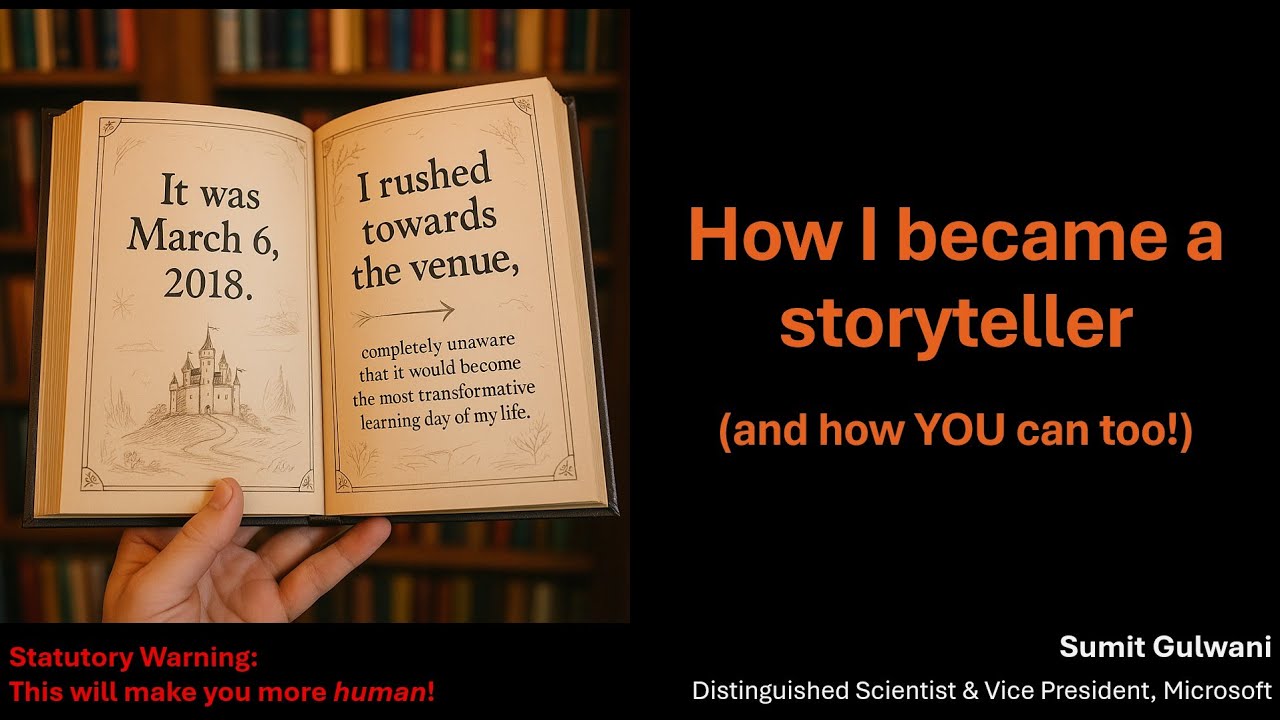
Distinguished Scientist Sumit Gulwani shares his personal journey from a skeptical researcher to a passionate advocate for storytelling, revealing how narratives built on human connection are more powerful than statistics. He breaks down the science behind why stories work and provides a toolkit of practical techniques—from crafting a strong start to knowing your audience—to help technical professionals transform their communication, research, and even their lives.

Stay In The Loop! Subscribe to Our Newsletter.

Get updates straight to your inbox. No spam, just useful content.