Tokenless

Interactive discovery

Explore the topic map

Follow the connections between themes, people, and ideas across the Tokenless archive in an interactive topic modeling map.

Machine Learning

View All
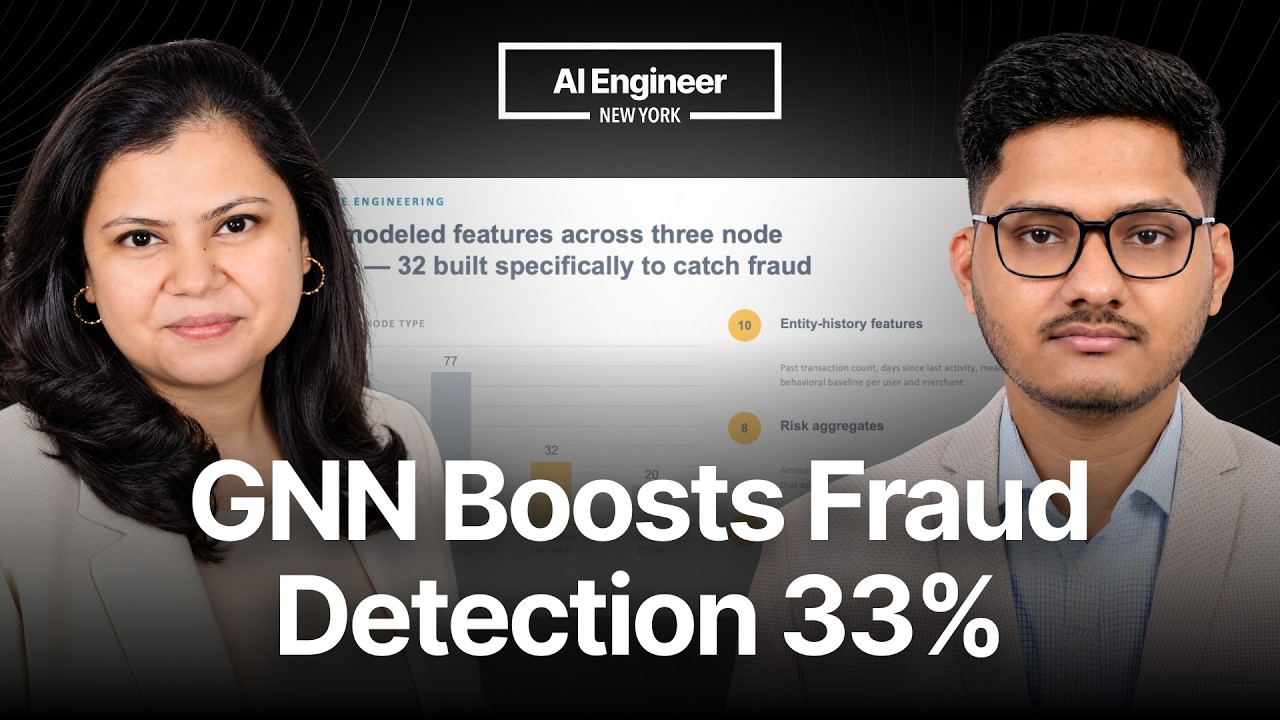
Judge a Transaction by the Company It Keeps — Somya Rai & MD Sharique, EXL

Judge a Transaction by the Company It Keeps — Somya Rai & MD Sharique, EXL

EXL developed an advanced fraud detection system that augments XGBoost with Graph Neural Network (GNN) embeddings. Traditional tabular models struggle to capture fraud signals residing in transaction neighborhoods. The system's innovative design includes meticulous sampling strategies, disjoint monthly graph construction for leakage control, and a GraphSAGE architecture that aggregates mean, max, and standard deviation of neighbor features to detect subtle fraud patterns. Emphasizing explainability for regulatory compliance and analyst trust, it also features a highly optimized serving architecture achieving 3ms P99 latency, pivoting to edge prediction to reduce cache footprint from 60GB to 2-3GB. This led to a 27-33% relative lift in true positive rates and a projected $65 million incremental fraud capture.
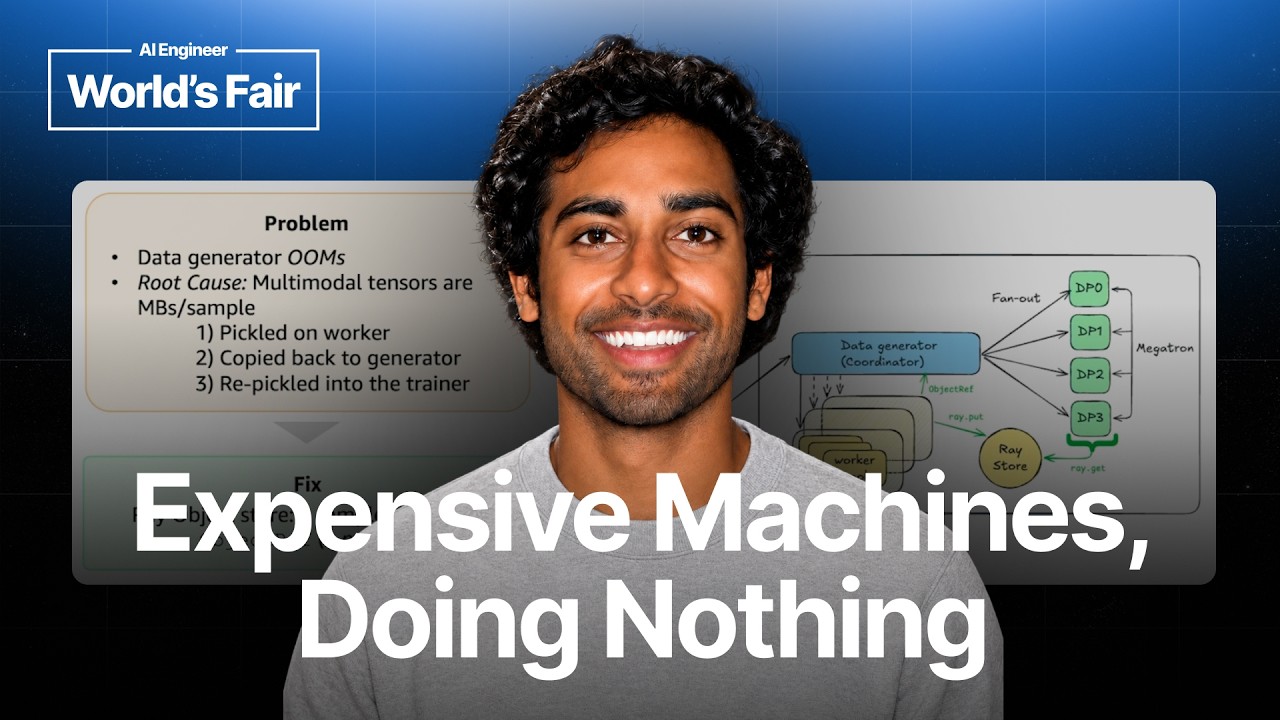

From 15% to 90% GPU Utilization: Fix the Data Pipeline, Not the Model

From 15% to 90% GPU Utilization: Fix the Data Pipeline, Not the Model

Tarun Sunkaraneni from Amazon AGI shows how a multimodal SFT pipeline that spent about 85% of its time waiting on data was brought to roughly 90% GPU utilization. He walks through concurrency with asyncio and Ray actors, prefetching, zero-copy transfer via Ray's object store, and a network-card bottleneck that appears only at scale, and argues that the hardest part of training throughput is often keeping GPUs fed rather than optimizing the model.

Small Models, Big Results: Training a Finance Agent for Under $500 — Charles Dickens, Snorkel AI

Small Models, Big Results: Training a Finance Agent for Under $500 — Charles Dickens, Snorkel AI

Snorkel AI and UC Berkeley's Sky Computing Lab show that a 4B Qwen3 model, trained with reinforcement learning for under $500 using the rLLM framework, beats its 235B sibling on expert-validated financial question answering built from SEC 10-K filings. The talk covers the FinQA dataset construction and verification, common failure modes of frontier models, transfer to multi-table and general tool-use tasks, and ablations showing that simple data and binary rewards outperform more elaborate setups, since the real bottleneck is disciplined tool use rather than reasoning depth.

Artificial Intelligence

View All
The Right Model for Each Coding Task

The Right Model for Each Coding Task

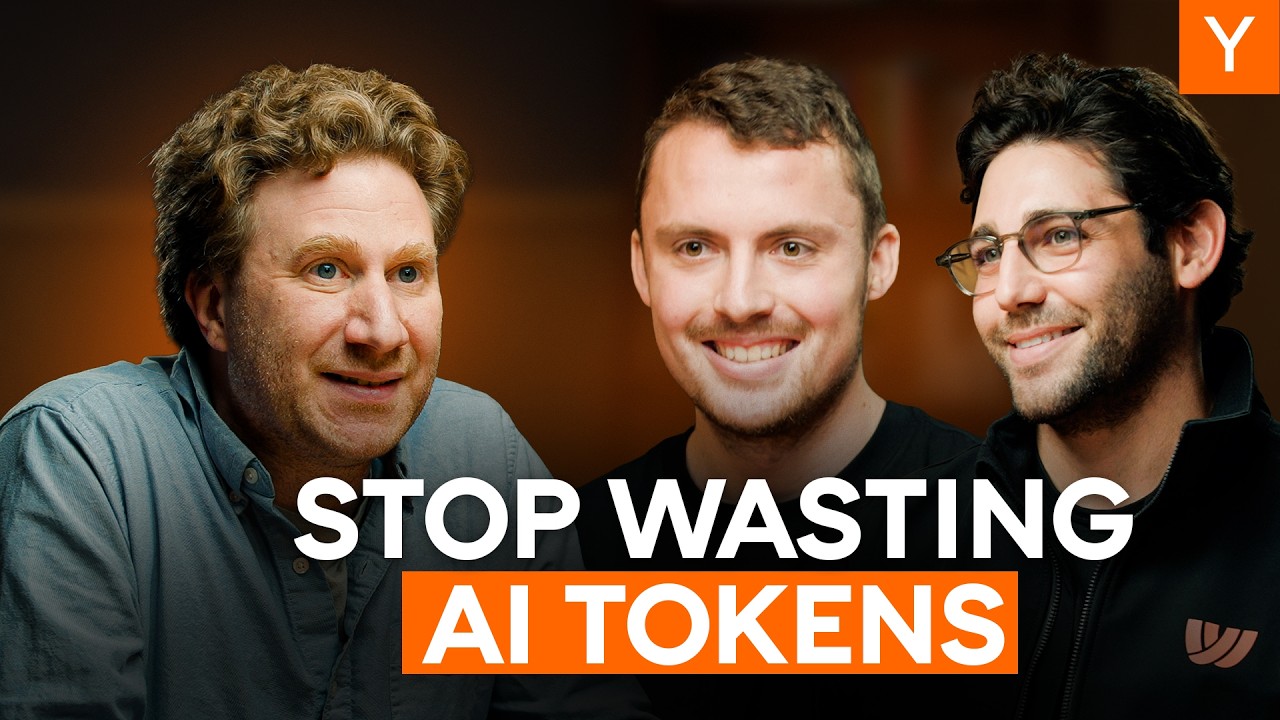
Weave co-founders Adam Cohen and Andrew Churchill explain how their engineering analytics platform evolved from measuring human productivity to optimizing coding agents. The conversation covers Weave Router, which automatically selects the best model for each coding task, cost per output as a better measure than raw token spend, an AI coach for engineers, and the design of autonomous software factories with automated validation.

The New AI Agents That Shop, Plan, and Gossip

The New AI Agents That Shop, Plan, and Gossip

David Pawlan, creator of Assistant Benchmark, joins Anish Acharya and Josh Elman to take stock of an agent landscape that changes almost weekly. Drawing on tests of more than 140 assistants and a survey of AI power users, they explore why trust is the dominant fear, how fences and permissions might make agents safe, and where privacy, embarrassment, and judgment fit in. The conversation then moves to multiplayer and gossipy agents, agent-to-agent networks that could spark serendipity, and the possibility that the most valuable agents will do more than save time, becoming a kind of secret superpower.

AI-Friendly Code: The Missing Link for Speed with Quality • Adam Tornhill • GOTO Copenhagen 2026

AI-Friendly Code: The Missing Link for Speed with Quality • Adam Tornhill • GOTO Copenhagen 2026

Adam Tornhill explores why AI agents produce fast early gains that often erode under growing code complexity, and how the Code Health metric, safeguarding loops, and codebase-specific refactoring can keep agentic development sustainable at scale, including a 300,000-line legacy case study.

Technology

View All
What iPhone Packaging Reveals About the Robotics Opportunity

What iPhone Packaging Reveals About the Robotics Opportunity

Tutor Intelligence CEO Josh Gruenstein explains why robotics is a systems problem spanning AI, hardware, manufacturing, and customers, and how deploying robots into real factories and warehouses, with human tutors as backup, generates the data that makes them more capable. The discussion covers the company's own robot designs, its focus on small and mid-sized businesses, the economics of flexible robotic labor, and the implications for American manufacturing and supply chains.

Why Founders Are Betting Big on Factories, Mines, and Energy

Why Founders Are Betting Big on Factories, Mines, and Energy

Erin Price-Wright and Connor Love unpack the AD50 and the rebuilding of America's industrial base, covering how defense demand is financing manufacturing capacity for commercial markets, how AI is reshaping factory economics, how a new generation of founders applies lessons from SpaceX, Tesla, Anduril, and Palantir to mining, energy, and manufacturing, and why private capital is now willing to fund physical infrastructure before government demand is guaranteed.

Mark Cuban’s Plan to Make Healthcare Affordable

Mark Cuban’s Plan to Make Healthcare Affordable

Mark Cuban and Julie Yoo discuss how transparency, direct contracting, and AI could reshape healthcare economics, from Cost Plus Drugs and modular pod manufacturing to personalized medicine, the future of physicians, and advice for founders who want to use AI to learn rather than to stop thinking.


Recent Post

The Laws of Thought: The Math of Minds and Machines, with Prof. Tom Griffiths

The Laws of Thought: The Math of Minds and Machines, with Prof. Tom Griffiths

Princeton Professor Tom Griffiths discusses his book "The Laws of Thought," exploring the mathematical models that govern both biological and artificial intelligence. He details the fundamental differences between human and machine cognition, rooted in their vastly different constraints, and explains how concepts like inductive bias, probability, and curiosity can bridge the gap between cognitive science and modern AI.

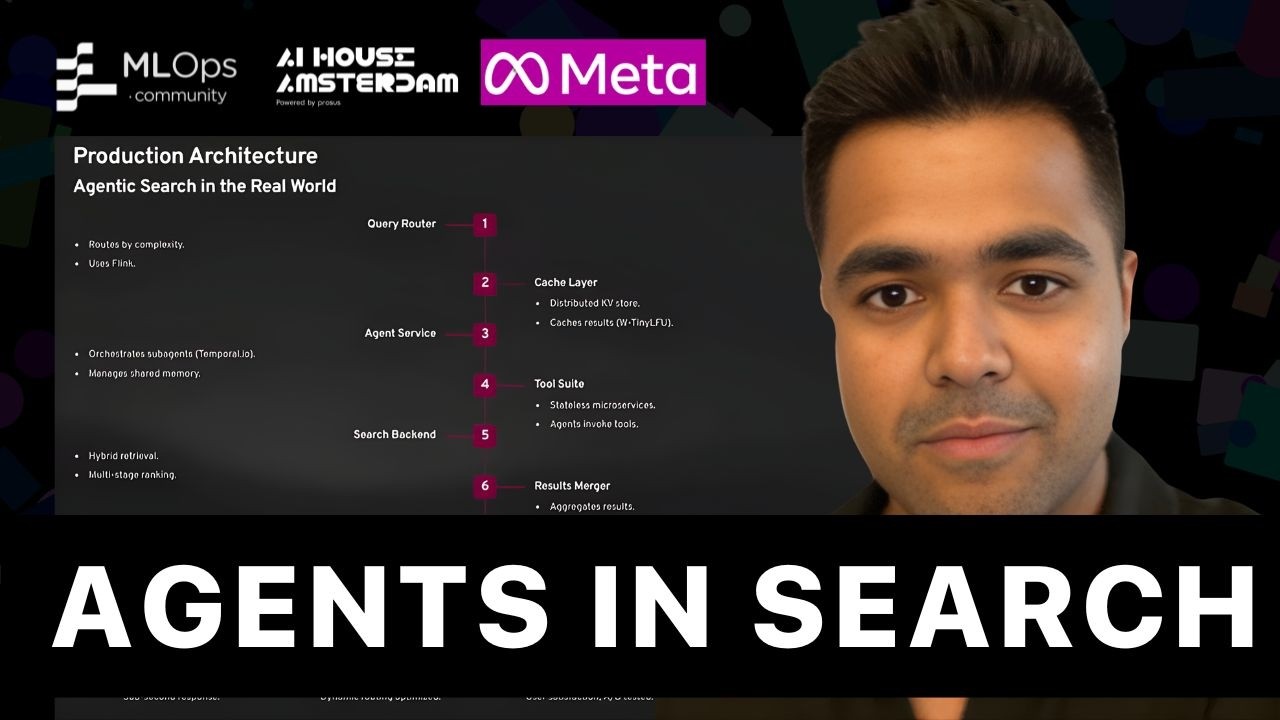
Agents as Search Engineers // Santoshkalyan Rayadhurgam

Agents as Search Engineers // Santoshkalyan Rayadhurgam

Large language models are transforming search from a static, stateless process into a dynamic, agent-based reasoning system. This talk explores the practical patterns—like query rewriting, hybrid retrieval, and agent-based reranking—for building and deploying these 'agentic search' systems at scale, covering the architectural principles, production challenges, and the future trajectory where search itself may dissolve into understanding.

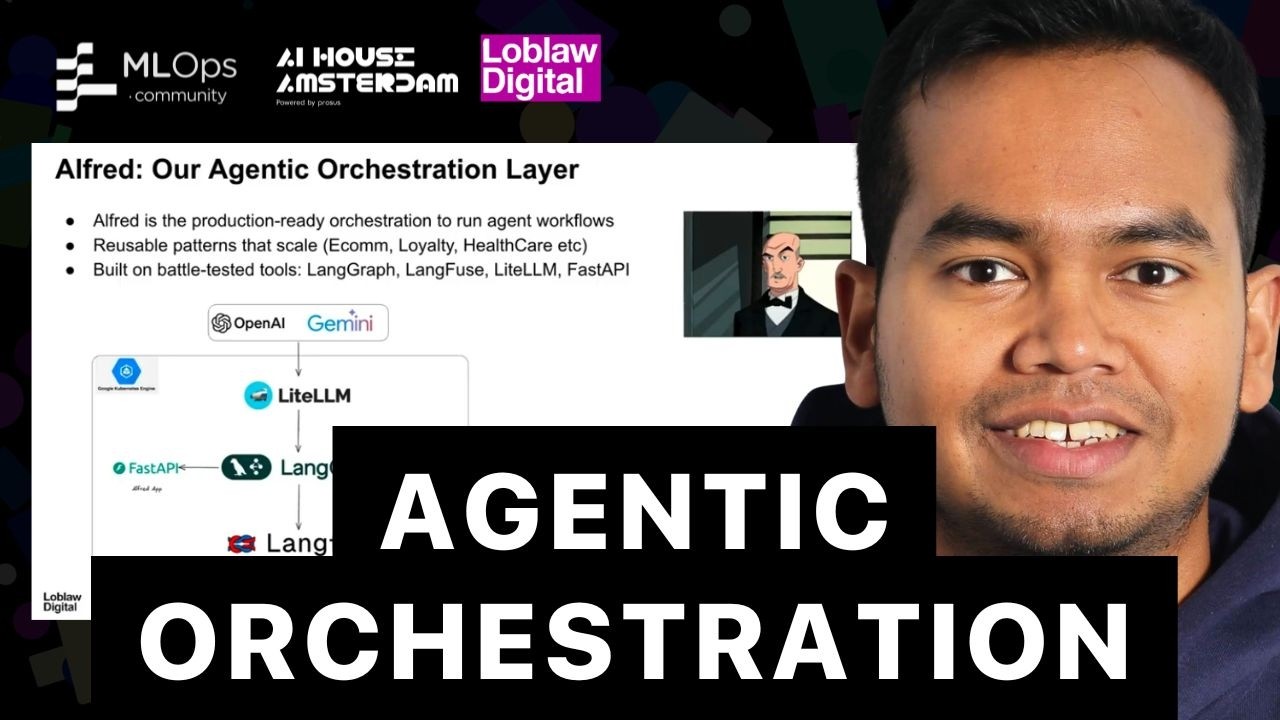
Building an Orchestration Layer for Agentic Commerce at Loblaws

Building an Orchestration Layer for Agentic Commerce at Loblaws

Mefta Sadat from Loblaw Digital discusses Alfred, an agentic orchestration layer designed to run AI shopping agents reliably in production. He covers the architecture built with LangGraph and GCP, the role of the Model Context Protocol (MCP) in simplifying API interaction, and practical MLOps strategies for observability, cost management, and ensuring reliability.

Time to become a hacker // Matt Sharp

Time to become a hacker // Matt Sharp

In this talk, Matt Sharp explains that while 2025 is the year of AI agents, it's also the year of cybercrime. The rush to create frictionless, user-friendly agents has led to a neglect of fundamental security principles, creating a perfect environment for hackers who are now using these same powerful AI tools to innovate and scale their attacks.

The Rush to Adopt AI: How to Get it Right & Business Risks • Nick Selby & Sarah Wells • GOTO 2026

The Rush to Adopt AI: How to Get it Right & Business Risks • Nick Selby & Sarah Wells • GOTO 2026

In this interview, Sarah Wells and Nick Selby discuss the significant business risks introduced by the current rush to adopt AI. They cover how AI vendors blur security terminology, how the insatiable need for data creates an enormous blast radius for breaches, and provide a framework for responsible AI adoption through threat modeling, cross-disciplinary governance, and a return to IT fundamentals.

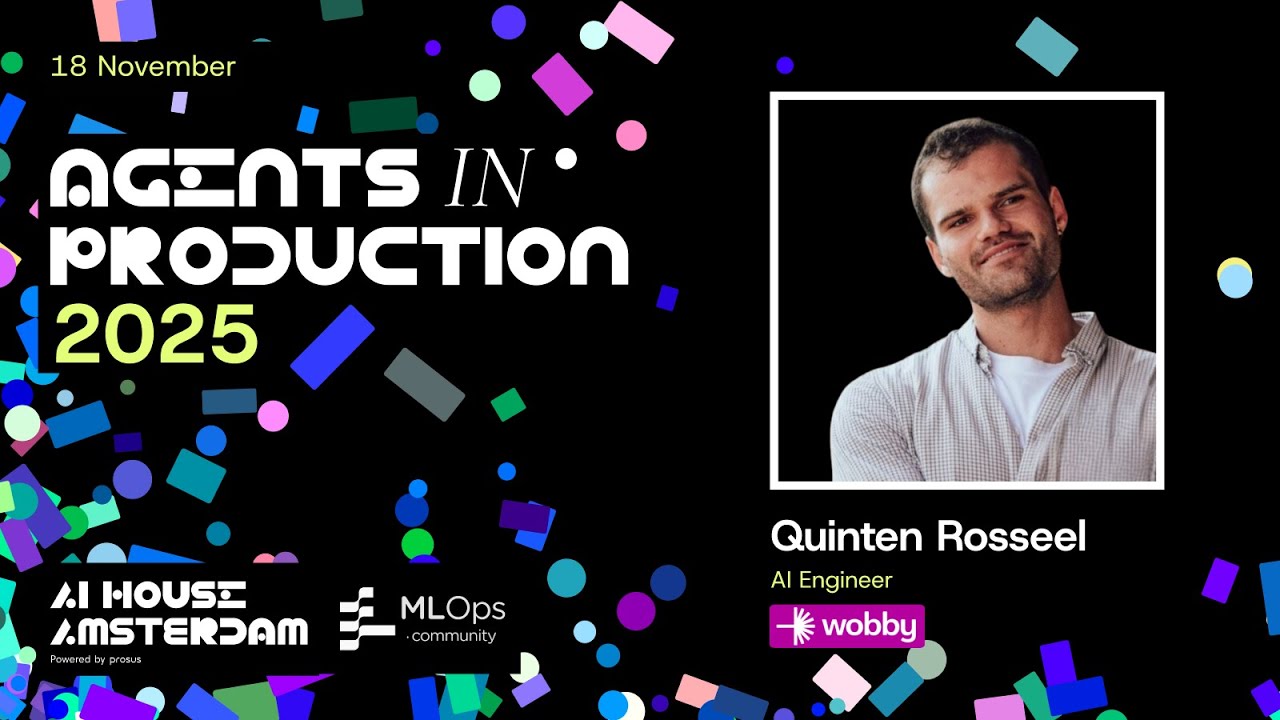
How AI covered a human’s paternity leave // Quinten Rosseel

How AI covered a human’s paternity leave // Quinten Rosseel

A practitioner's guide to deploying a text-to-SQL agent in a real-world business environment. The talk covers the critical lessons learned in moving from concept to production, focusing on the importance of the communication channel (Slack), the necessity of a semantic layer over benchmark scores, and a pragmatic approach to system architecture, testing, and evaluation.

Stay In The Loop! Subscribe to Our Newsletter.

Get updates straight to your inbox. No spam, just useful content.