Ai

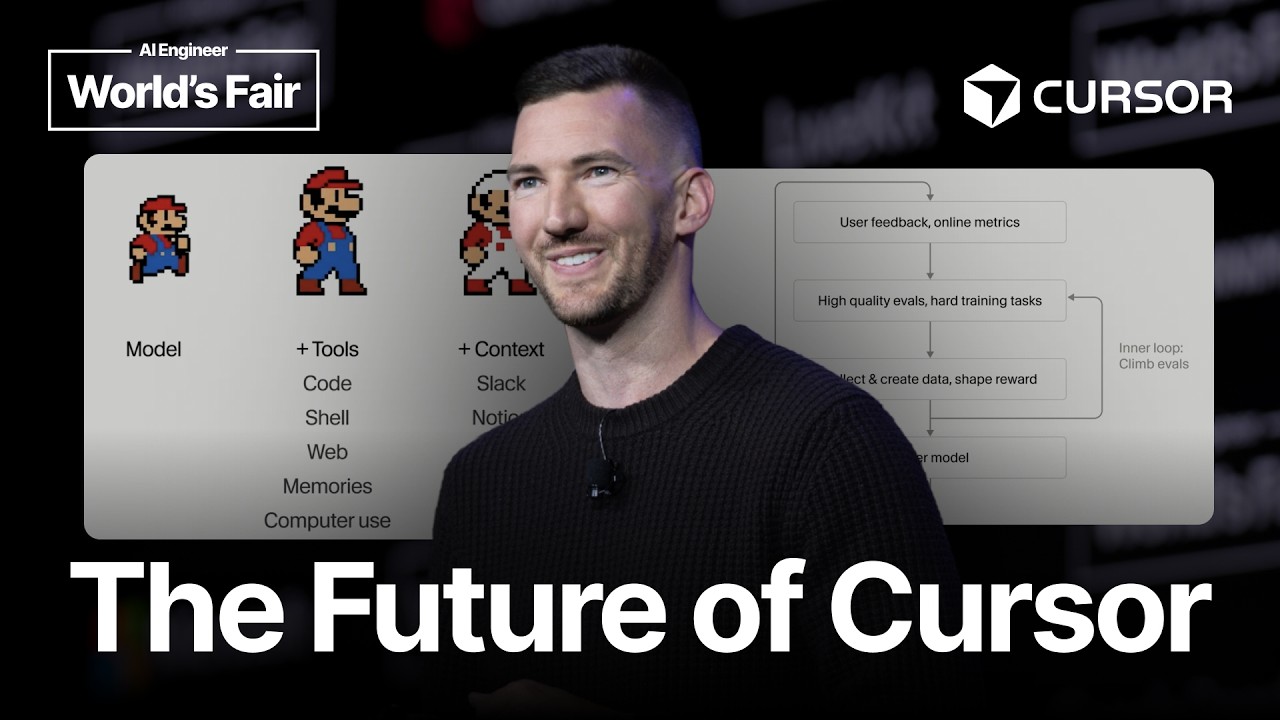
Recursive Model Improvement — Lee Robinson, Cursor, SpaceXAI

Recursive Model Improvement — Lee Robinson, Cursor, SpaceXAI

Lee Robinson of Cursor outlines a comprehensive strategy for recursive AI model improvement, centered on a two-loop training framework. He details how Cursor enhances both user-feedback-driven outer loops and high-quality evaluation inner loops, introducing novel methods like textual feedback and addressing reward hacking. The discussion extends to scaling compute infrastructure through partnerships with SpaceX, Colossus, and Terafab, and leveraging agent-based automation to streamline research and foster a future where models continuously train and improve themselves.
Simon Willison in conversation with Cat Wu & Thariq Shihipar, Anthropic

Simon Willison in conversation with Cat Wu & Thariq Shihipar, Anthropic

A Q&A with Anthropic's Cat Wu and Thariq Shihipar on how Claude Code and agentic AI are fundamentally changing software development, from workflow shifts and engineering norms to safety, model trust, and team collaboration. The discussion covers the rapid evolution of coding agents, the rise of proactive agents like Claude Tag, new approaches to code review and system prompt optimization, and Anthropic's robust safety measures including Auto Mode.

Omnigent: Composition, Control, and Collaboration for AI Agents

Omnigent: Composition, Control, and Collaboration for AI Agents

Denny Lee discusses the industry's shift to meta-harnesses like Omnigent, which enables hot-swappable AI models and agents, illustrated by his personal project of using debating agents to plan a matcha farm in Taiwan. He highlights how "tokenomics" is replaying the CapEx-to-OpEx cost shift, emphasizing the need for developer visibility, central governance, and auto-model selection to manage AI spend. The conversation also touches on the importance of databases for agent memory and accountability in AI-assisted workflows.

GLM-5.2: The real security risk? Plus: Vibe hunting, the end of CVSS and updates on Lightwell

GLM-5.2: The real security risk? Plus: Vibe hunting, the end of CVSS and updates on Lightwell

This podcast explores the implications of open-weight AI models like GLM-5.2 for cybersecurity, CISA's new four-variable vulnerability prioritization model, the rise of AI-assisted 'vibe hunting,' and the commercial launch of IBM and Red Hat's Lightwell for securing open-source software. It highlights the tension between AI capabilities for attackers and defenders, the challenges of rapid vulnerability remediation, and the need for new "trust infrastructures" in the AI era.

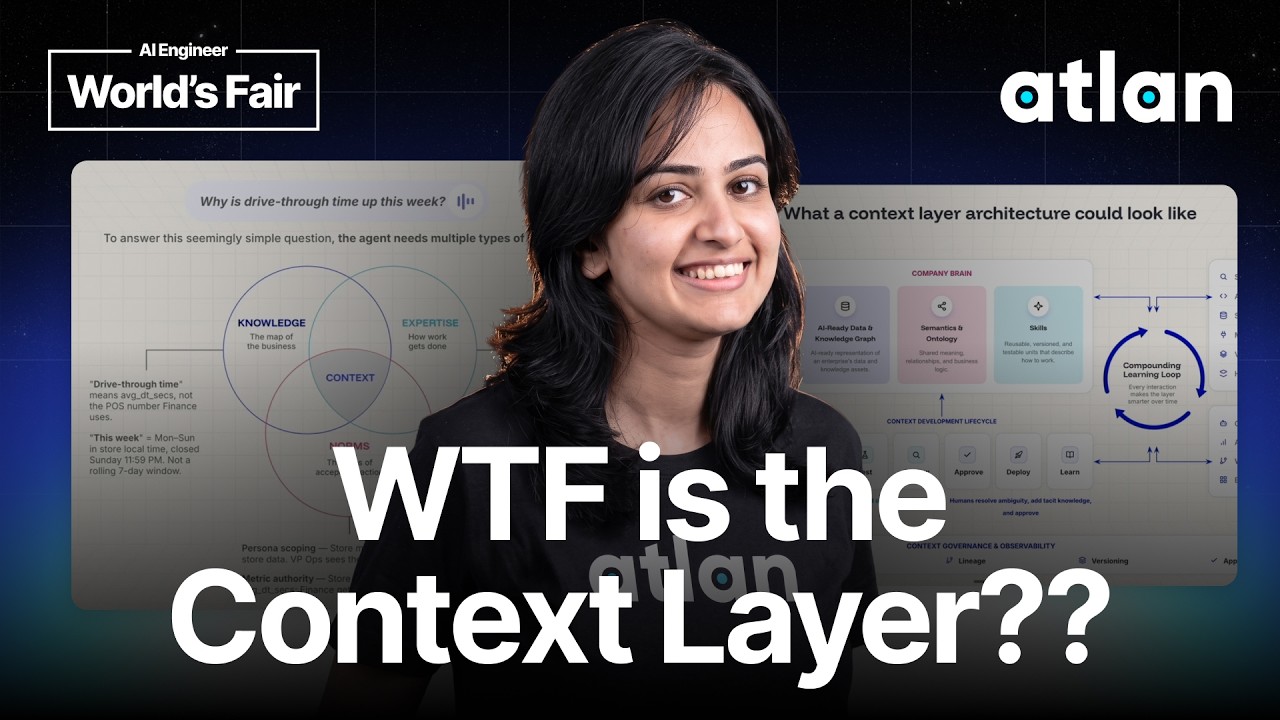
WTF Is the Context Layer? The Missing Infrastructure for Production Agents — Prukalpa Sankar

WTF Is the Context Layer? The Missing Infrastructure for Production Agents — Prukalpa Sankar

Prukalpa Sankar argues that while AI models are increasingly intelligent, their practical business utility is limited by a lack of contextual intelligence. She proposes a "context layer" as a crucial solution, akin to a "GitHub for context," to centralize and manage business knowledge, expertise, and norms. This system aims to provide AI agents with the shared, versioned, and continuously learning context necessary to overcome the challenges of isolated systems and context sprawl, ultimately differentiating companies in an AI-driven world.

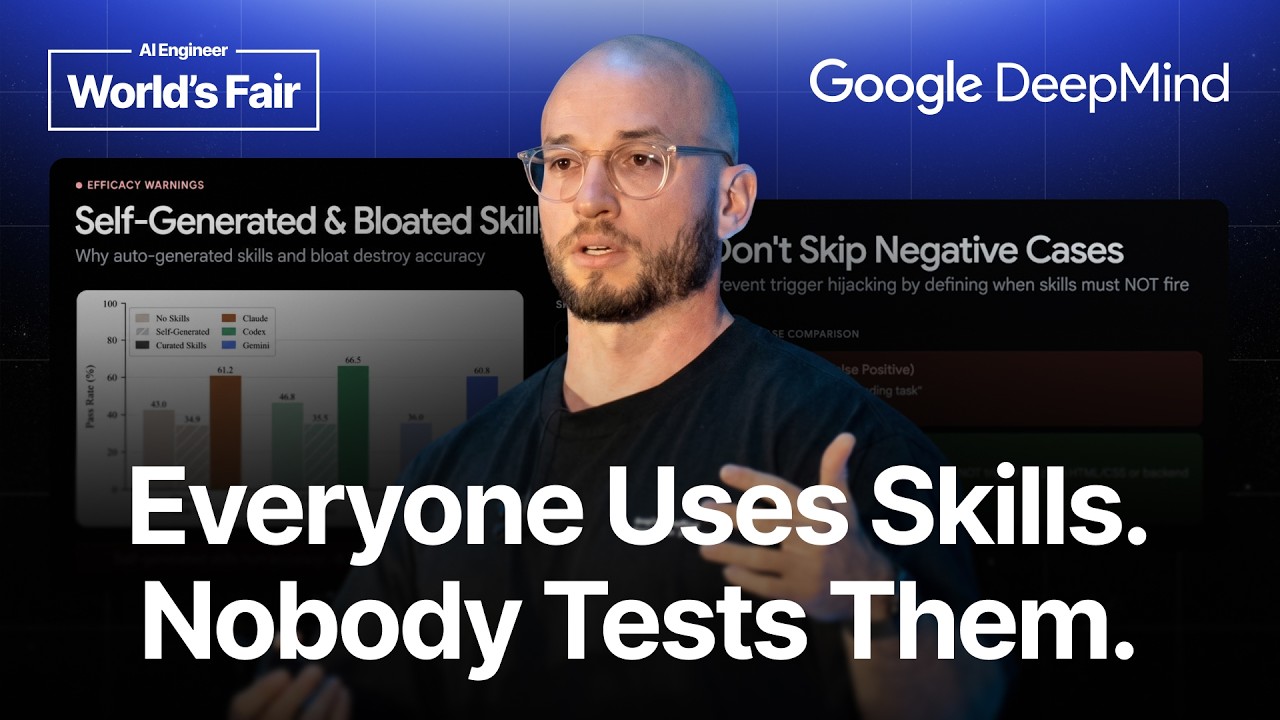
Don't Ship Skills Without Evals — Philipp Schmid, Google DeepMind

Don't Ship Skills Without Evals — Philipp Schmid, Google DeepMind

Philipp Schmid from Google DeepMind emphasizes the critical, often-overlooked need for rigorous evaluation of AI agent skills. He argues that shipping skills without testing is akin to deploying code without unit tests, leading to unreliable agent behavior. The talk covers what defines an agent skill, strategies for writing effective and correctly triggering skills, and a practical guide to building lightweight evaluation harnesses to catch failures proactively.