Ai

How Standard Kernel uses compound AI systems to optimize code and extract maximum GPU performance

How Standard Kernel uses compound AI systems to optimize code and extract maximum GPU performance

Chris from Standard Kernel explains how the company uses two autonomous optimization systems, one for whole workloads and one for individual CUDA kernels, to speed up AI inference. He walks through a roughly 2x vLLM speedup on Qwen with a CoreWeave team, details the kernel generation search and the correctness checks needed for frontier-model-written kernels, and presents case studies including 11x faster world models, faster time-series and LLM serving, and customer-driven requirements.
Brains vs Hands: How to Run AI Agents Safely in Production — Viren Baraiya

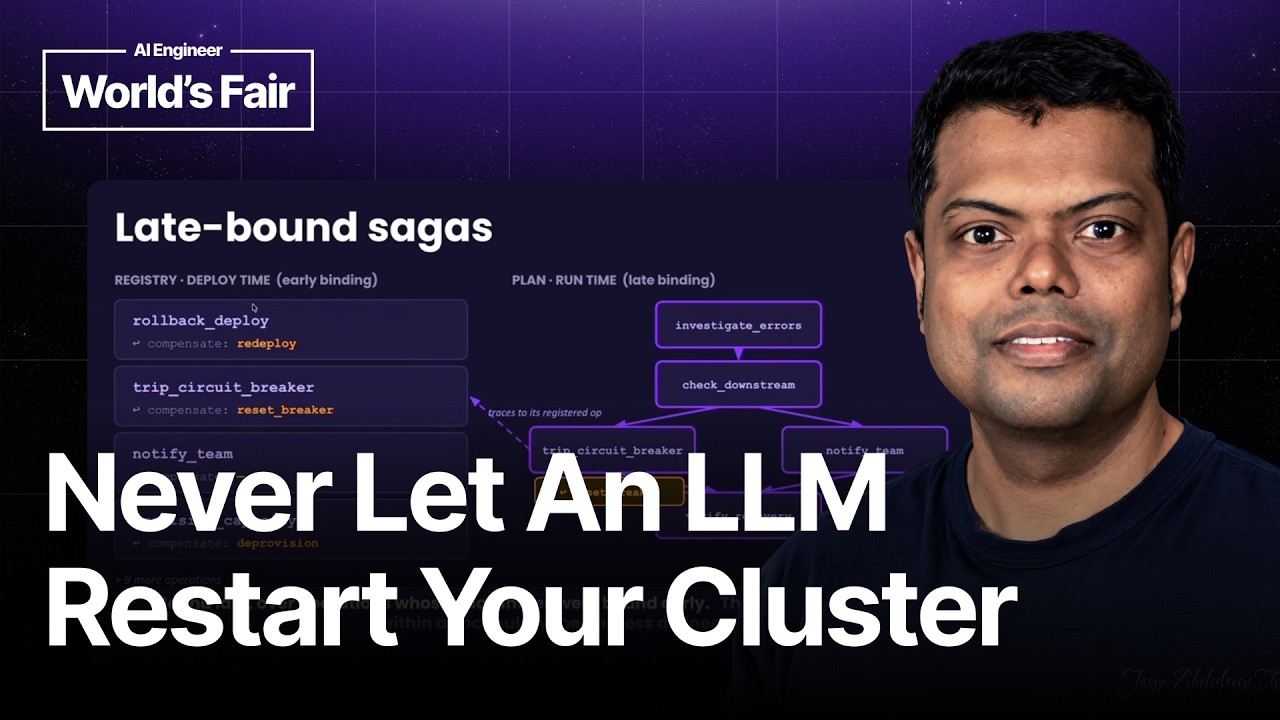
Brains vs Hands: How to Run AI Agents Safely in Production — Viren Baraiya

Viren Baraiya, CTO of Orkes and original creator of Netflix Conductor, explains why production agents behave like applications built from microservices. He argues for splitting the work between a non-deterministic LLM that plans and a deterministic, durable harness that executes, with approval gates, idempotent steps, and recorded side effects. He frames agent harnesses as late-bound sagas and demos an SRE remediation agent whose plan is compiled into a Conductor workflow.

We Mapped 115 Microservices for Our Coding Agents — Kamalakannan Nandagopal, Postman

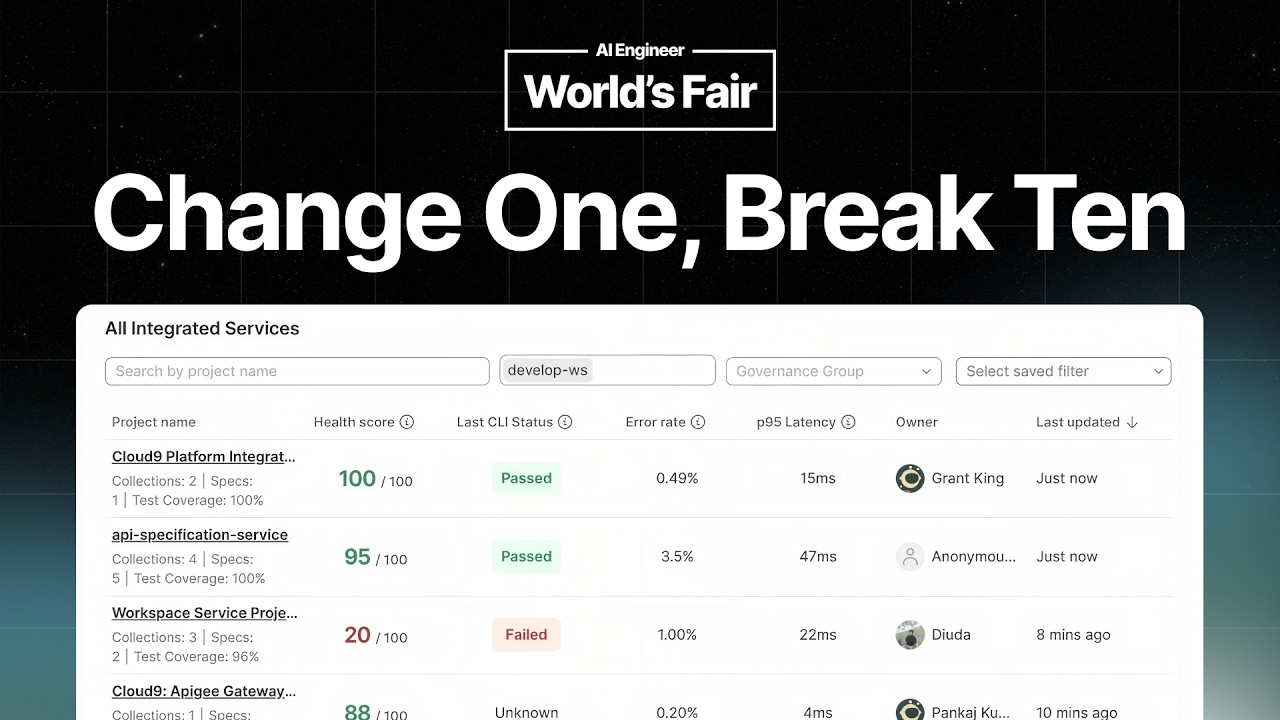
We Mapped 115 Microservices for Our Coding Agents — Kamalakannan Nandagopal, Postman

Kamalakannan Nandagopal from Postman explains why coding agents struggle beyond a single repo and how an API context graph, grounded in code and production telemetry, gives agents system-wide awareness. The talk covers evals built from real PRs, wins on API discovery, redesign and impact assessment, a stale-graph failure, and a 21-page architecture review generated by the agent.

Beyond the Benchmark: How Parallel Web Systems Builds Reliable Web Agents

Beyond the Benchmark: How Parallel Web Systems Builds Reliable Web Agents

Parallel Web Systems engineer explains how the company moved beyond academic web-research benchmarks to a fully automated evaluation flywheel that samples production questions, generates reference answers with an oracle agent, judges with tool-equipped agents, and masks components to diagnose failures, along with the open challenges of evaluating subjective and infrastructure-dependent quality.

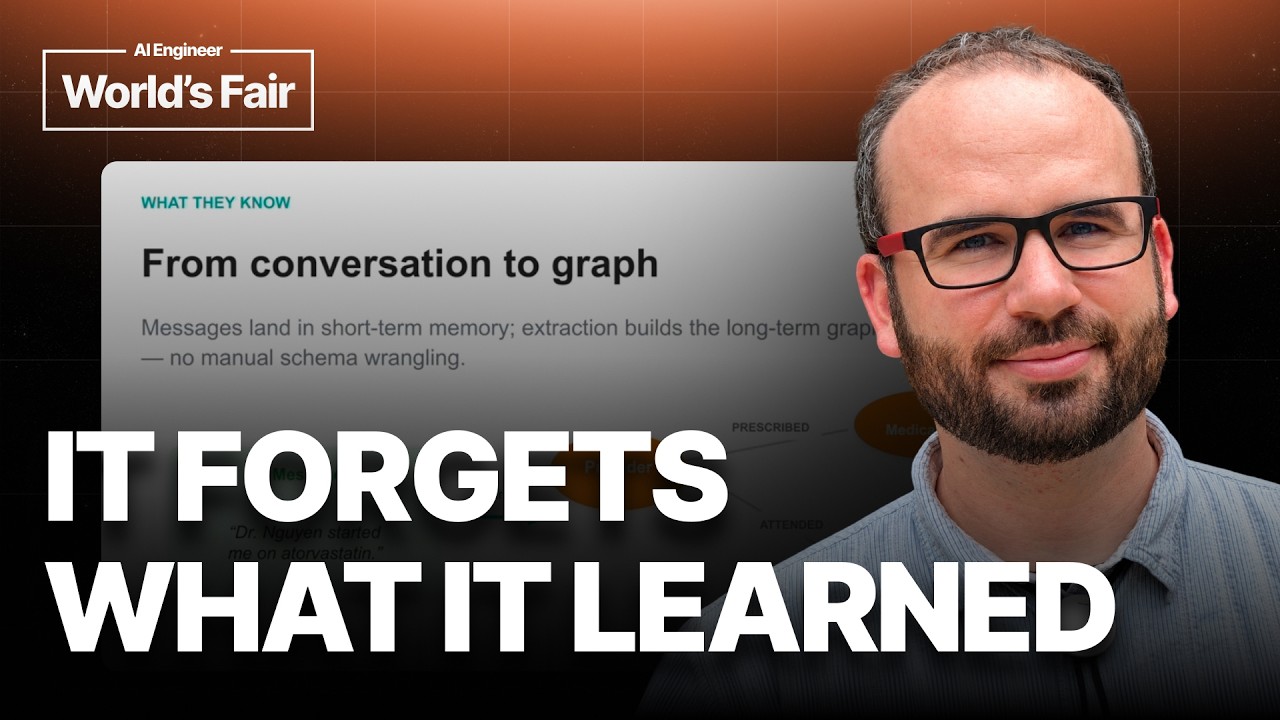
Turning Agent Memory Into Skills That Work — Will Lyon, Neo4j

Turning Agent Memory Into Skills That Work — Will Lyon, Neo4j

Neo4j's Will Lyon argues that embedding-based retrieval gives agents recall but not actionable knowledge. He presents a context graph model of agent memory with short-term, long-term, and reasoning memory, then shows how to distill grounded, governed skills from that graph using APE typed execution graphs, with grounding, coverage, and coherence checks, staleness alerts, and a live demo of the Neo4j Agent Memory Service building a patient-intake skill.

How Cline Embraces an Open-Weights Model Ecosystem for AI Agents

How Cline Embraces an Open-Weights Model Ecosystem for AI Agents

Cline's CEO explains why open-weight models are rapidly taking over coding-agent workloads, and why the agent harness, not raw model capability, determines reliability. The talk covers model-specific tuning and failure handling, context and token optimization, self-improving harness loops, an SDK-first and UI-agnostic architecture, interactive evaluation built from real-world usage data, and production inference challenges such as KV cache hit rates.