Ai

Multimodal & Embodied Intelligence (Pt 1), Panel on Multimodal AI: Progress, Pitfalls, Possibilities

Multimodal & Embodied Intelligence (Pt 1), Panel on Multimodal AI: Progress, Pitfalls, Possibilities

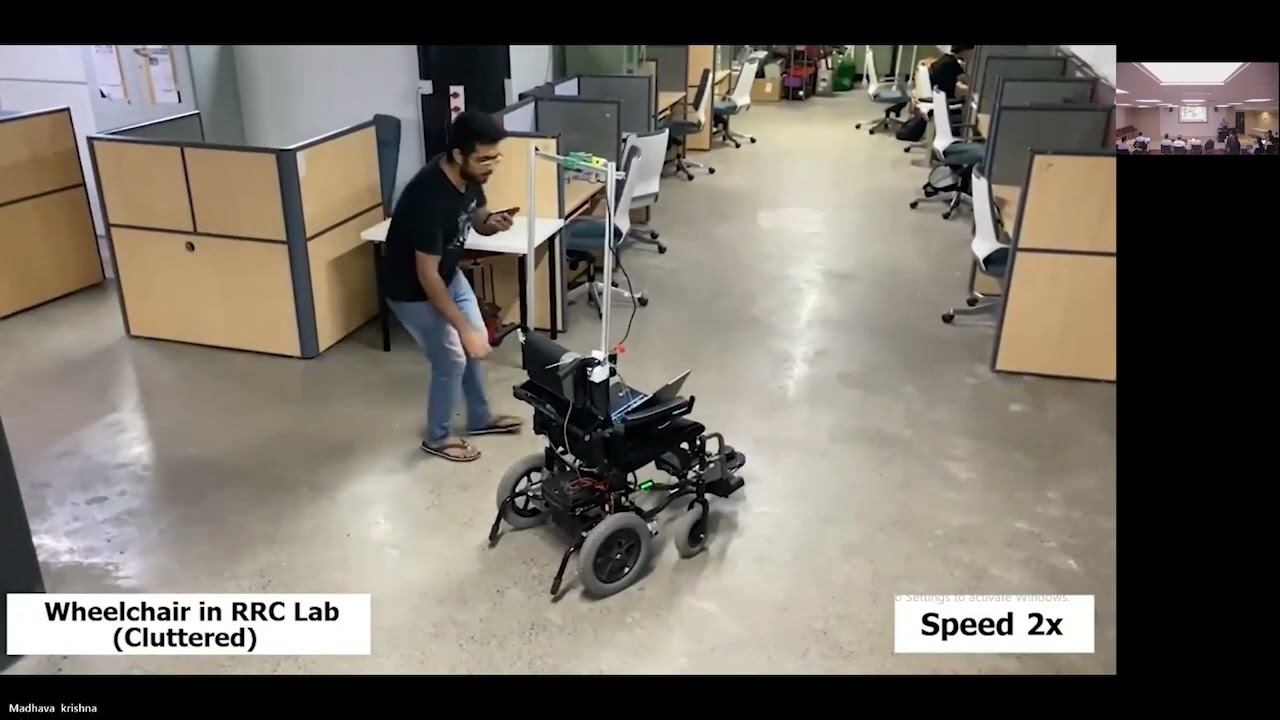
This session explored Multimodal and Embodied Intelligence, featuring talks on hybrid AI in robotics (classical vs. end-to-end), AI's role in healthcare (focusing on NCDs, deployment, and uncertainty modeling), and fundamental perception challenges in multimodal reasoning (using educational video QA and visual puzzles). A panel discussed the impact of foundation models, the blurred lines between AGI and human-like AI, critical deployment pitfalls (human factors, efficiency, architectural limits), and future directions, emphasizing task-specific models and the redefinition of 'foundation models.'
Grant Sanderson (@3blue1brown) – AI and the future of math

Grant Sanderson (@3blue1brown) – AI and the future of math

Grant Sanderson and Dwarkesh Patel discuss AI's rapid but uneven progress in mathematics, exploring whether AI can achieve true conceptual breakthroughs, the challenge of measuring creativity, and the long-term implications for human understanding and the future roles of mathematicians. They delve into the unique 'grindability' of math for AI training, the potential of formalization, and why AI currently struggles with 'theory of mind' in writing, offering advice for students navigating an AI-transformed world.

Sustainable Augmented Development • Kent Beck • YOW! 2025

Sustainable Augmented Development • Kent Beck • YOW! 2025

Kent Beck's presentation at YOW! Australia 2025 explores the transformative impact of augmented development ('the genie') on software engineering. He argues that AI shifts programming into an exploratory phase, requiring a re-evaluation of traditional practices. Beck introduces the concept of 'resting between the notes' to foster optionality over mere feature churn, and makes a compelling case for the increased value of junior developers as AI tools become powerful learning aids, emphasizing that 'nobody knows' the future but we must 'take our time' to adapt effectively.

Why Hardware-Software Co-Design Is AI's Real 100x: Dylan Patel of SemiAnalysis

Why Hardware-Software Co-Design Is AI's Real 100x: Dylan Patel of SemiAnalysis

Dylan Patel, founder of SemiAnalysis, details how software-hardware co-design drives 100x gains in AI performance, citing examples like DeepSeek's optimization for Nvidia Hopper and the architectural differences between OpenAI's sparse and Anthropic's dense models. He introduces InferenceX, a living benchmark tracking a 60x annual cost reduction in AI quality, and explains why the "CUDA moat" narrative is shifting. Patel also delves into the persistent compute crunch, the strategic rise of neoclouds, and Jensen Huang's efforts to foster a multipolar AI world to prevent hyperscaler dominance.

How KV Cache Speeds Up LLMs for Faster AI Models on GPUs

How KV Cache Speeds Up LLMs for Faster AI Models on GPUs

LLMs often slow down under heavy traffic due to inefficient GPU memory management during inference. This overview explains how KV cache and Paged Attention, implemented in VLLM, optimize memory usage across prefill and decode phases, significantly boosting LLM throughput, reducing latency, and improving GPU utilization through advanced context handling and specific tuning techniques like prefix caching and speculative decoding.

The AI Agents Helping Home Services Book More Jobs

The AI Agents Helping Home Services Book More Jobs

Avoca (YC W23) has achieved eight-figure revenue and a $1 billion valuation by building an AI workforce for home services, turning missed calls into revenue. Founders Apurva Shrivastava and Tyson Chen explain how AI expands software's market share beyond 1% by automating labor and operational costs, leading to a 15x larger opportunity. They emphasize that their AI agents augment human workers, reducing attrition in challenging CSR roles and creating new positions for training AI, driven by a deep customer obsession learned at YC.