Ai

The AI Memory Problem: Why Long Context Isn’t Enough — Dan Biderman, Engram Co-founder & CEO

The AI Memory Problem: Why Long Context Isn’t Enough — Dan Biderman, Engram Co-founder & CEO

Engram co-founder Dan Biderman discusses building AI that learns from users, critiquing long context, RAG, and compaction's limitations. He introduces Engram's approach of compressing knowledge into "cartridges" and model weights via continual learning and gradient-based updates, aiming for "intuition" over retrieval. The vision extends to personal, "Tamagotchi" AI models and addresses the critical need for token efficiency and "doing more with less" in both enterprise and personal AI.
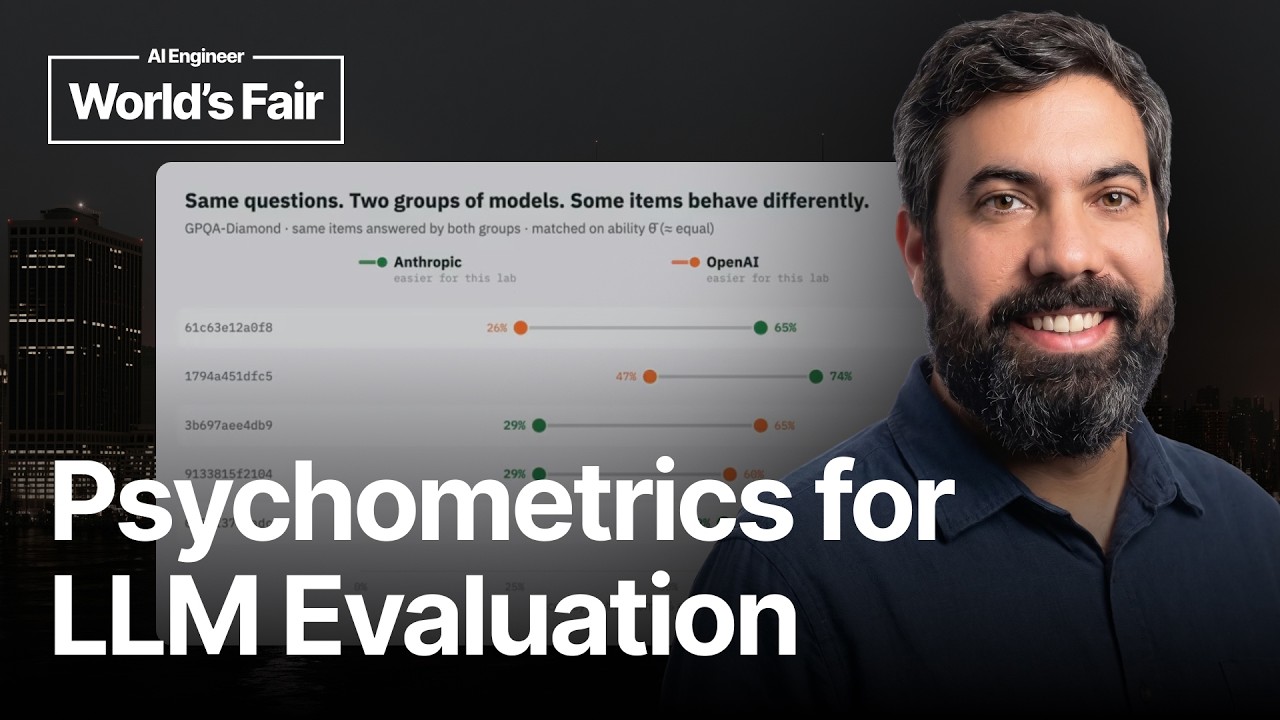
Stop Evaluating Models Like It's the 50s - Alejandro Vidal, Mindmakers

Stop Evaluating Models Like It's the 50s - Alejandro Vidal, Mindmakers

This talk introduces the transformative potential of Item Response Theory (IRT), a psychometric model, for evaluating AI models. It addresses the limitations of current evaluation methods by demonstrating how IRT can precisely measure model intelligence, audit and optimize benchmarks, detect data leakage, implement adaptive testing, identify item bias, and even fingerprint models based on their error patterns, opening new avenues for understanding and improving LLM capabilities.

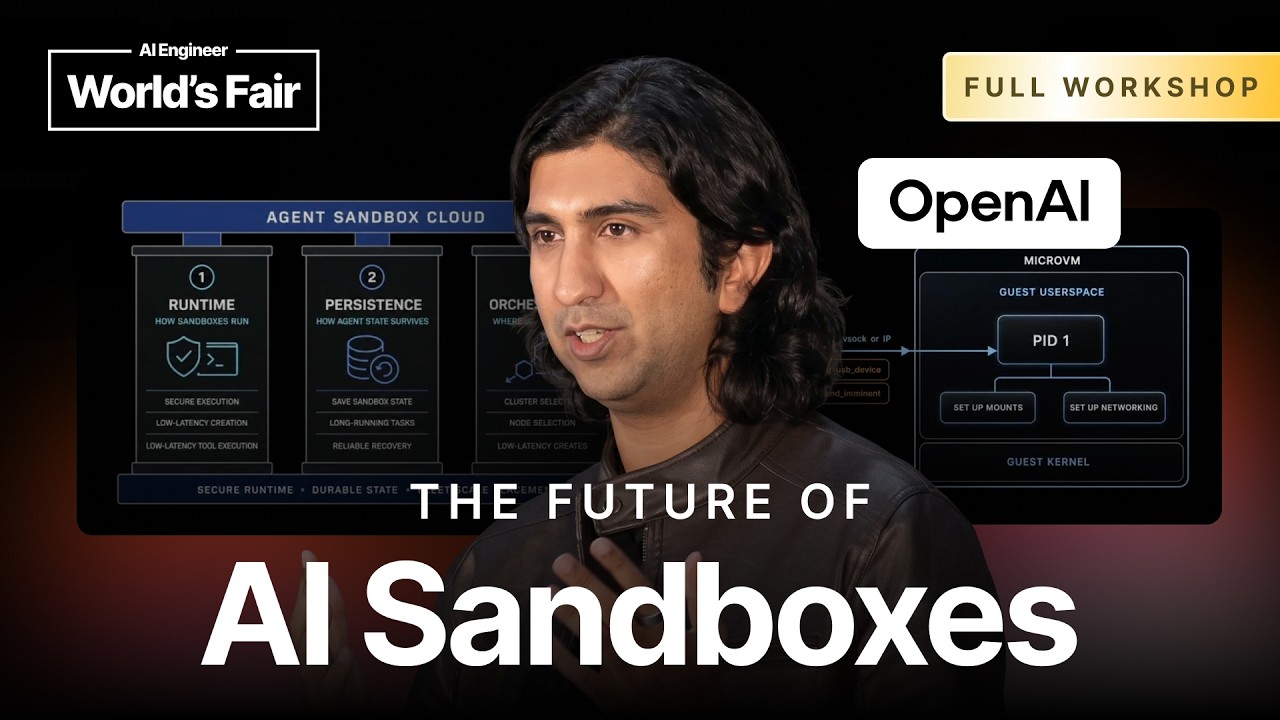
From fork() to Fleet: Designing an Agent Sandbox Cloud — Abhishek Bhardwaj, OpenAI

From fork() to Fleet: Designing an Agent Sandbox Cloud — Abhishek Bhardwaj, OpenAI

This talk by Abhishek Bhardwaj from OpenAI details the architectural considerations for building secure and scalable AI agent sandboxes in the cloud. It explores runtime isolation technologies (from basic process execution to containers, GVisor, and microVMs), emphasizing the superior security of hardware-virtualized microVMs. The speaker then highlights the critical need for persistent storage, outlining explicit (copy-on-write snapshots) and always-on (tiered block storage) solutions as the next major unlock for agent capabilities. Finally, it touches on orchestration challenges for fleet-level management, including low-latency sandbox creation and snapshot-driven scheduling.

What is an AI Code Generator? LLM Coding, Productivity, & Risk

What is an AI Code Generator? LLM Coding, Productivity, & Risk

AI code generators leverage LLMs to translate natural language into code, significantly boosting developer productivity and job satisfaction by automating boilerplate and accelerating learning. However, they introduce risks like subtle security vulnerabilities and require rigorous human review. Evaluating tools hinges on trust, demanding features like data provenance, governance, secure deployment, and curated training data for enterprise adoption.

RLM: Recursive Language Models for Large Codebases - Shashi, Superagentic AI

RLM: Recursive Language Models for Large Codebases - Shashi, Superagentic AI

This talk introduces Recursive Language Models (RLM) as a solution for coding agents struggling with large codebases. RLM externalizes context management into a programmable REPL, allowing the model to write code, inspect the repository, and recursively delegate sub-questions via `llm_query` to curate relevant context. The speaker demonstrates `RLM Code`, an independent implementation, showcasing its operational loop, observability features, and practical applications for AI engineers dealing with complex software projects.

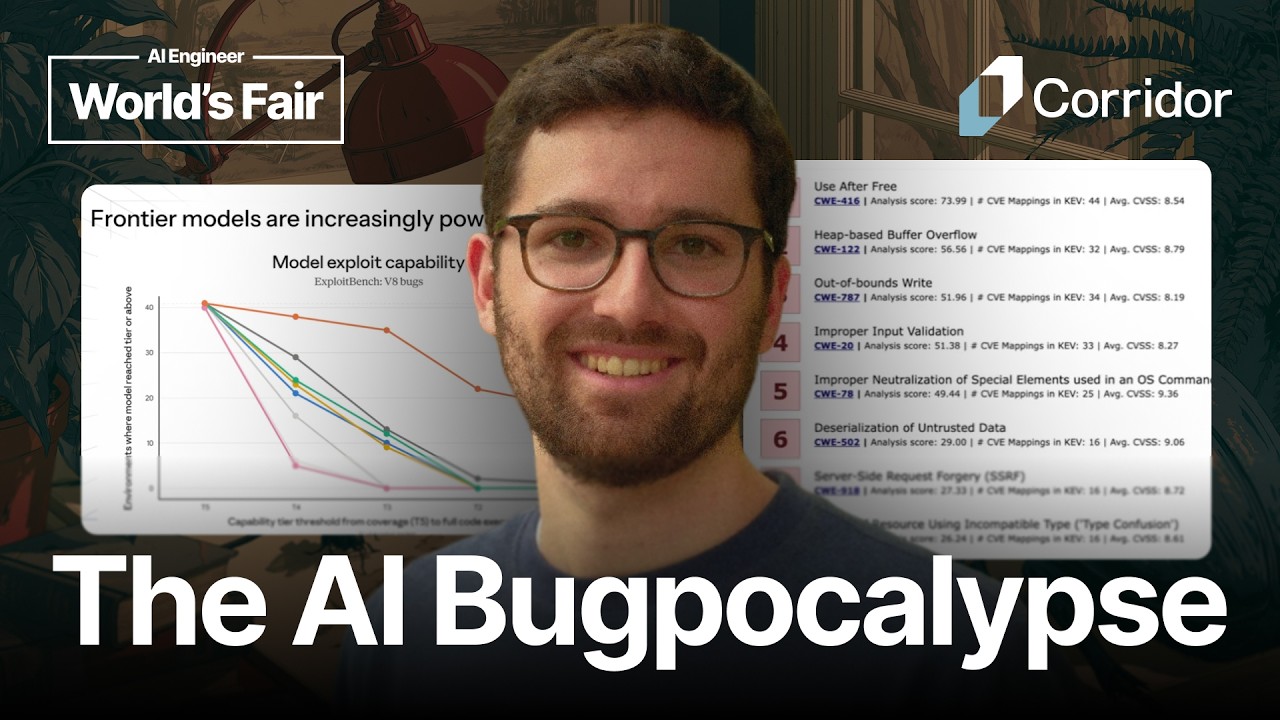
The AI bugpocalypse is here. Now what? - Jack Cable, Corridor

The AI bugpocalypse is here. Now what? - Jack Cable, Corridor

Jack Cable discusses the "AI bug apocalypse" driven by advanced AI models finding and exploiting vulnerabilities and AI coding tools increasing attack surfaces. He champions a "secure by design" approach, advocating for systemic changes like using memory-safe languages to prevent common vulnerability classes rather than just patching. He also addresses AI's role in introducing new vulnerabilities, the shift towards autonomous AI in development, and policy recommendations for securing the future of AI-powered coding.