Ai

Semantic Blindness: 500,000 Sensors Confused an LLM - Raahul Singh & Vanč Levstik, Phaidra

Semantic Blindness: 500,000 Sensors Confused an LLM - Raahul Singh & Vanč Levstik, Phaidra

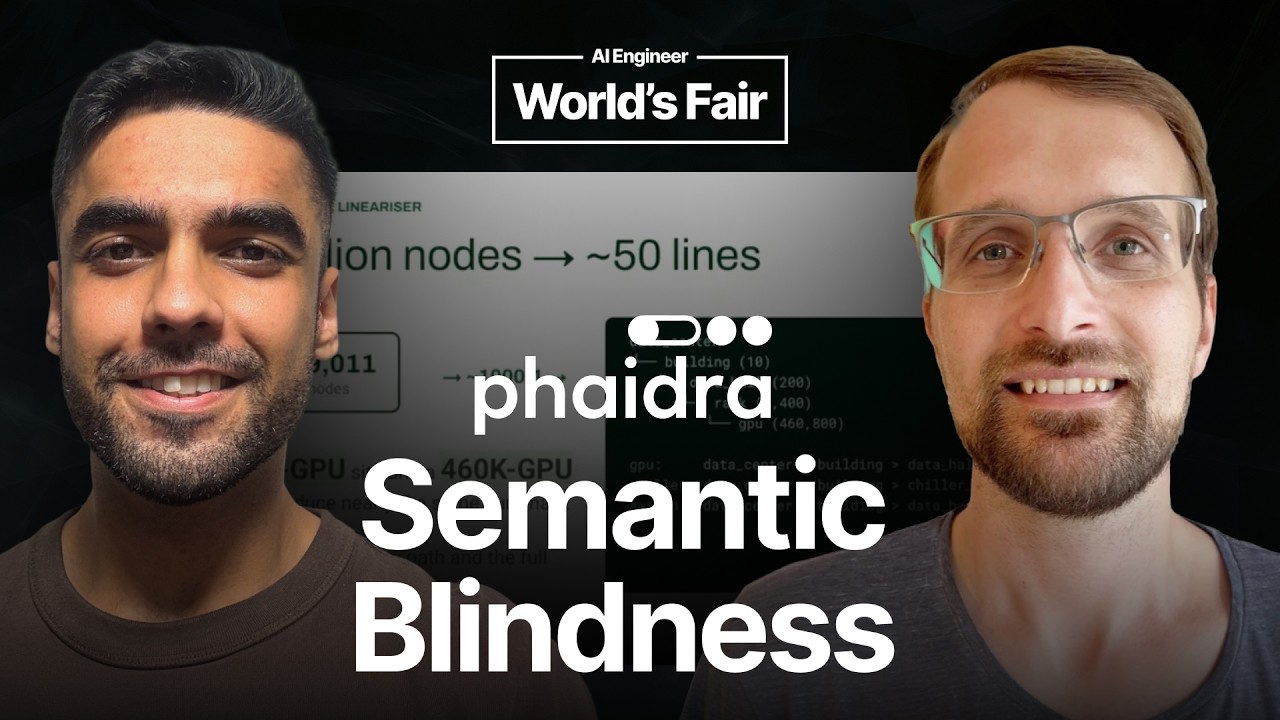
Modern LLMs struggle with combinatorial engineering problems in industrial settings due to "Semantic Blindness" – an inability to understand physical system topology, scale efficiently, or handle repetitive naming conventions. This talk introduces a hybrid AI architecture that combines LLMs for high-level planning with deterministic systems for execution, leveraging hierarchical structures and pattern-based search. This approach achieves 100% accuracy and flat operational costs at massive scales, demonstrating an "inversion" of the Software 1.0/3.0 paradigm where AI-native systems mature by integrating deterministic code for reliable, structured tasks.

The Agentic Web and the Bazaar Era of AI - Ramesh Raskar, MIT Media Lab

The Agentic Web and the Bazaar Era of AI - Ramesh Raskar, MIT Media Lab

Project Nanda introduces the Agentic Web, an open infrastructure designed to break AI agents out of "walled gardens" and enable truly interconnected, autonomous interactions. It focuses on three core layers: Discovery, using the Nanda Index for agents to find and trust each other; Commerce, facilitating "knowledge pricing" markets for agents to pay for intelligence and services; and the Bazaar, fostering machine co-learning through the Nanda Town simulator, a sandbox for testing large-scale agent coordination and protocols. This initiative aims to establish an open, permissionless ecosystem for trillions of AI agents.

Why the tech workforce is quietly splitting in two | Annual AI sentiment survey (Noam Segal)

Why the tech workforce is quietly splitting in two | Annual AI sentiment survey (Noam Segal)

Noam Segal and Lenny Rachitsky's second annual Tech Worker Sentiment Survey reveals a striking bifurcation in the tech workforce: 50% feel energized and amplified by AI, while the other half feels redefined, destabilized, or diminished. Burnout is surging (up 11 points in a year) and optimism is declining, even as 97% believe AI makes them 'better' (often meaning faster, not higher quality, leading to 'cognitive rot'). The #1 fear isn't job loss to AI, but being squeezed to do more for the same pay. Nobody would recommend their job to someone entering the industry today, with designers and researchers being the most negative. Managers are identified as the single biggest lever for employee well-being, yet most are rated ineffective. The industry is described as 'chaotic,' with advice for employees to go deep on AI, manage the 'squeeze,' and invest in manager relationships, while leaders are urged to invest in managers, manage expectations, and support early talent and struggling roles.

Stop Evaluating Models Like It's the 50s - Alejandro Vidal, Mindmakers

Stop Evaluating Models Like It's the 50s - Alejandro Vidal, Mindmakers

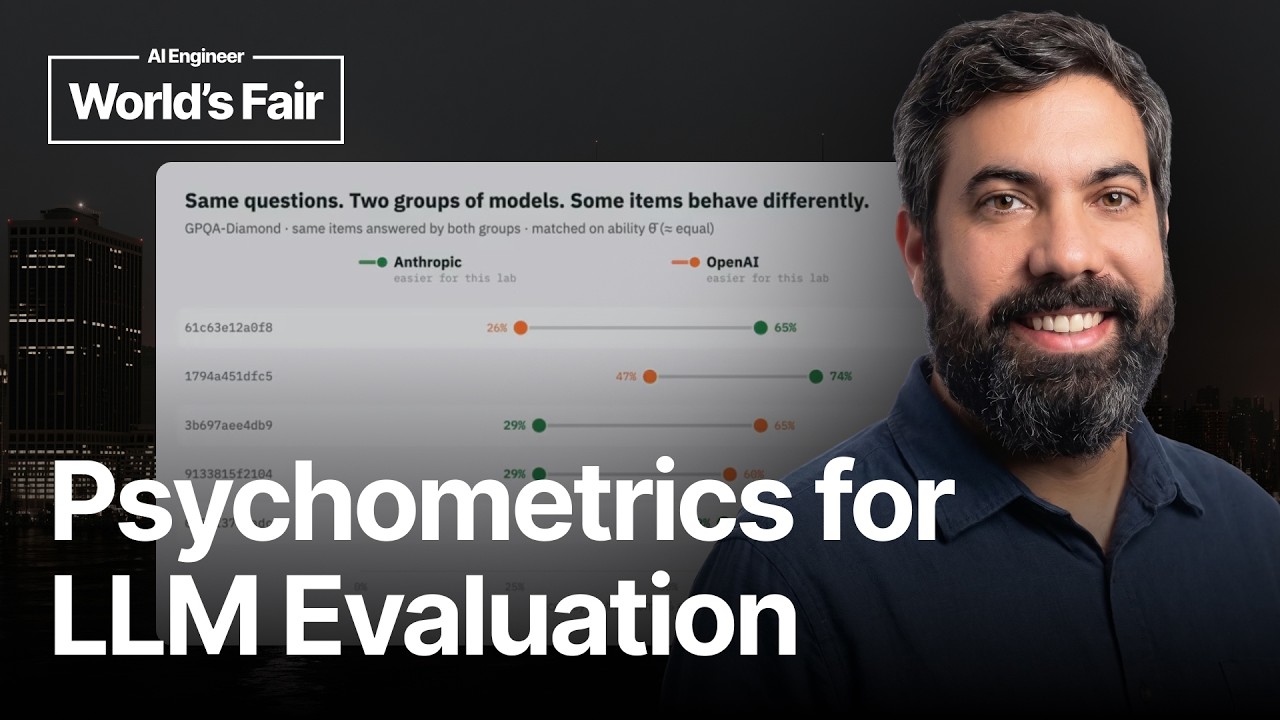
This talk introduces the application of psychometrics, particularly Item Response Theory (IRT), to improve LLM evaluation. It highlights how IRT goes beyond simple accuracy to measure model ability, item difficulty, and discrimination, enabling benchmark auditing, adaptive testing, data leakage detection, and the identification of model relationships and distillation, ultimately providing deeper insights into what LLMs truly learn.

Claws Out: Securing and Building with OpenClaw - Nick Taylor, Pomerium

Claws Out: Securing and Building with OpenClaw - Nick Taylor, Pomerium

This talk details how the speaker contributed a "trusted-proxy auth mode" to the OpenClaw project to enhance security and user experience by eliminating the need for tokens and device pairing. It explains the technical implementation of this mode using Identity-Aware Proxies like Pomerium. The speaker also demonstrates a unique workflow, building and live-editing a Multi-Modal Chatbot Protocol (MCP) application directly within ChatGPT, controlled by their OpenClaw instance via Discord, showcasing the power of secure, natural language-driven web development.

Stop AI Agent Hallucinations: 5 Techniques + Production Patterns - Elizabeth Fuentes, AWS

Stop AI Agent Hallucinations: 5 Techniques + Production Patterns - Elizabeth Fuentes, AWS

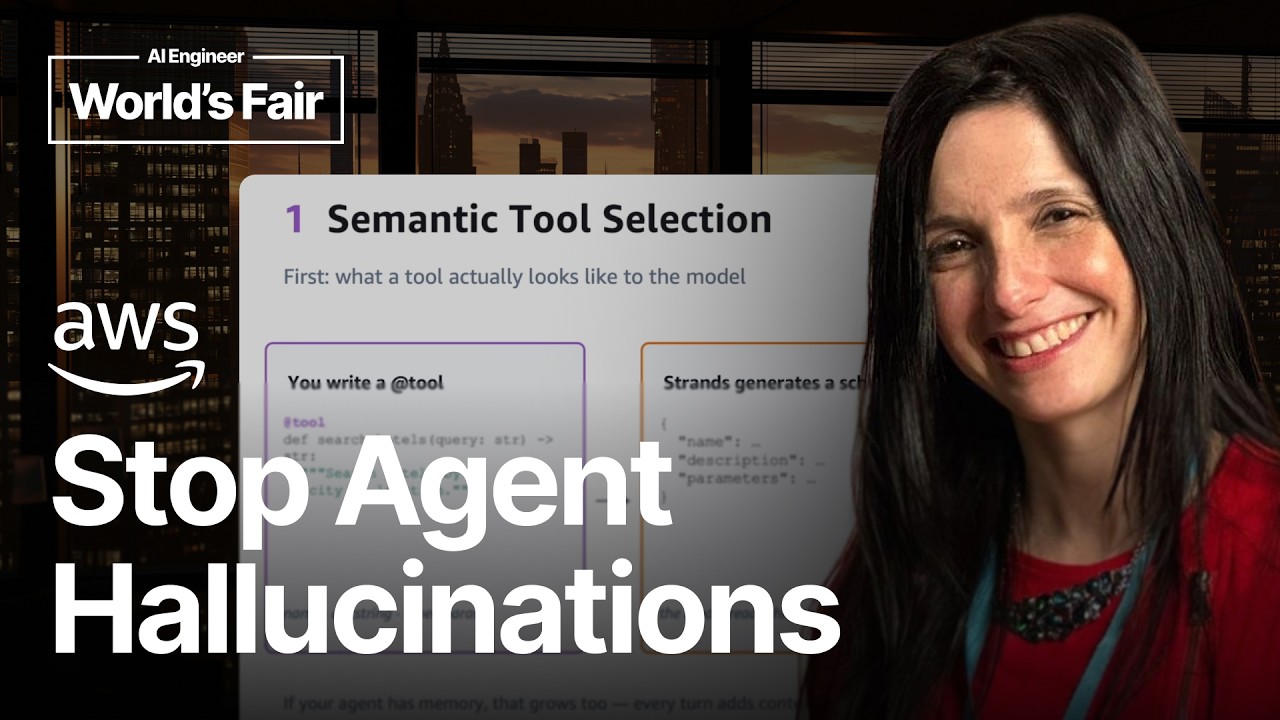
Explore five research-backed techniques to overcome common AI agent architectural limitations like hallucination, inefficient tool use, and rule violations. Learn how to implement semantic tool selection, Graph-RAG, multi-agent validation, neurosymbolic guardrails, and agent steering through code changes, not prompt engineering, and deploy them using AWS Bedrock Agent Core for robust and cost-effective AI agents.