Vector database

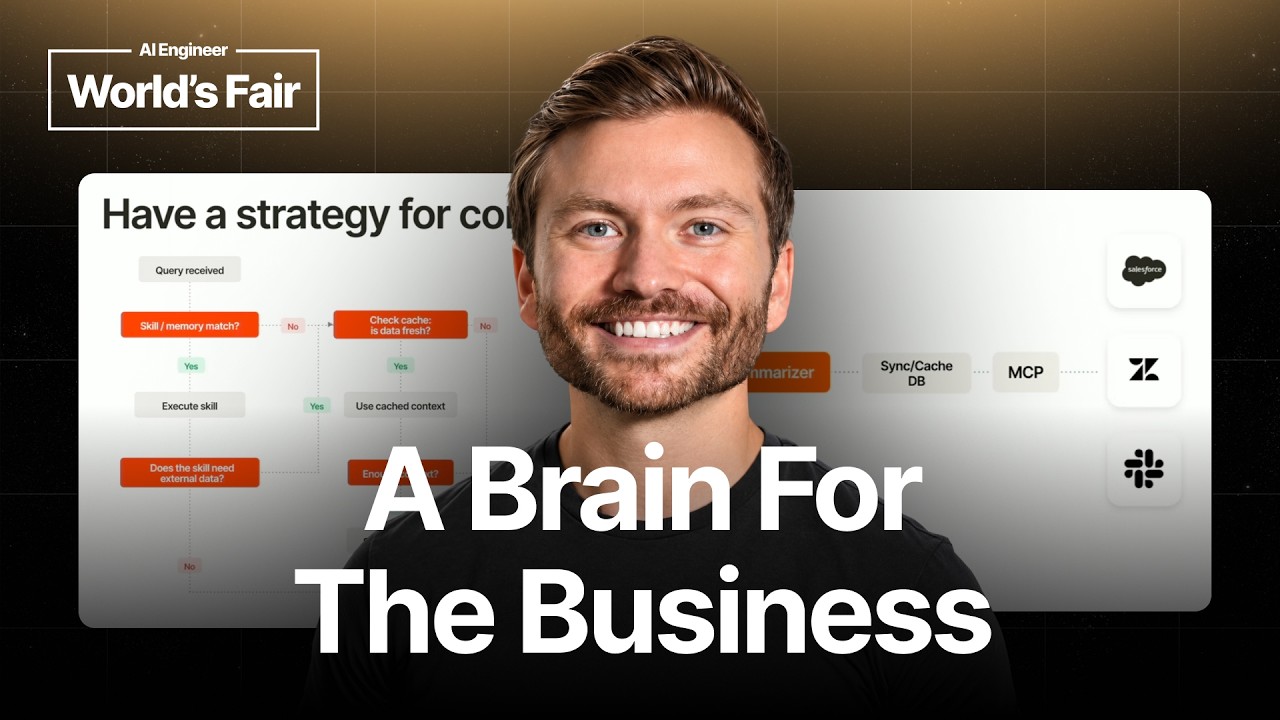
Why Your Company Needs a Context Graph (and How to Build It) — Gil Feig, Merge

Why Your Company Needs a Context Graph (and How to Build It) — Gil Feig, Merge

Gil Feig, co-founder and CTO of Merge, explains why agents need a company-wide context graph rather than a few MCP connections. Using the question of which customers were upset last week, he shows why live API lookups fail across large datasets and why synced local copies, routing, summarization, skills, memory, and traceable provenance are needed to build a reliable company brain.
Data Architecture for AI: From Training Pipelines to Agent Memory

Data Architecture for AI: From Training Pipelines to Agent Memory

Alan Kourev, co-founder and CTO of VAST Data, explains how AI workloads (training, inference with KV cache offload, RAG, and agents) access data in fundamentally different ways, and presents a disaggregated, shared-everything architecture, shaped in part by work with CoreWeave, that serves all of them from one unified platform.

AI & Data Science Periodic Tables: How They Work Together

AI & Data Science Periodic Tables: How They Work Together

Aaron Baughman and Martin Keen present a unified framework using "periodic tables" to integrate AI and Data Science. They illustrate how elements like pipelines, embeddings, and RAG combine to build real-world AI applications, using a detailed document Q&A system example. The discussion emphasizes the critical interdependence of data science in grounding AI models and ensuring continuous improvement through an innovative feedback loop.

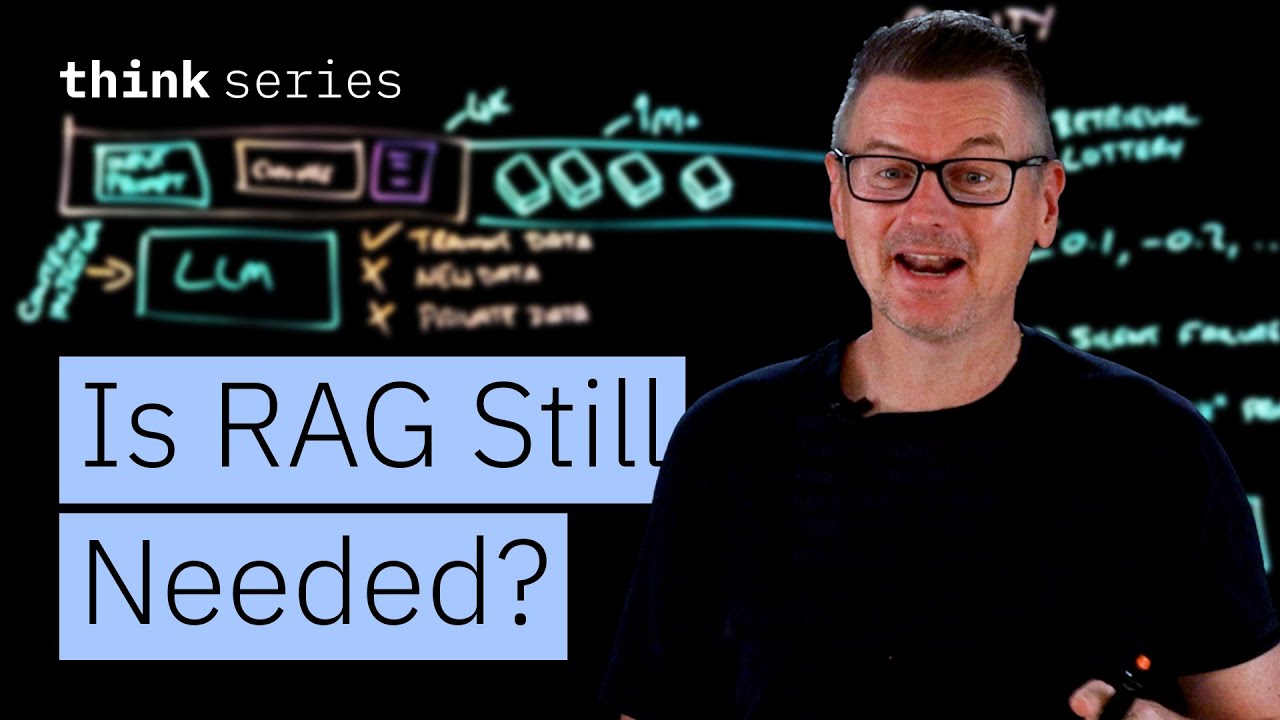
Is RAG Still Needed? Choosing the Best Approach for LLMs

Is RAG Still Needed? Choosing the Best Approach for LLMs

Martin Keen compares Retrieval Augmented Generation (RAG) with the emerging long context window approach in LLMs. He analyzes the pros and cons of each, from infrastructure simplicity and retrieval accuracy to computational costs and the 'needle in the haystack' problem, providing guidance on when to use each solution.

Context Engineering 2.0

Context Engineering 2.0

Simba Khadder explains the evolution of feature stores and MLOps, detailing why they remain crucial in the age of LLMs for high-scale use cases. He discusses the acquisition of his company, Featureform, by Redis and outlines their new vision: building a "Context Engine" for AI. This engine aims to unify structured data, unstructured data, and memory into a single pane of glass, moving beyond simple RAG to a more sophisticated "Context Engineering 2.0" that empowers agents with rich, queryable context.

Context Engineering & Agentic Search with the CEO of Chroma

Context Engineering & Agentic Search with the CEO of Chroma

Jeff Huber, CEO of Chroma, discusses "context rot," the degradation of AI performance in large context windows, and outlines a new vision for retrieval infrastructure. He covers the evolution of search, the importance of a two-stage recall-then-precision pipeline, and the challenges of agentic memory, advocating for a shift from AI "alchemy" to reliable engineering.