Uncertainty quantification

The mathematics of AI uncertainty

The mathematics of AI uncertainty

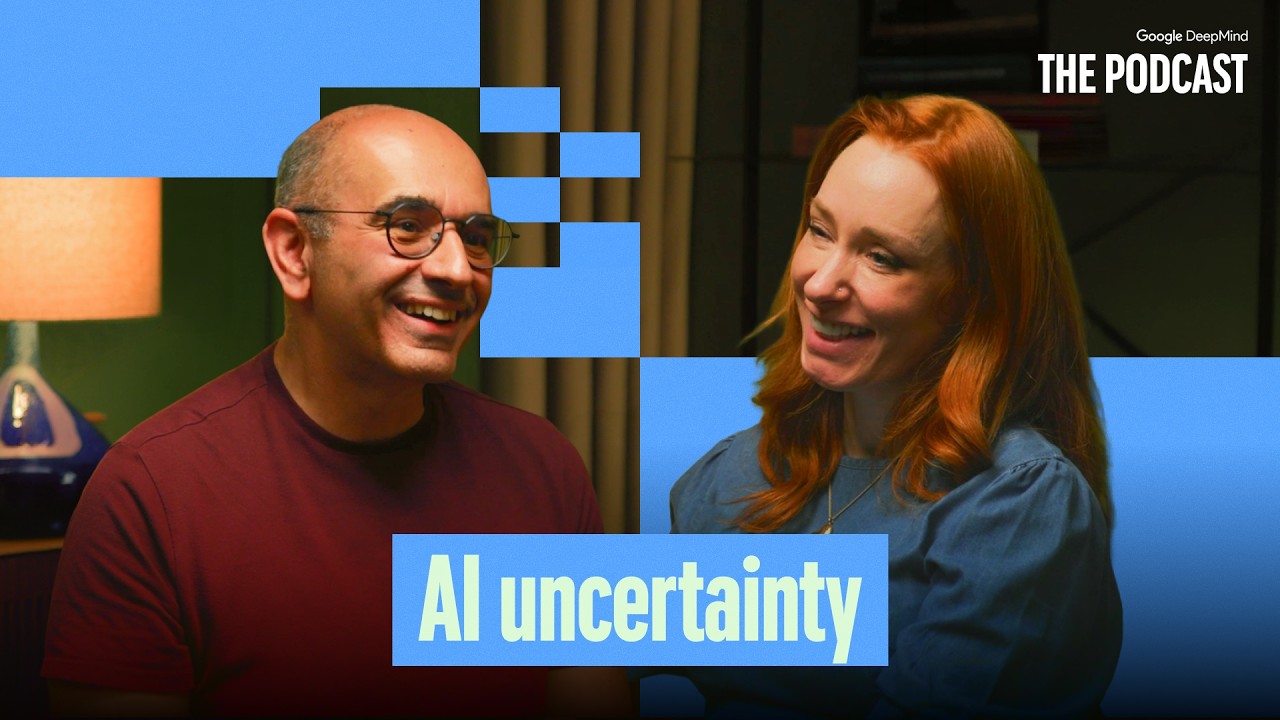
Zoubin Ghahramani, a leading researcher at Google DeepMind and professor at Cambridge, argues that incorporating uncertainty is a missing piece for ever-improving AI. He discusses the critical difference between correctness and confidence in AI, tracing the historical evolution of probabilistic models from early neural networks to modern Bayesian approaches. Ghahramani highlights how current large language models often 'fake' uncertainty and explores successful implementations in areas like weather forecasting and AlphaFold, ultimately advocating for architectural innovations over pure scale to build more robust, trustworthy, and human-aligned intelligent systems that understand their own limitations.
PhylaFlow: Hybrid flow matching in phylogenetic tree space

PhylaFlow: Hybrid flow matching in phylogenetic tree space

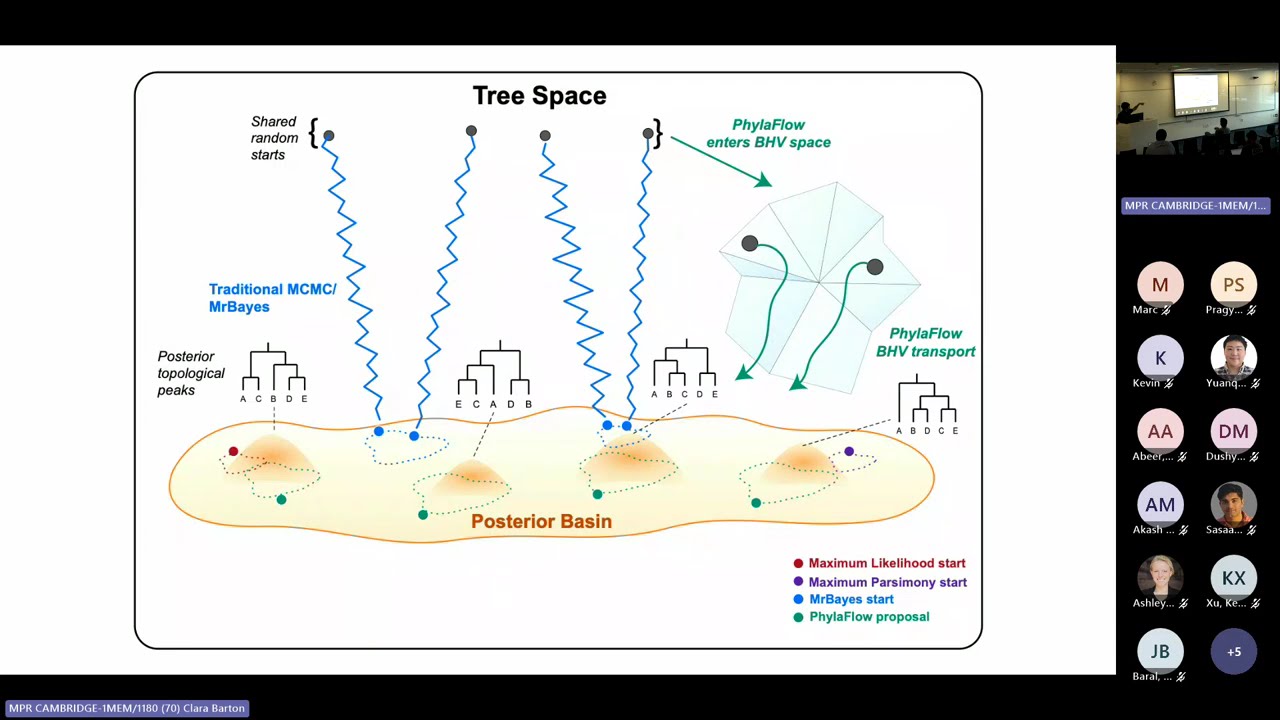
PhylaFlow is a hybrid flow-matching framework that navigates Billera–Holmes–Vogtmann (BHV) tree space to accelerate Bayesian phylogenetic inference. By learning geodesic paths from random trees to posterior samples, PhylaFlow efficiently initializes MCMC chains, drastically reducing the "burn-in" time. A PhylaFlow-MCMC variant, which guides MrBayes move acceptance, significantly outperforms traditional methods and even existing machine learning baselines for posterior sampling, achieving better results within the same computational budget. The work also explores conditioning on sequence embeddings, aiming for a future phylogenetics foundation model capable of zero-shot inference.

Uncertainty-Guided Data Augmentation for Engineers | Deep Dive - Yongmin Kwon

Uncertainty-Guided Data Augmentation for Engineers | Deep Dive - Yongmin Kwon

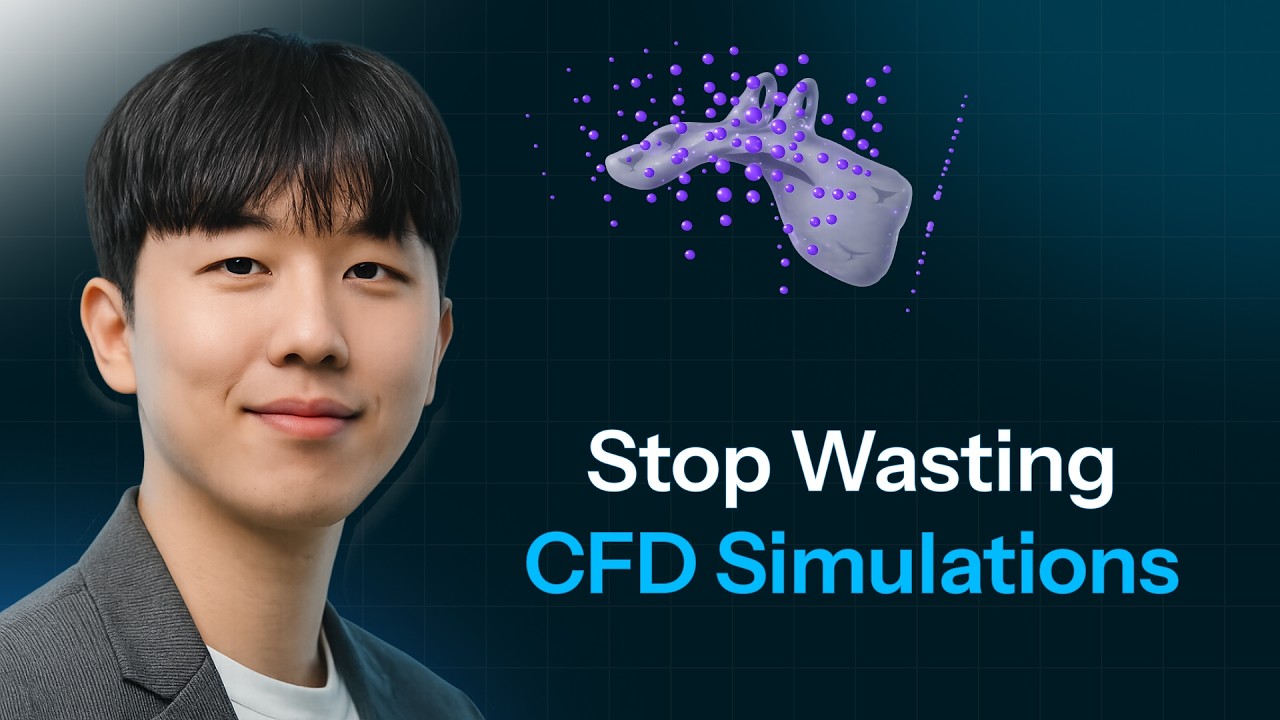
This session details a data-efficient method for training engineering surrogate models by using uncertainty quantification (UQ) to guide geometric data augmentation. Instead of random deformations, the approach lets the deep ensemble model identify its own knowledge gaps (epistemic uncertainty), then uses Free-Form Deformation (FFD) to generate new shapes specifically in those uncertain regions. This ensures every expensive simulation run yields maximally informative data, significantly improving model accuracy for a fixed computational budget across domains like structural mechanics and aerodynamics.

Inference, not prediction — Prof. Michael I. Jordan on what modern AI is still missing

Inference, not prediction — Prof. Michael I. Jordan on what modern AI is still missing

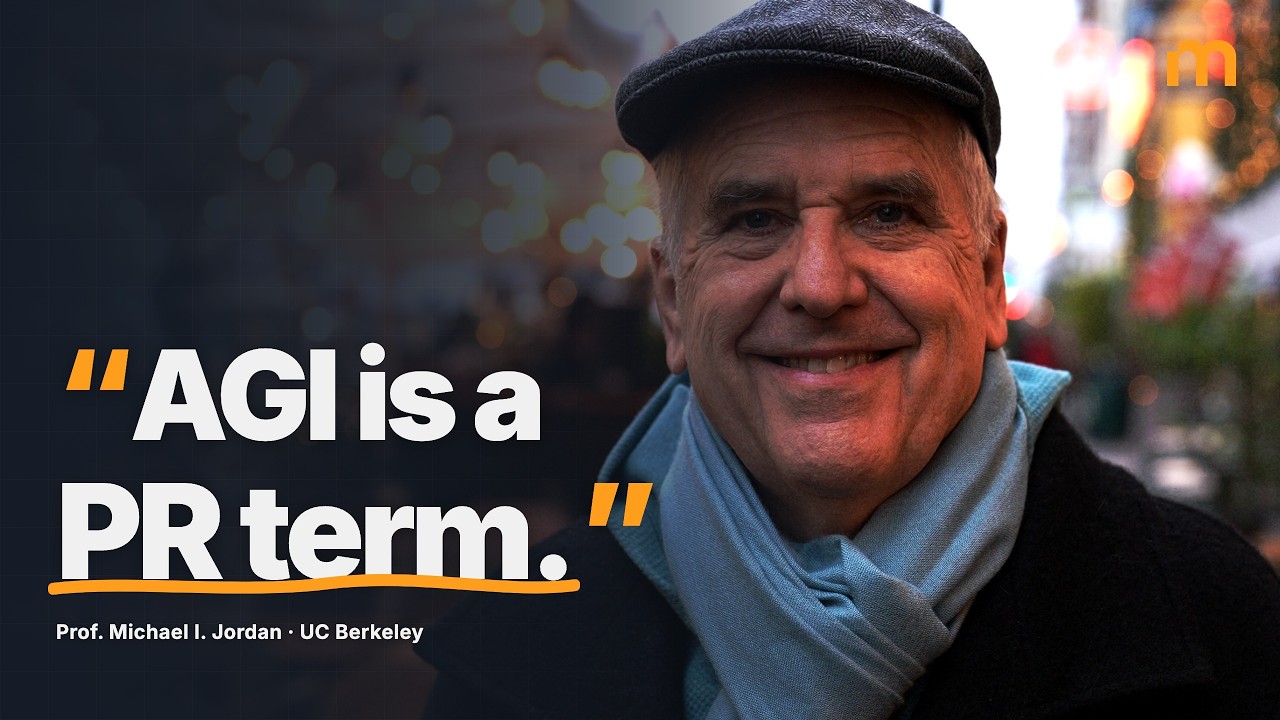
Michael I. Jordan, a leading figure in machine learning and statistics, argues for reframing AI from a race for disembodied superintelligence to the design of collective economic systems. He critiques the AGI hype, advocates for integrating economic principles and robust uncertainty quantification into ML, and proposes a new intellectual framework for building technology that augments, rather than replaces, human systems.