Can Your AI Analyst Keep a Secret? - Aaron Linsky, Bridgewater & Nikhil Benesch, turbopuffer
Aaron Linsky of Bridgewater Associates and Nikhil Benesch of turbopuffer explain how permission-aware retrieval over a 100-million-document research vault broke a conventional search setup, and why native filtering over a clustered vector index is needed to keep search fast without sacrificing recall.
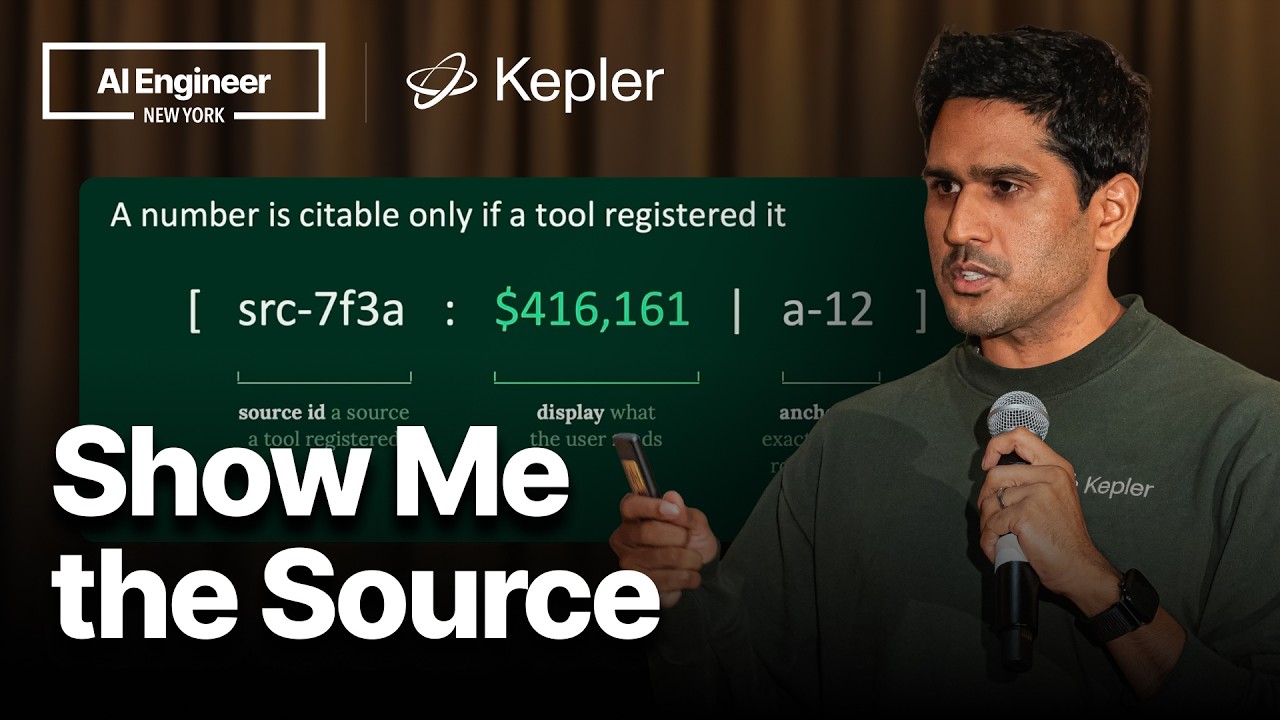
Do Not Let Models Invent Numbers - Vinoo Ganesh, Kepler
Vinoo Ganesh, CEO of Kepler, explains how the company builds a verifiable financial research platform. Models cite numbers but never write them. Deterministic code performs the math, a citation registry built from more than 30 million SEC documents anchors every figure, and a post-processing filter strips anything untraceable. The talk covers hybrid search and re-ranking on Turbopuffer, tenant isolation, and why plain RAG produced thousands of wrong numbers in evaluations.
How Bridgewater Turned 100 Million Documents Into an Edge - Sam Green & Aaron Linsky, Bridgewater
Bridgewater Associates' Applied AI and product engineering leads explain how they built the Vault, a governed repository of more than 100 million unstructured documents, and why humans and agents need different things from the same search system. They cover a hand-built benchmark that lifted precision at 10 from about 60% to over 90%, the filtering and scaling choices behind it, and the shift toward proactive agents that bring investors the topics most deserving of their attention.
Building Turbopuffer: Gergely Orosz (@pragmaticengineer ) × Simon Eskildsen (CEO)
Simon Eskildsen, CEO of Turbopuffer, discusses his unique path from early computer fascinations to founding an S3-native vector search company. He shares insights from his eight years at Shopify, detailing infrastructure scaling challenges and the development of Toxyproxy for fault injection. A core theme is his "napkin math" philosophy, using fundamental performance metrics to optimize systems and challenge benchmarks. He explains the impetus for Turbopuffer, its initial minimalist architecture, and how it achieved a 95% cost reduction for its first customer, Cursor. Simon also touches on the unexpected scarcity of CPUs due to AI workloads and his unconventional, principled approach to venture capital and building a remote-first company culture.
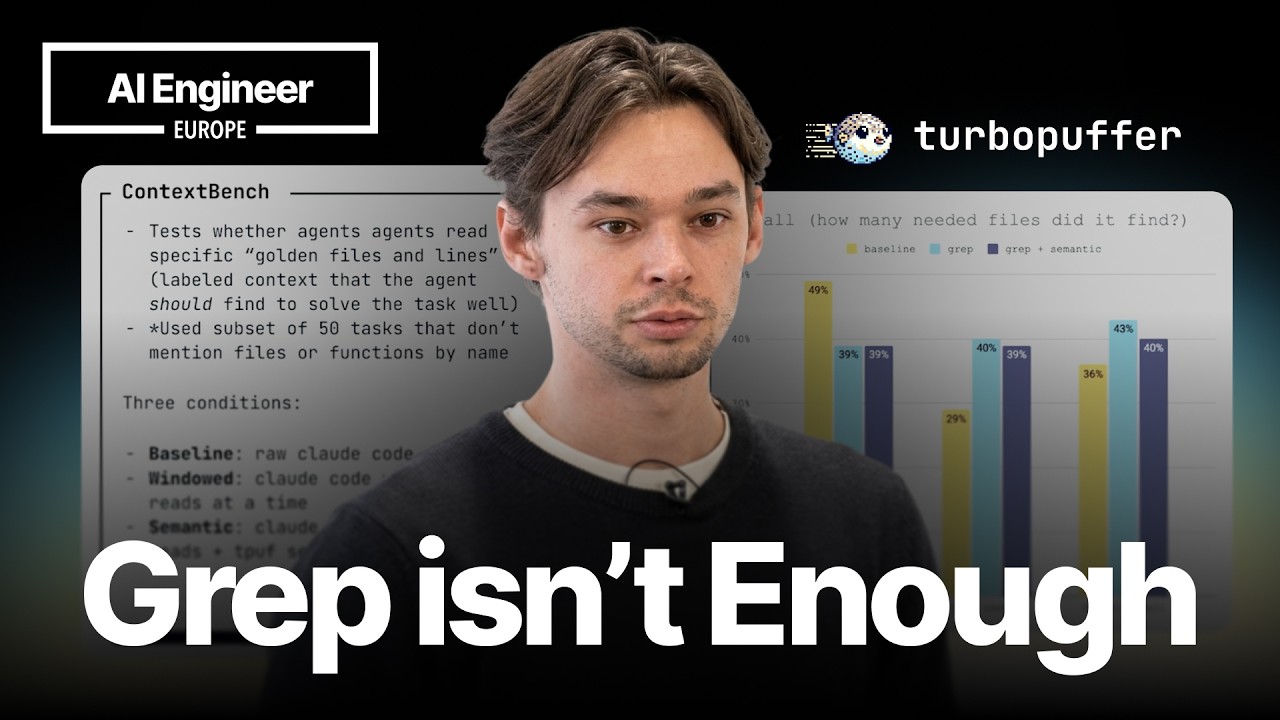
Benchmarking semantic code retrieval on Claude Code — Kuba Rogut, Turbopuffer
A detailed benchmark analysis comparing raw Claude Code's performance with windowed grep and Turbopuffer's semantic search for code retrieval in LLM agents. The study reveals significant improvements in file precision (65% to 87%) and reduced wasted reads (1 in 3 to 1 in 8) with semantic search, while highlighting the importance of the agent's understanding of when to use retrieval tools.
The Future of Search: Agents, RAG, and Why Retrieval Still Matters — Simon Eskildsen, Turbopuffer
Simon Hørup Eskildsen, founder of turbopuffer, shares his journey from scaling Shopify's infrastructure to creating a new search engine for the AI era. He discusses how a prohibitively expensive experiment at Readwise inspired him to build a cost-effective vector search solution based on object storage and NVMe. Eskildsen breaks down turbopuffer's architecture, its role in cutting costs for companies like Cursor and Notion, his philosophy on building a 'P99' engineering team, and how agentic workloads are changing the future of retrieval.