Tracing

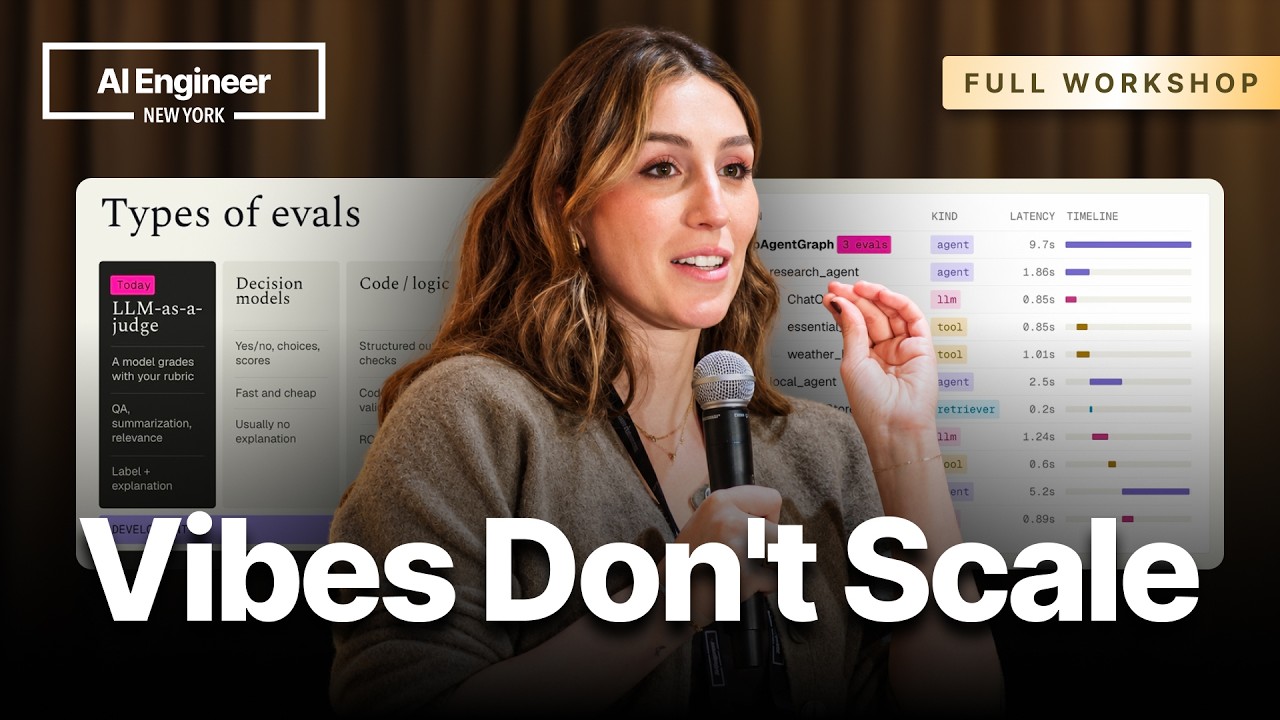
How to Write Your First AI Eval - SallyAnn DeLucia, Arize AI

How to Write Your First AI Eval - SallyAnn DeLucia, Arize AI

A hands-on workshop from Arize AI on moving from vibe checks to real LLM evals. It covers what an eval is and how it differs from a unit test, the main eval types, how to read agent traces, how to write concrete pass/fail criteria, and how to build and iterate on an LLM-as-a-judge in Arize's prompt playground.
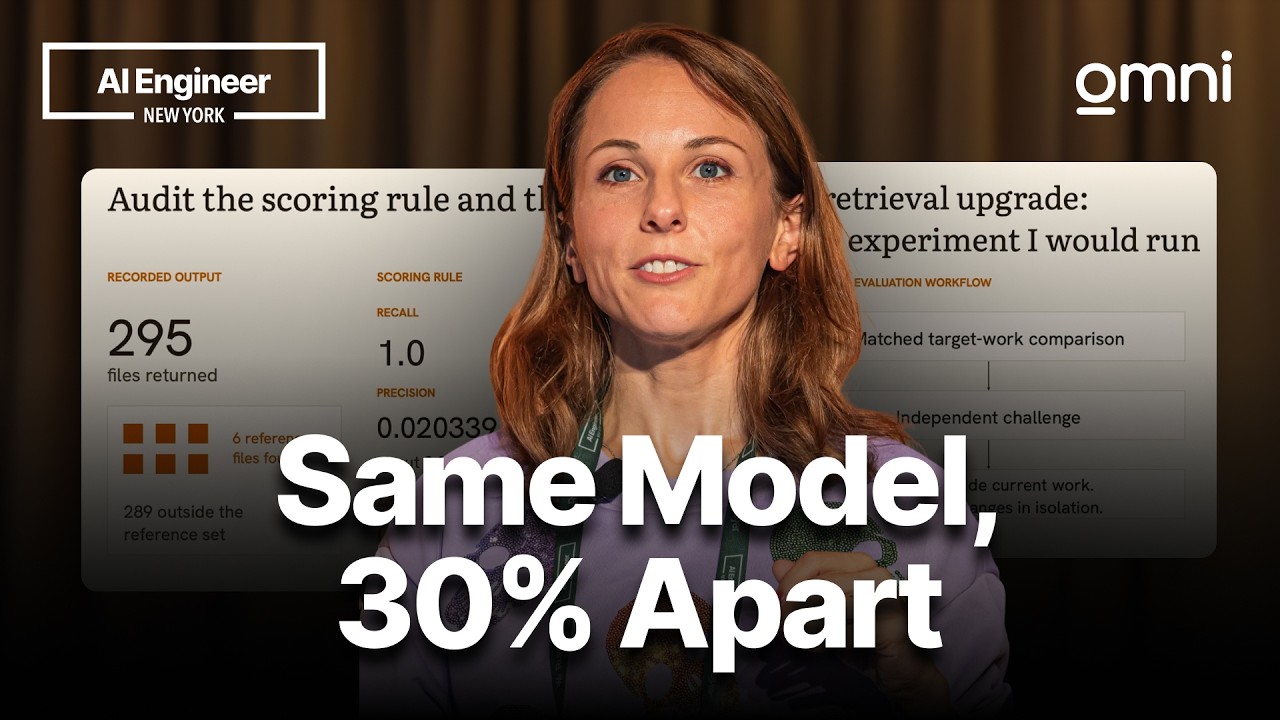
Don't Trust Your AI Agents. Test Them Like a Scientist — Stephanie Jarmak, Omni Analytics

Don't Trust Your AI Agents. Test Them Like a Scientist — Stephanie Jarmak, Omni Analytics

Stephanie Jarmak, who moved from astronomy into building coding benchmarks and agent evals, argues that most agent evaluations are easy to misread. She covers how harness choice can swamp model differences, why public benchmarks serve shortlisting rather than decisions, how to design experiment-style evals with realistic tasks, repeated runs, and full traces, and how to set quality gates, manage human review load, verify agent records, and treat production as the final test.

Beyond the Benchmark: How Parallel Web Systems Builds Reliable Web Agents

Beyond the Benchmark: How Parallel Web Systems Builds Reliable Web Agents

Parallel Web Systems engineer explains how the company moved beyond academic web-research benchmarks to a fully automated evaluation flywheel that samples production questions, generates reference answers with an oracle agent, judges with tool-equipped agents, and masks components to diagnose failures, along with the open challenges of evaluating subjective and infrastructure-dependent quality.

Advanced Workshop: Mastering AI Observability — Doug Guthrie, Braintrust

Advanced Workshop: Mastering AI Observability — Doug Guthrie, Braintrust

Doug Guthrie showcases how Braintrust connects observability with AI agent improvement. Using a support agent, he demonstrates setting up tracing, establishing evaluation baselines, and publishing custom scorers. The workshop delves into Braintrust's Topics feature for discovering unknown failure modes, configuring online automations, and importing real-world traces. A key focus is on automating the improvement cycle: using the Loop assistant for SQL-based trace analysis, integrating coding agents with Braintrust CLI skills to propose code changes, add regressions, run evals, and generate pull requests, thereby closing the feedback loop from production to development.

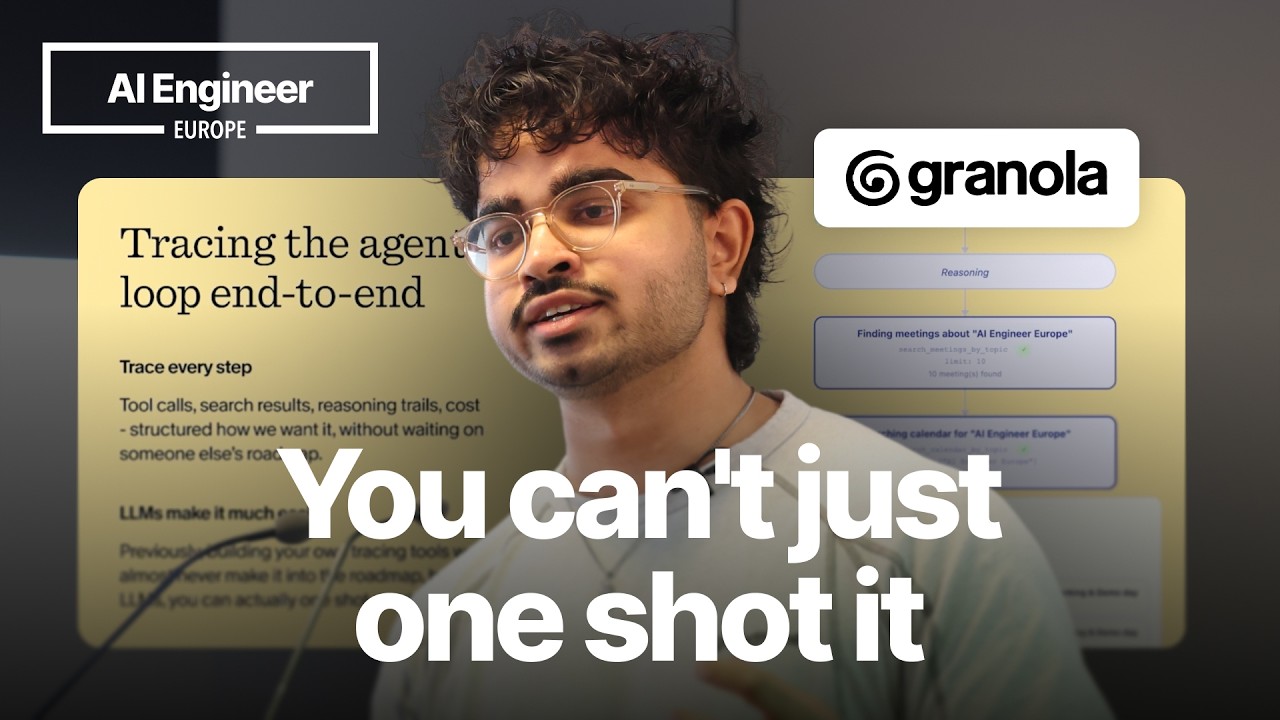
You can't just one shot it — Mehedi Hassan, Granola

You can't just one shot it — Mehedi Hassan, Granola

A product engineer from Granola shares a candid account of the challenges in moving AI features from the playground to production. This talk covers the pitfalls of "one-shot" solutions like web search and generic prompts, and details Granola's strategy of building custom internal tracing and development tooling to create a tight, effective feedback loop for iteration.

Build and monitor multi-agent contact centers using Weights & Biases

Build and monitor multi-agent contact centers using Weights & Biases

This post explores the shift from costly legacy contact center software to multi-agent AI systems. It demonstrates how to build, monitor, and evaluate these complex agentic systems using the Weights & Biases AI Developer Platform, with a focus on tracing, quality assessment, and ensuring consistent customer support.