Traces

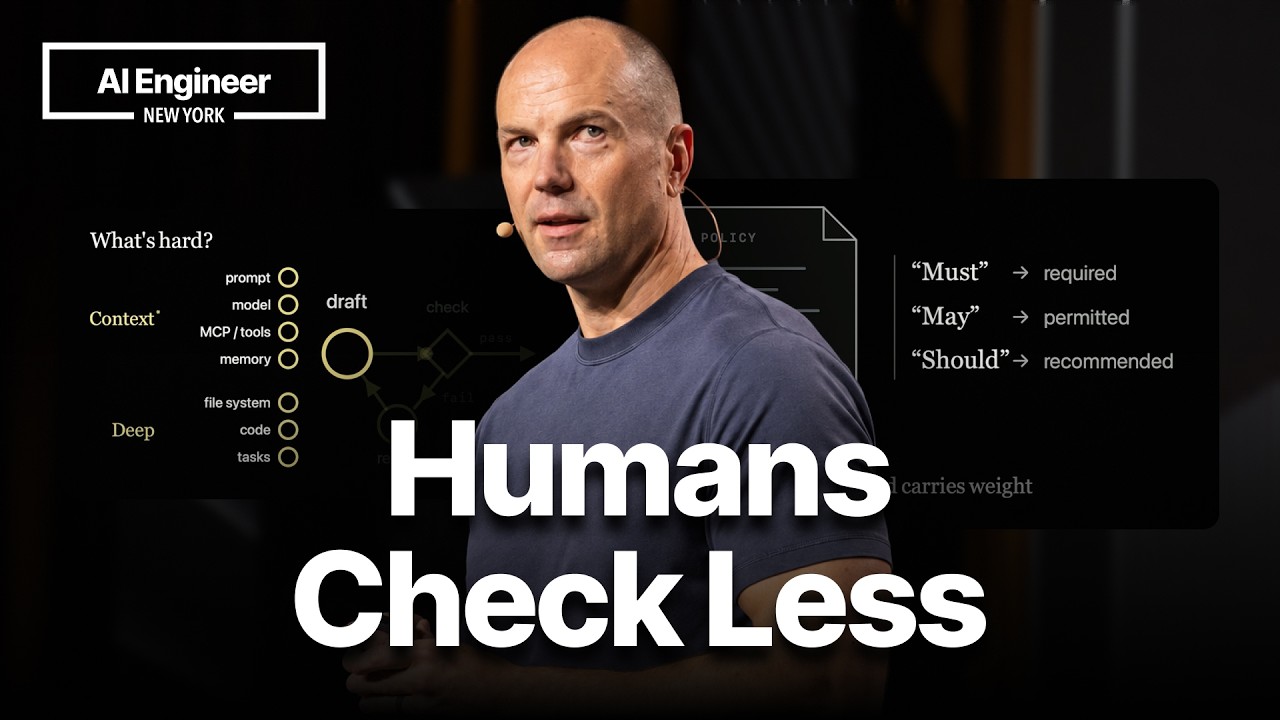
How to Know When an AI Agent Can Work Unsupervised — Evan Kormos, Coinbase

How to Know When an AI Agent Can Work Unsupervised — Evan Kormos, Coinbase

Evan Kormos of Coinbase presents a practical framework for bringing AI agents into policy-driven, regulated workflows. He models processes as DAGs with loops inside each node, argues that a loop is only as trustworthy as its check, and shows how evals and traces create a new confidence mechanism. Agents then move through supervised, sampled, and exception-only stages.
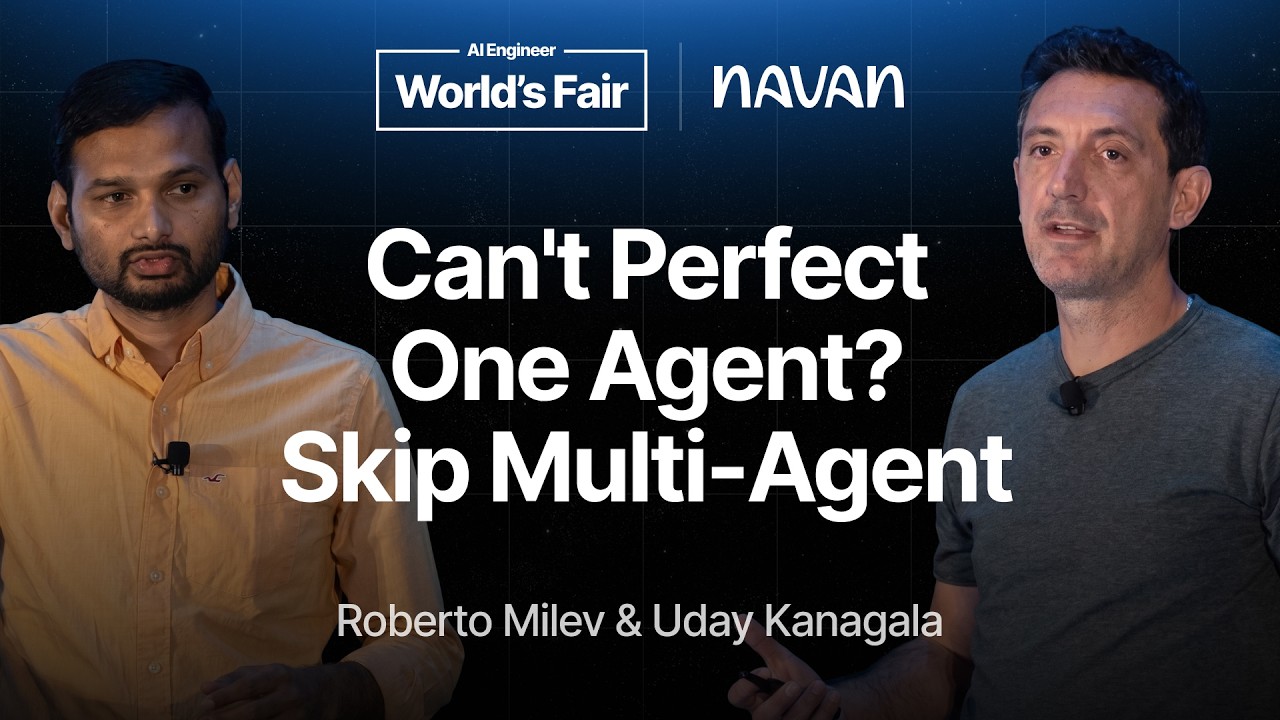
Agents Are Where Microservices Were in 2015 — Roberto Milev & Uday Kanagala, Navan

Agents Are Where Microservices Were in 2015 — Roberto Milev & Uday Kanagala, Navan

Roberto Milev and Uday Kanagala from Navan discuss the challenges and emerging best practices in building and operating AI agents, drawing parallels with microservices. They highlight the shift to stateful runtimes, innovative memory and context management using 'skills,' and crucial solutions for observability and testing non-deterministic systems. A central theme is the critical need for robust authorization and guardrails, given the blurring line of agentic action, and a preference for mastering single-agent loops before scaling to complex orchestrations. They conclude by outlining the solved and unsolved problems, with cost and debugging remaining significant hurdles.