Threat modeling

AI Security Engineer Foundations + Certificate — Javier Garza, Snyk

AI Security Engineer Foundations + Certificate — Javier Garza, Snyk

Javier Garza's AI Security Engineer Foundations workshop walks through the OWASP LLM Top 10, shadow AI and AI Bills of Materials, AI threat modeling, securing agent skills and MCP servers, secure vibe coding, and offensive agent workflows. Throughout, he argues that AI systems break traditional security assumptions because they are probabilistic, reach external content, and act through tools, so defenses must combine least-privilege access, continuous inventory, automated scanning, human approval, and education that explains guardrails rather than merely imposing them.

Debating RSI, the US-China Gap, and Jaggedness of Frontier AI

Debating RSI, the US-China Gap, and Jaggedness of Frontier AI

Jean-Stanislas Denain of Epoch AI and Nathan Lambert debate the nuanced trajectory of AI. They discuss the current state of RSI, the US-China AI capabilities gap (estimated 6-8 months), and the role of distillation and compute in closing it. The conversation also covers the challenges and differing paces of AI in robotics, insights from Chinese AI job postings, and the complex trade-offs between open and closed models regarding safety and misuse. They touch on Epoch AI's research philosophy and speculate on the intricate, evolving post-training recipes at frontier AI labs.

The Rush to Adopt AI: How to Get it Right & Business Risks • Nick Selby & Sarah Wells • GOTO 2026

The Rush to Adopt AI: How to Get it Right & Business Risks • Nick Selby & Sarah Wells • GOTO 2026

In this interview, Sarah Wells and Nick Selby discuss the significant business risks introduced by the current rush to adopt AI. They cover how AI vendors blur security terminology, how the insatiable need for data creates an enormous blast radius for breaches, and provide a framework for responsible AI adoption through threat modeling, cross-disciplinary governance, and a return to IT fundamentals.

Designing safe digital systems for the humanitarian sector

Designing safe digital systems for the humanitarian sector

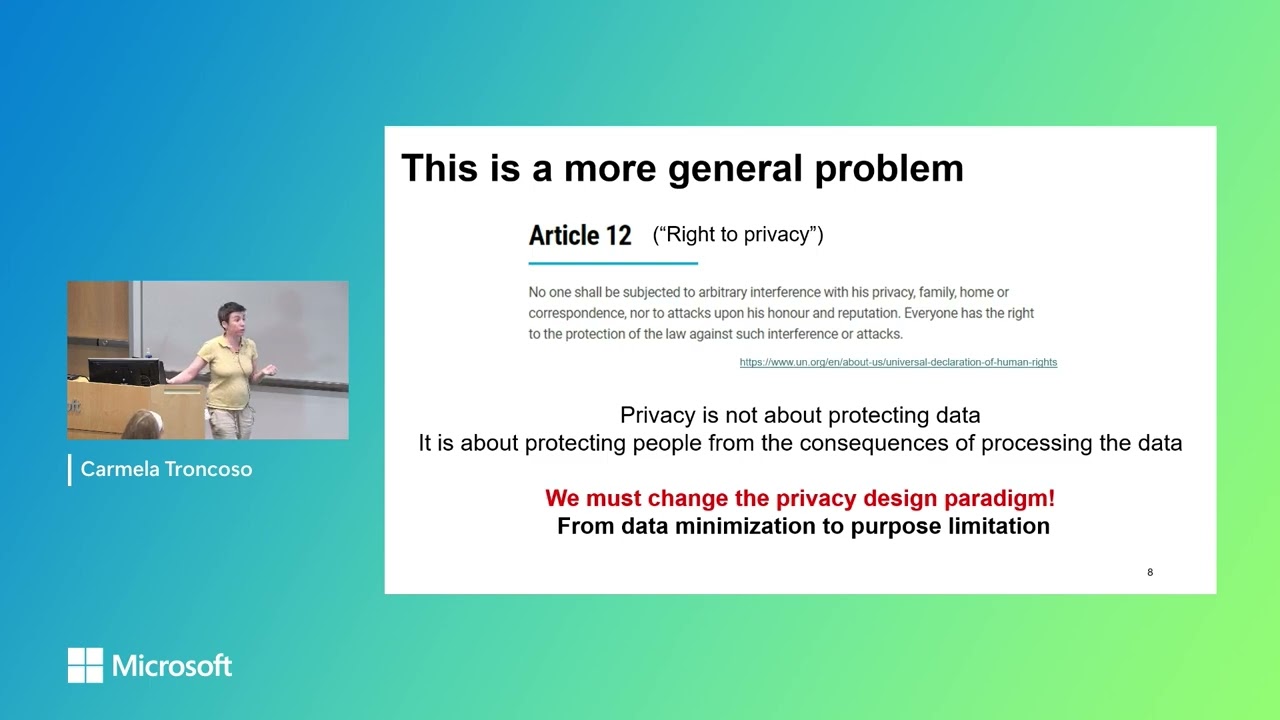
Carmela Troncoso from EPFL discusses her collaboration with the International Committee of the Red Cross (ICRC) to digitalize humanitarian aid distribution. She advocates for a paradigm shift from data minimization to "purpose limitation," designing systems that are structurally incapable of being misused, even if the data is accessed. The talk details a practical, low-cost, and connectivity-resilient system built on this principle, using smart cards and cryptographic techniques to protect vulnerable aid recipients while meeting the operational needs of the ICRC.

A Framework for Abusability Analysis: The Case of Passkeys in Interpersonal Threat Models

A Framework for Abusability Analysis: The Case of Passkeys in Interpersonal Threat Models

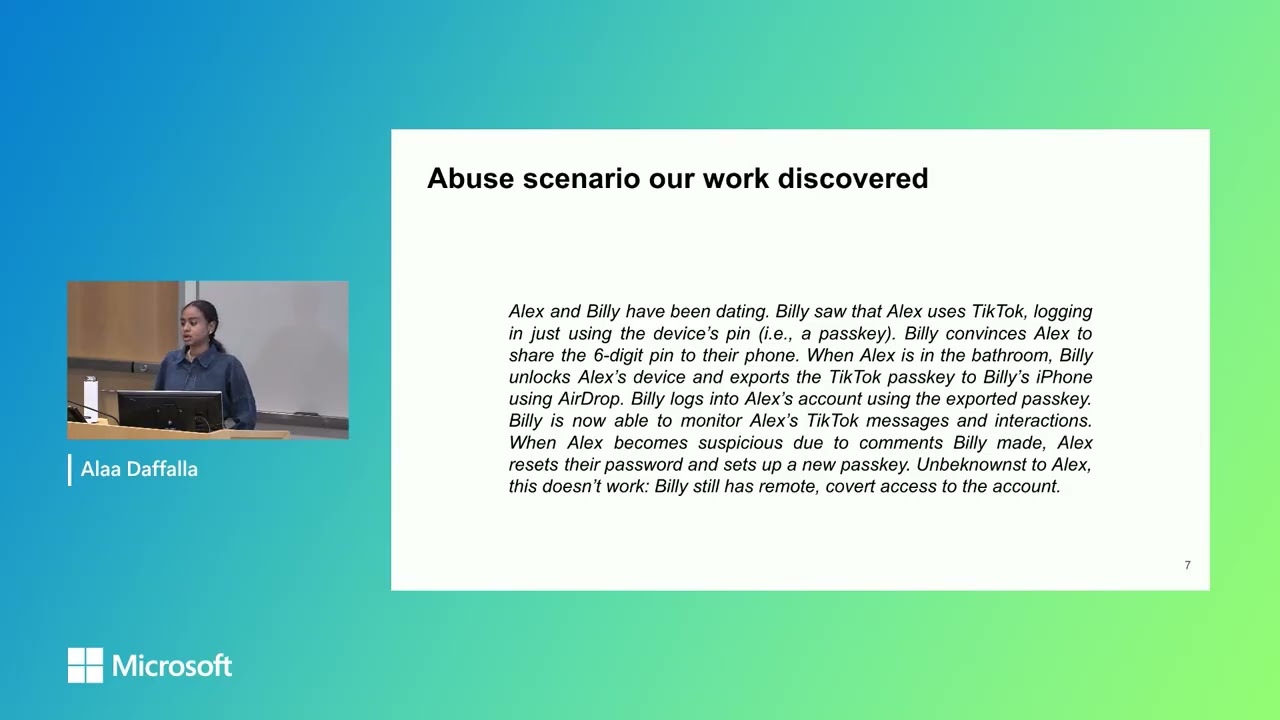
This talk introduces an "abusability analysis framework" to evaluate technologies like passkeys under interpersonal threat models, such as intimate partner violence. An analysis of 19 services revealed critical implementation flaws, including irrevocable cloned passkeys and the failure of password resets to secure accounts, which can create persistent backdoors for abusers.