Small language models

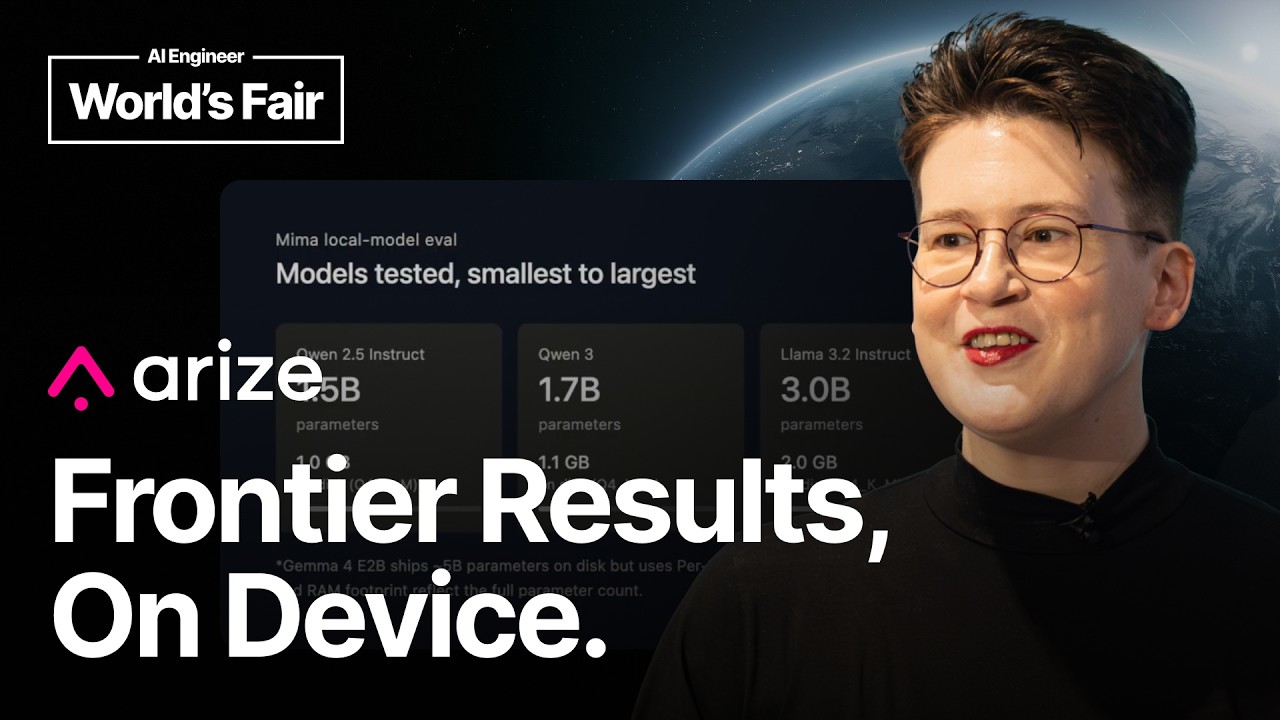
Frontier results, on device - RL Nabors, Arize

Frontier results, on device - RL Nabors, Arize

RL Nabors discusses the significant costs associated with using frontier AI models, covering security, latency, and financial implications. She introduces a framework for right-sizing AI solutions by leveraging smaller, task-specific models and Small Language Models (SLMs). The framework details how to prove task feasibility, establish success criteria with golden datasets, conduct capability evaluations (using tools like Phoenix), and select the most appropriate "Small And Good Enough" (SAGE) model. Nabors further demonstrates how prompt engineering, particularly few-shot prompting, and post-processing can close performance gaps with larger models, while advocating for continuous regression evaluations to maintain performance integrity. The overarching message is to "prototype big, deploy small" to optimize AI deployments.

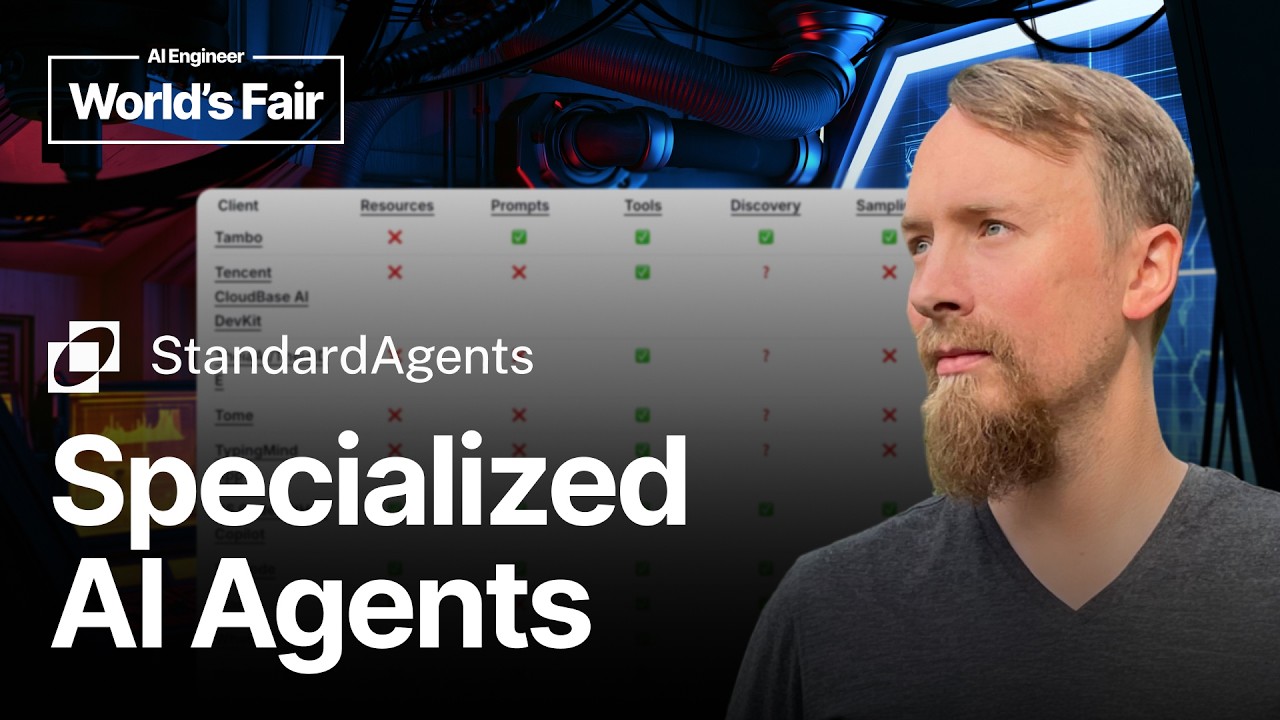
The Future Is Domain-Specific Agents - Justin Schroeder, StandardAgents

The Future Is Domain-Specific Agents - Justin Schroeder, StandardAgents

Justin Schroeder argues for a paradigm shift in AI agent development from monolithic, context-inflated agents (inheritance) to modular, domain-specific agents (DSAs) that operate through composition. He explains how DSAs offer superior token efficiency, cost savings with smaller models, enhanced security through capability limits, and better scalability, predicting their widespread adoption by 2027 as a solution to rising AI costs and the need for practical, customer-facing AI.

Welcome Session - Microsoft Research India Academic Summit 2026

Welcome Session - Microsoft Research India Academic Summit 2026

The Microsoft Research India Academic Summit 2026 opens with MSR India Lab Director Venkat Padmanabhan outlining the lab's collaborative research philosophy and Microsoft's evolution into an AI infrastructure powerhouse. He details MSR India's four core research pillars: fundamental AI advancements, specialized domain solutions, efficiency across the AI stack (including small language models), and the crucial diffusion of AI technologies for societal impact in India and the Global South, exemplified by diverse projects and collaborations.

MagenticLite is here: A full-stack agentic experience powered by Small Models

MagenticLite is here: A full-stack agentic experience powered by Small Models

Microsoft Research introduces MagenticLite, an agentic framework powered by two new small, open-weight models: Magentic Orchestrator for planning and coding, and Fara-1.5 for browser automation. The talk details the novel synthetic data generation techniques and training strategies used to achieve state-of-the-art performance in small models, enabling them to compete with much larger ones.

I Read 9,000 AI Papers So You Don't Have To

I Read 9,000 AI Papers So You Don't Have To

Nick Vasiloglou, VP of Research at Relational AI, analyzes the key trends from NeurIPS 2025, highlighting the most impactful and under-the-radar developments for industry professionals. The discussion covers the rise of data markets through real-time attribution, the sophisticated engineering behind capable small language models (SLMs), the explosion of AI for science, and the shift towards post-training models with real-world tools.

Everything I Learned Training Frontier Small Models — Maxime Labonne, Liquid AI

Everything I Learned Training Frontier Small Models — Maxime Labonne, Liquid AI

Maxime Labonne from Liquid AI shares a playbook for post-training frontier small models (under 1GB) for on-device deployment. The talk breaks down the LFM2.5 recipe, which includes on-policy preference alignment and agentic reinforcement learning, and addresses unique challenges at the 1B scale, such as capability interference and 'doom loops', offering concrete solutions to build efficient models for tasks like data extraction and tool use.