Skill distillation

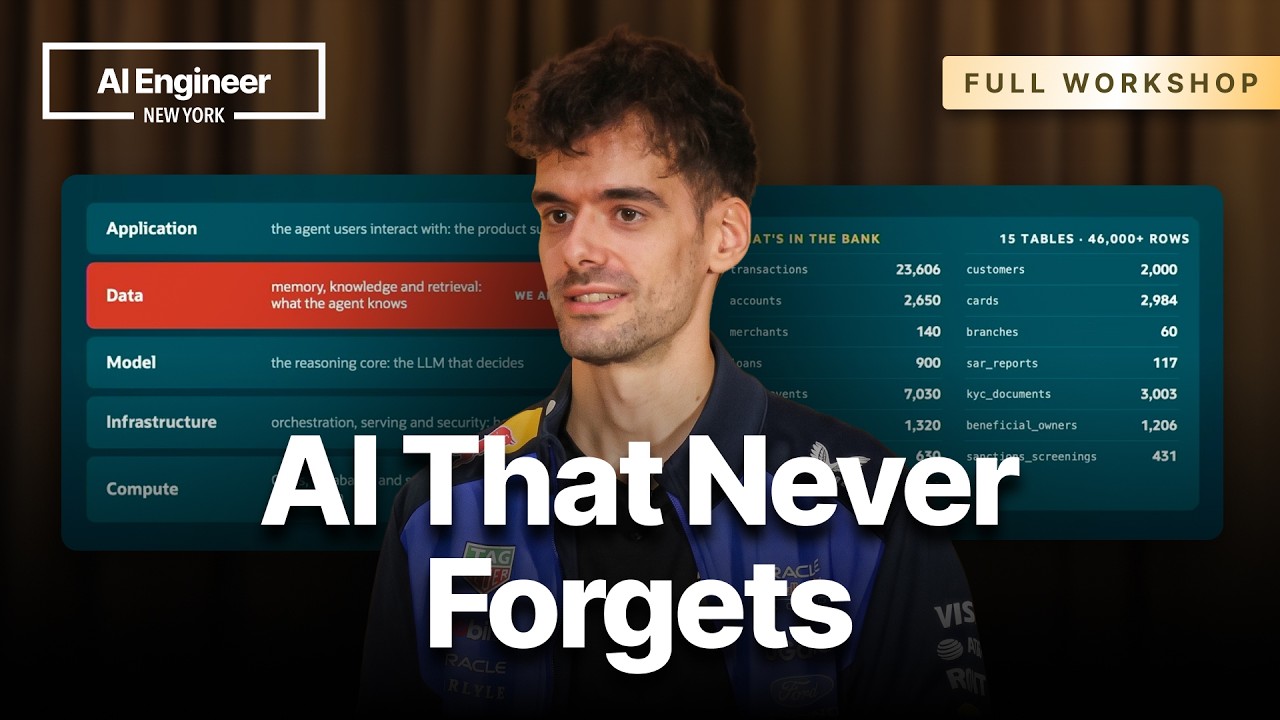
Memory-Aware Agent Harnesses for Anti-Money Laundering — Nacho Martinez, Oracle

Memory-Aware Agent Harnesses for Anti-Money Laundering — Nacho Martinez, Oracle

Nacho Martinez argues that the model is fixed while the harness (agent loop, memory, context engineering, tools and skills, continual learning) is where engineers can make real gains. He walks through the agent stack and applies it to an autonomous AML agent that flags suspicious bank transactions, then demonstrates the workshop environment and answers questions on memory design, skill retrieval, caching, and hybrid search.
Turning Agent Memory Into Skills That Work — Will Lyon, Neo4j

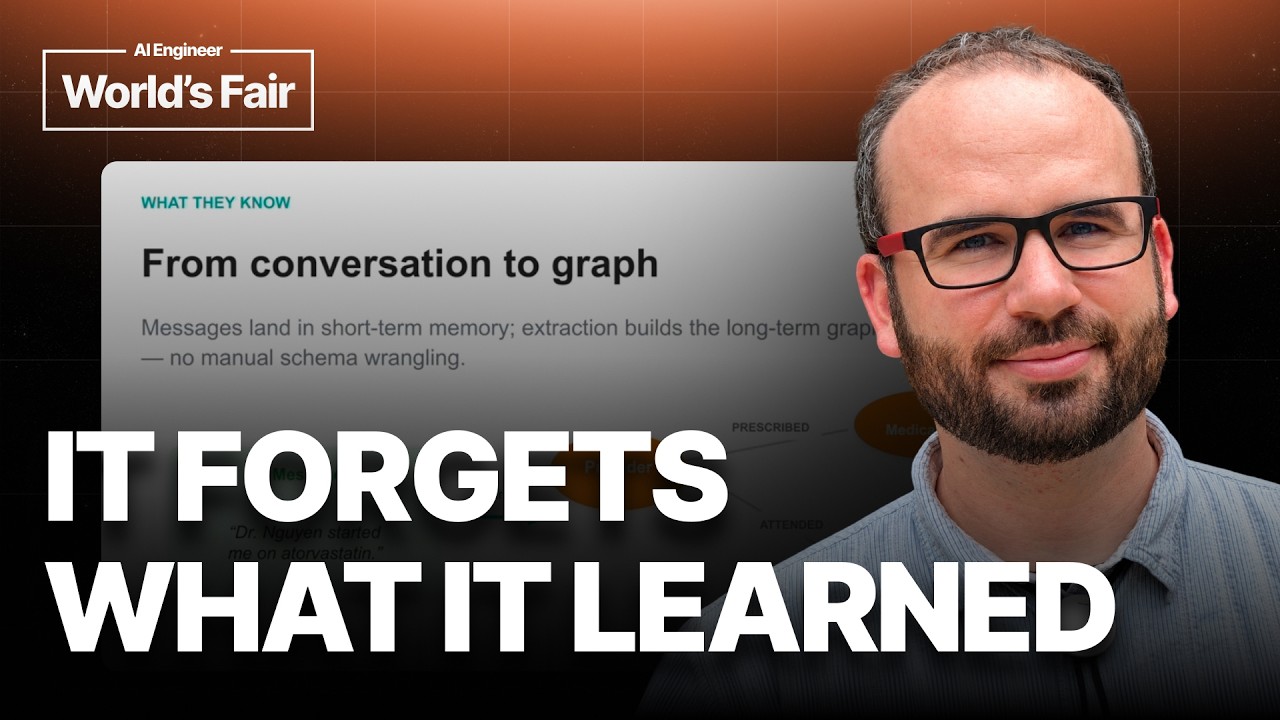
Turning Agent Memory Into Skills That Work — Will Lyon, Neo4j

Neo4j's Will Lyon argues that embedding-based retrieval gives agents recall but not actionable knowledge. He presents a context graph model of agent memory with short-term, long-term, and reasoning memory, then shows how to distill grounded, governed skills from that graph using APE typed execution graphs, with grounding, coverage, and coherence checks, staleness alerts, and a live demo of the Neo4j Agent Memory Service building a patient-intake skill.

From 36% to 100%: How Self-Improving Agents Write Their Own Skills — Rafal Wilinski, Runlayer

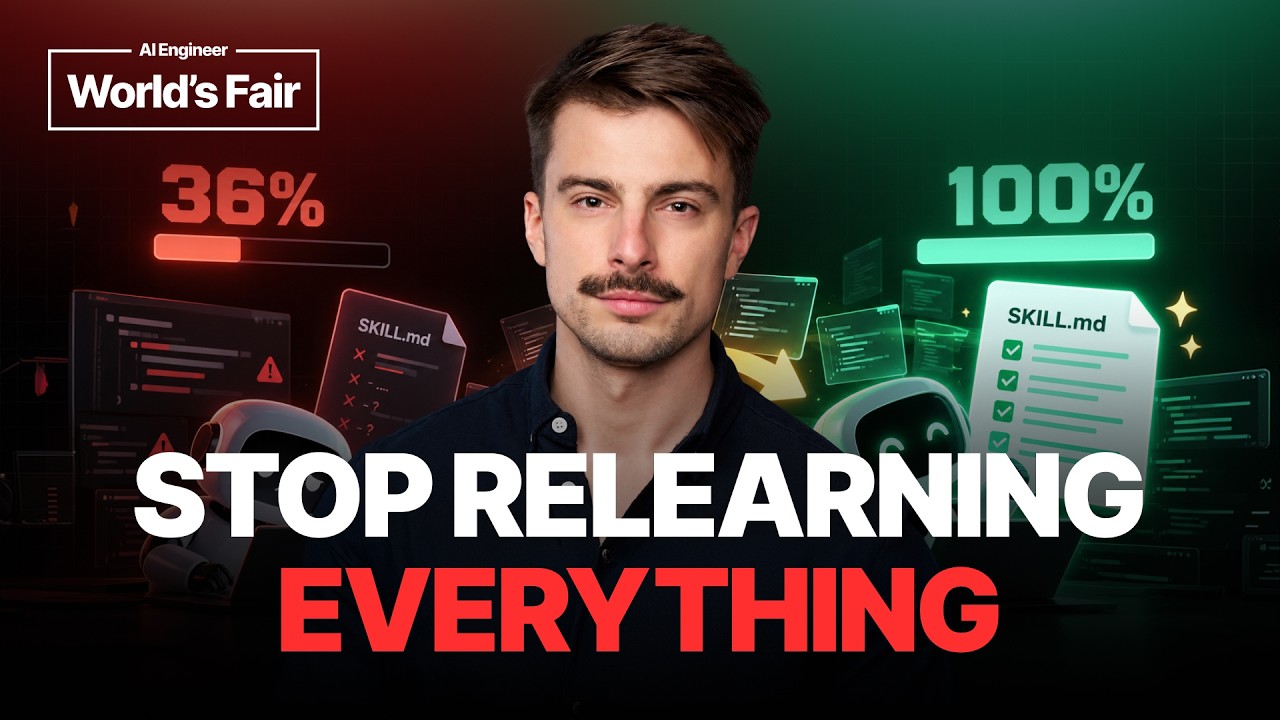
From 36% to 100%: How Self-Improving Agents Write Their Own Skills — Rafal Wilinski, Runlayer

Rafal Wilinski of Runlayer argues that when one agent solves a hard problem, that knowledge should become a skill shared across the whole company. He covers why skills matter more as agents run longer, three problems with current skills, using MCP as a governed distribution layer, distilling skills from successful and failed agent traces inspired by the Voyager paper, and the organizational flywheel as a durable competitive advantage.