Robot learning

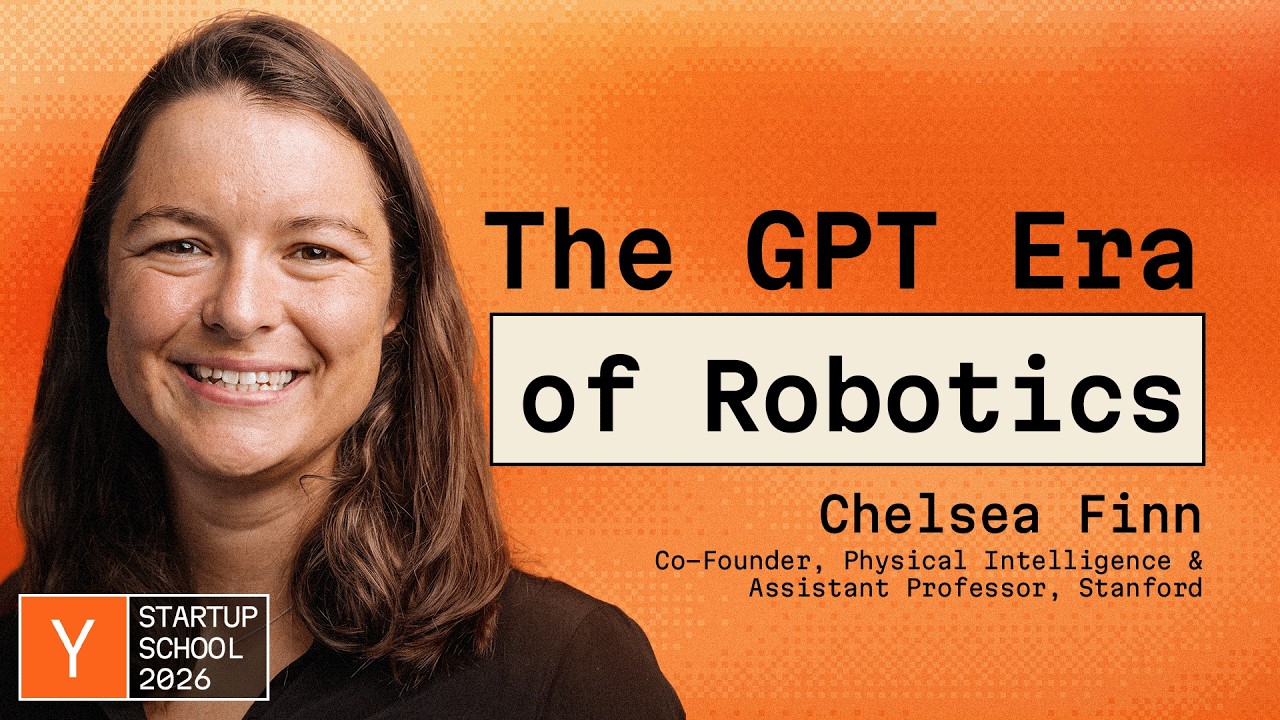
Chelsea Finn: This is the State of the Art in Robotics

Chelsea Finn: This is the State of the Art in Robotics

Chelsea Finn, co-founder of Physical Intelligence, discusses the path to building general-purpose robots that operate reliably in the real world. She details how advanced reinforcement learning with human intervention, coupled with multi-scale memory systems, significantly boosts robot autonomy and throughput. Finn argues that robotics is entering its "GPT era," moving from specialized models to powerful, out-of-the-box foundation models like their PIO7, which demonstrates strong compositional generalization across tasks, objects, and robot platforms, matching or exceeding specialist performance without fine-tuning. The talk also covers the unique challenges and opportunities in robotics data, model deployment, and career paths.
The Next Frontier of AI Is Spatial Intelligence | Fei-Fei Li on a16z

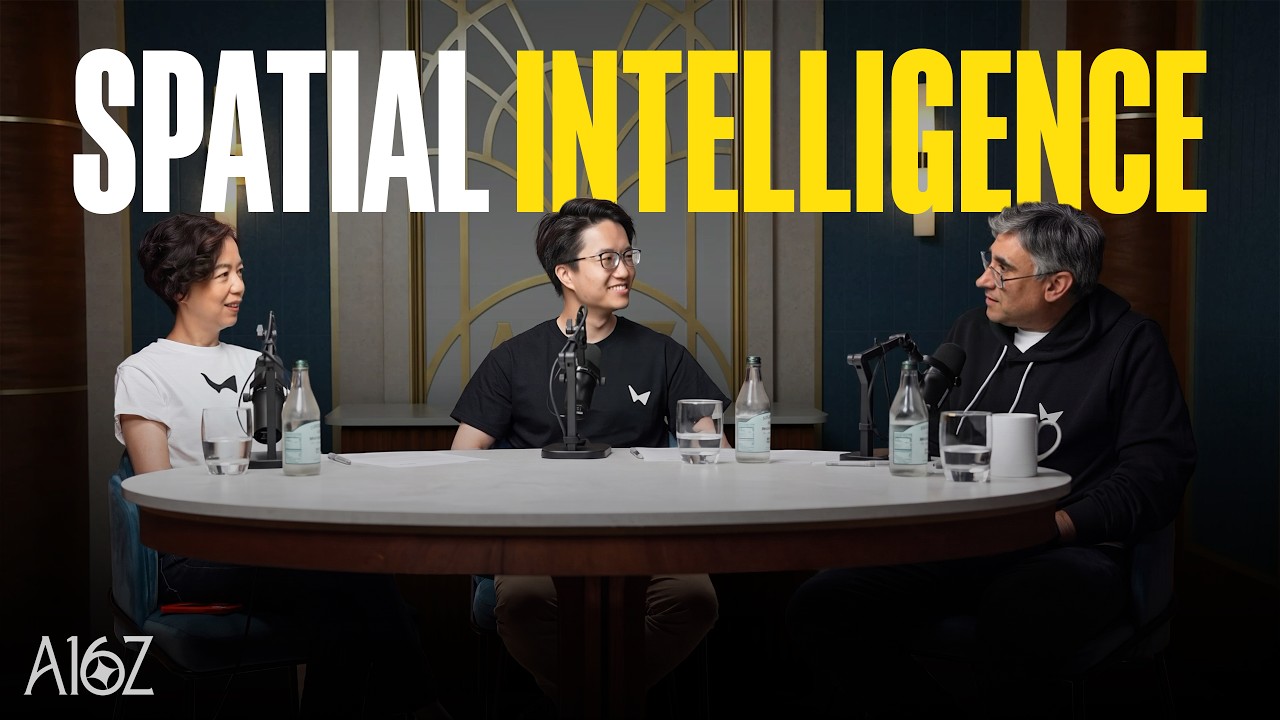
The Next Frontier of AI Is Spatial Intelligence | Fei-Fei Li on a16z

Fei-Fei Li and Yunzhu Li discuss World Labs' acquisition of SceniX, focusing on building "spatial intelligence" and "large world models" to enable robots to understand and interact with the physical world. They elaborate on SceniX's "real-to-sim-to-real" pipeline, emphasizing how simulation, coupled with generative models like Marble, addresses the data bottleneck in robotics by providing consistent, scalable, and efficient training and evaluation environments. The conversation covers the role of counterfactual reasoning, the development of robotics foundation models, and the strategic focus on semi-structured environments for pragmatic, reliable robot deployment.

Q-learning with Flow-Matching Policies

Q-learning with Flow-Matching Policies

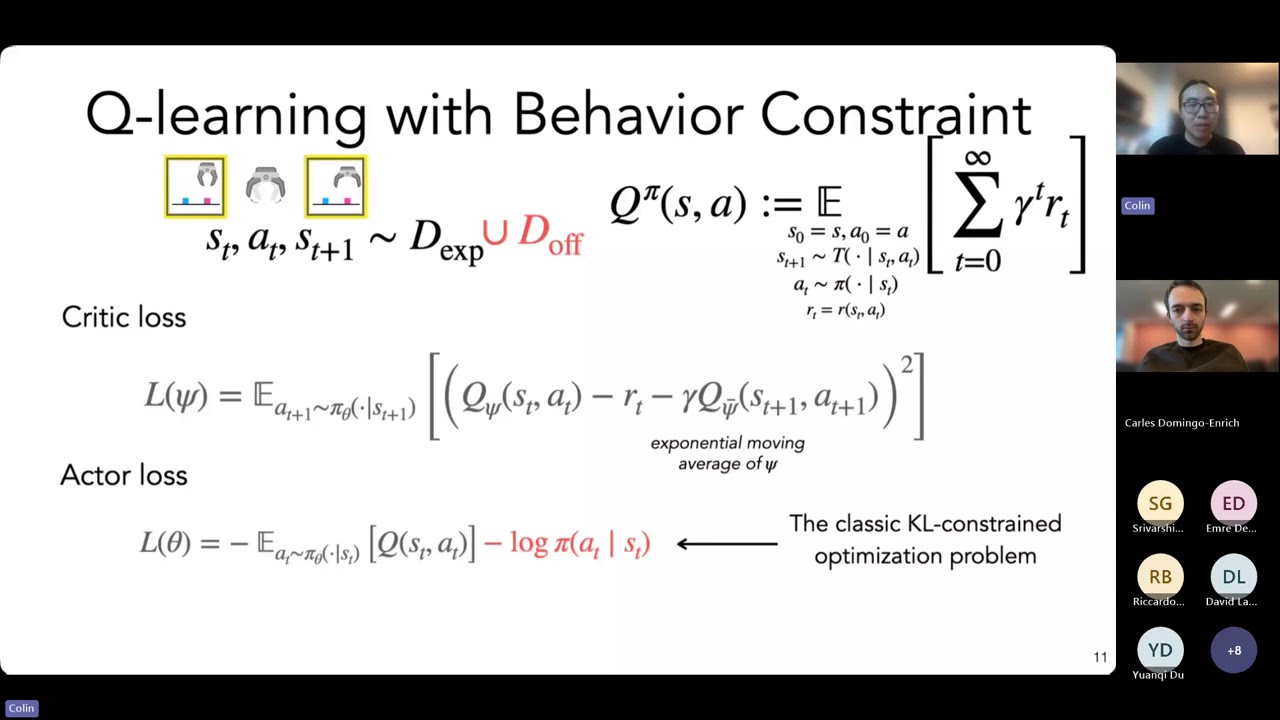
This talk explores methods for optimizing expressive, multi-modal policies, such as those based on flow-matching, with off-policy reinforcement learning. The speaker presents two novel algorithms, FQ-RL and CAM, designed to overcome the instability of backpropagation through multi-step generative models, enabling effective online self-improvement and adaptation for robotic manipulation tasks.