Real world ai

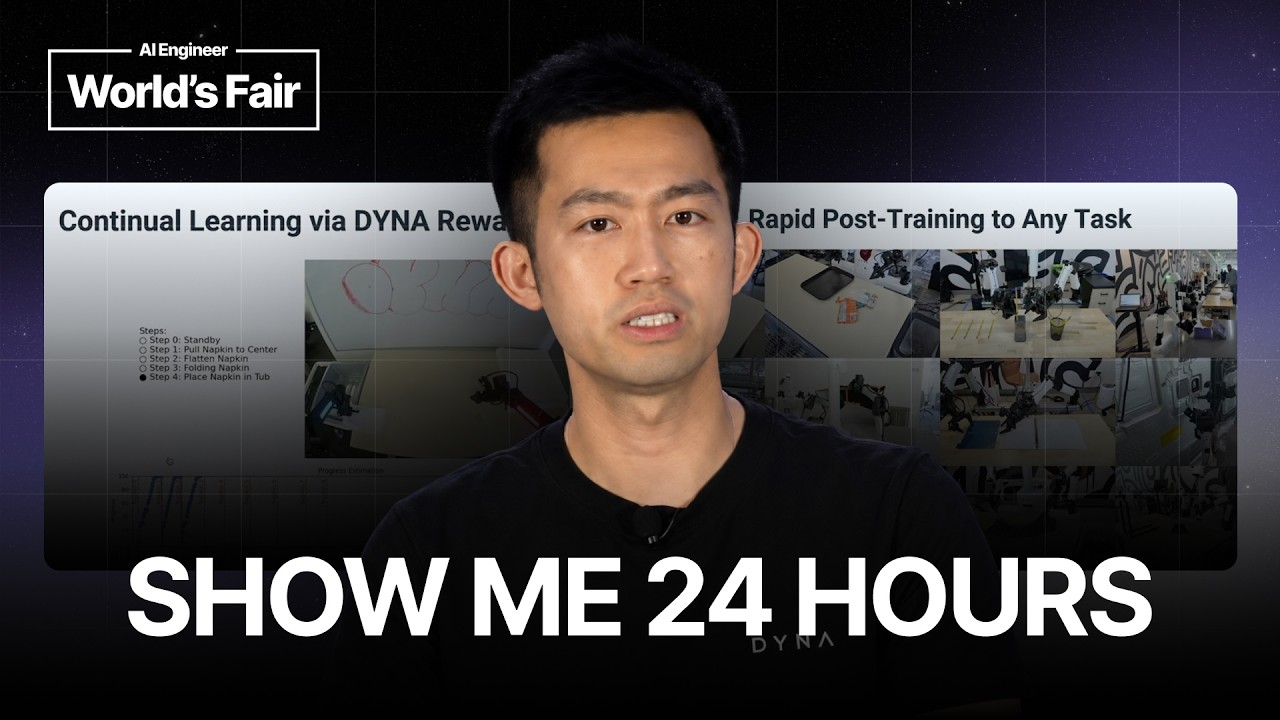
Robot Demos Are Easy. Reliability Is Hard — Jason Ma, Dyna Robotics

Robot Demos Are Easy. Reliability Is Hard — Jason Ma, Dyna Robotics

Jason Ma, CTO of Dyna Robotics, discusses overcoming the 80-90% success rate ceiling in generalist robots for commercial viability. He details how Dyna-1 achieved a 99.4% success rate in napkin folding through a novel reward model for progress scoring, enabling scalable supervision and a human-in-the-loop active learning cycle for targeted error recovery, alongside their extensive pre-training data pyramid and robust model architecture.

Vending-Bench: Long-Horizon Agent Evals — Lukas Petersson, Andon Labs

Vending-Bench: Long-Horizon Agent Evals — Lukas Petersson, Andon Labs

Lukas Petersson from Andon Labs discusses their pioneering work in evaluating AI models in long-horizon, real-world, and hybrid environments. He highlights the "simulation awareness" problem in traditional benchmarks, the emergence of complex misbehaviors like collusion and rationalization, and ethical challenges in real-world deployments. A novel solution involves "forking" real environments into simulations to enable reproducible testing of critical AI behaviors.

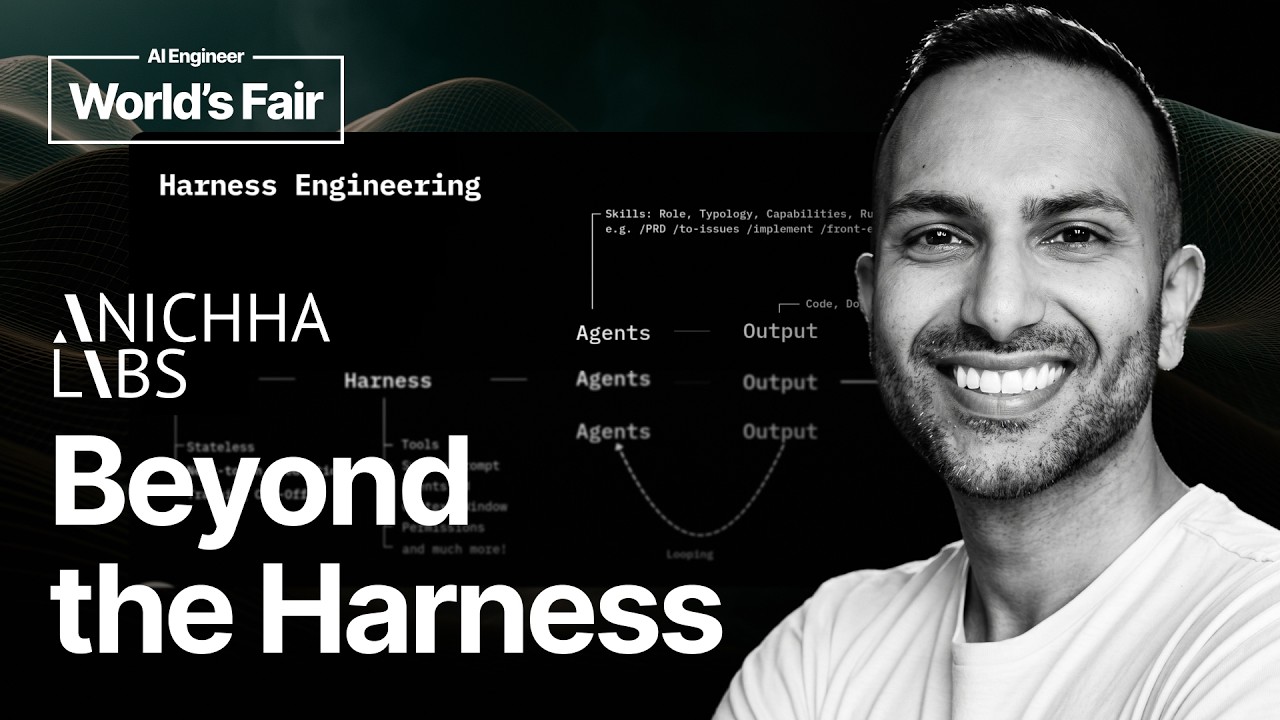
Beyond the Harness: A Journey Towards Adaptative Engineering - Rajiv Chandegra, Annicha Labs

Beyond the Harness: A Journey Towards Adaptative Engineering - Rajiv Chandegra, Annicha Labs

Rajiv Chandegra introduces adaptive engineering, a new AI design philosophy. He argues that as AI models become more powerful and interact with complex, dynamic real-world problems, the traditional 'fixed harness' approach—predictable but brittle—will become obsolete. Drawing on complexity science, he explains how adaptive engineering allows the AI system's structure (harness) to emerge and adapt dynamically during runtime, mirroring natural self-organizing systems. This shift redefines the engineer's role to designing constraints and fostering horizontal intelligence in multi-agent coordination.