Prompt injection

What should security leaders do with AI? They don’t know.

What should security leaders do with AI? They don’t know.

This podcast explores the challenges cybersecurity leaders face in adopting AI, the emergence of new threats like ghostjacking, and AI's current capabilities in patching vulnerabilities. It highlights the prevalent "AI decision paralysis" and offers strategic advice for integrating AI into security operations, advocating for a human-in-the-loop approach and a realistic assessment of AI's current
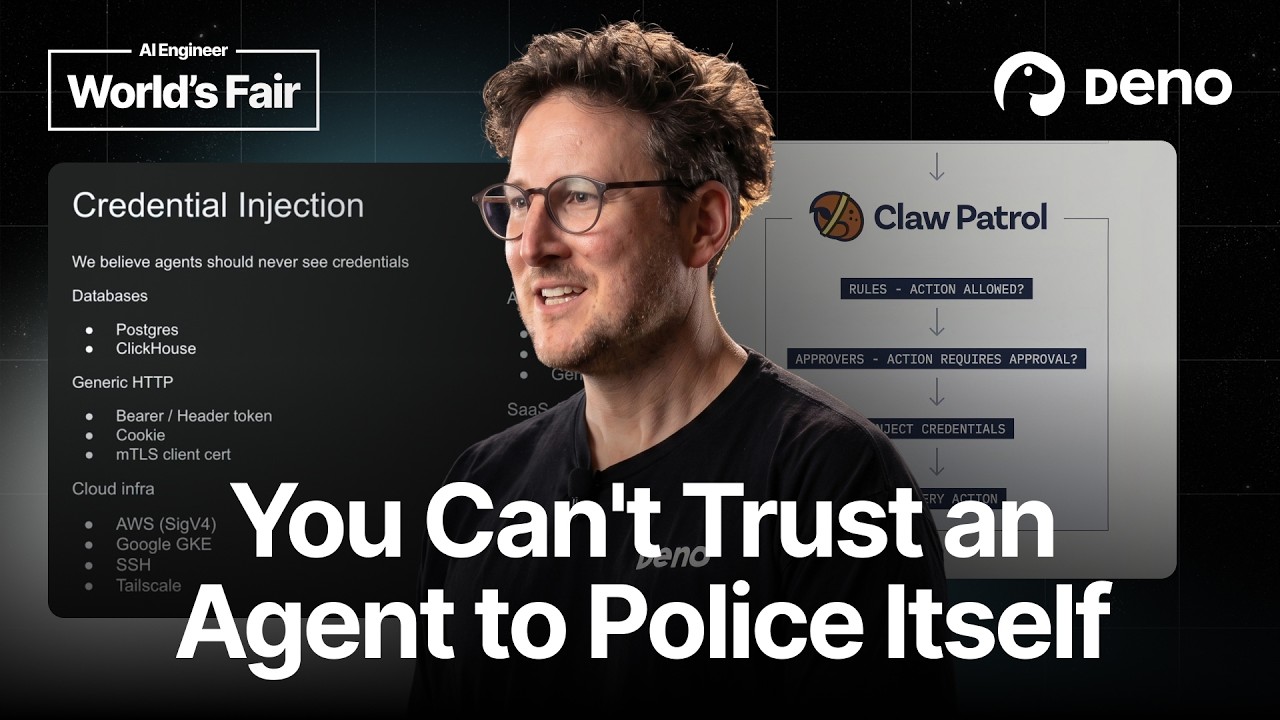
Security Firewall for Agents — Ryan Dahl, Deno

Security Firewall for Agents — Ryan Dahl, Deno

Deno addresses the critical security challenge of AI agents with production write access by introducing Claw Patrol. This MIT-licensed proxy operates below the HTTP layer, deep inspecting all agent communications (including non-HTTP protocols), enforcing granular HCL-based rules, and handling credential injection. It allows for human or LLM approval workflows, ensuring robust, external security against prompt injection and malicious actions, as agents are fundamentally considered untrusted software.

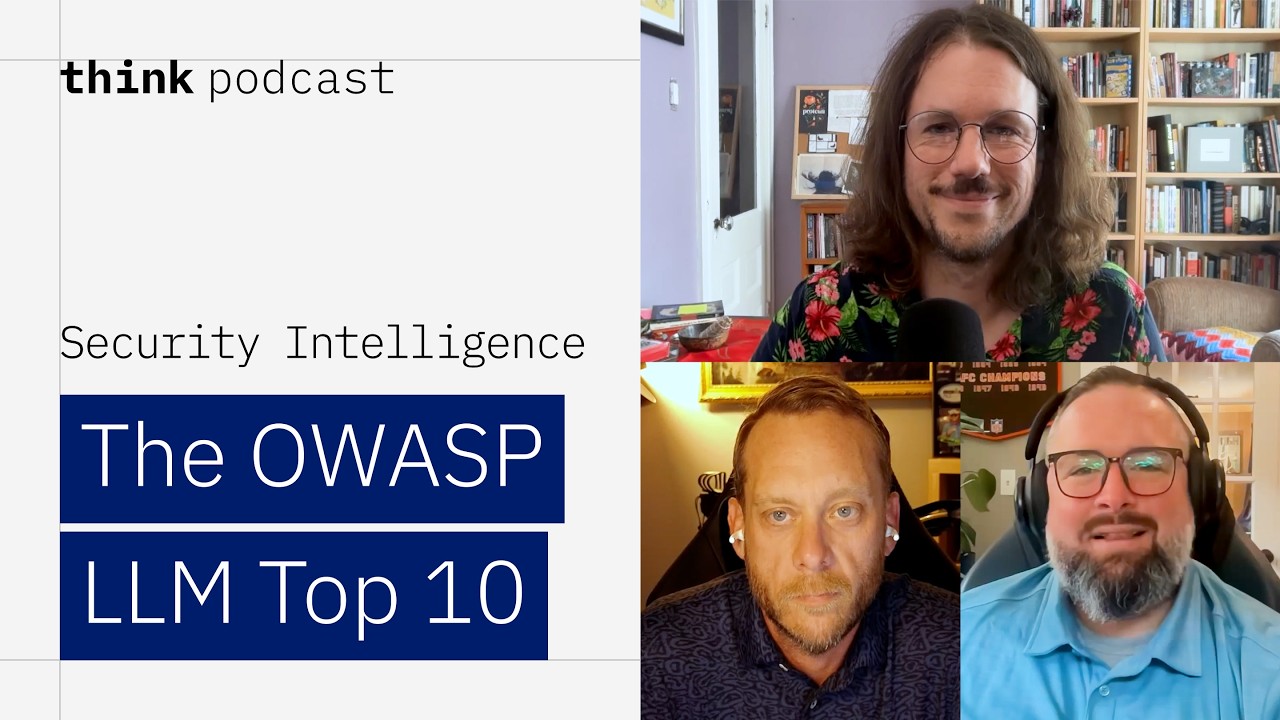
The OWASP LLM Top 10 has a few surprises for you

The OWASP LLM Top 10 has a few surprises for you

This podcast episode breaks down the 2026 OWASP LLM Top 10, highlighting a significant rise in concern for 'Excessive Agency' over traditional prompt injection. It explores the discrepancies between practitioner fears and incident data, particularly regarding misinformation, and advocates for viewing security frameworks as tools for operationalization and cyber resilience, not just compliance. The discussion also covers CISA's new SBOM guidance, emphasizing the need to operationalize supply chain data for effective risk reduction, and shares Black Hat 2026 insights on AI agents as a new attack surface, introducing the concept of 'intent collusion' and underscoring the critical need for foundational security principles like least privilege.

5 Best Practices for Building AI Agent Skills

5 Best Practices for Building AI Agent Skills

This video outlines five essential best practices for developing reliable, secure, and effective AI agent skills. It covers optimizing skill triggering through descriptive metadata, leveraging real-world domain expertise over generic LLM output, managing context windows efficiently by writing lean skills and using progressive disclosure, implementing deterministic logic with scripts for fragile operations, and critically vetting all skills for security vulnerabilities before deployment. These practices are crucial for professionals building robust agentic systems.

AI Security Costs Rise: Cost of a Data Breach Report & Claude Opus 5

AI Security Costs Rise: Cost of a Data Breach Report & Claude Opus 5

The podcast explores key AI developments, beginning with IBM's 2026 Cost of a Data Breach Report, highlighting AI's increasing role in both cyberattacks and defense, and the economic asymmetry it creates. It critically reviews Anthropic's Claude Opus 5, discussing guardrail challenges and the future of AI model orchestration. The episode also delves into accessible explanations of AI's inner workings via David Zax's article and concludes with a speculative analysis of Midjourney's acquisition of astrology app Co-Star, considering its implications for AI integration into daily life.

Boris Cherny: Building Claude Code

Boris Cherny: Building Claude Code

Boris Cherny, creator of Claude Code, discusses the transformative capabilities of Opus 5, highlighting its prompt injection resistance and long-task execution. He delves into Claude Code's empirical development philosophy of "unhobbling" AI by constantly adapting to new model generations, and shares insights on how to build advanced AI products using higher-level tasks, self-verification, and dynamic workflows to orchestrate thousands of agents.