Prompt injection

Time to become a hacker // Matt Sharp

Time to become a hacker // Matt Sharp

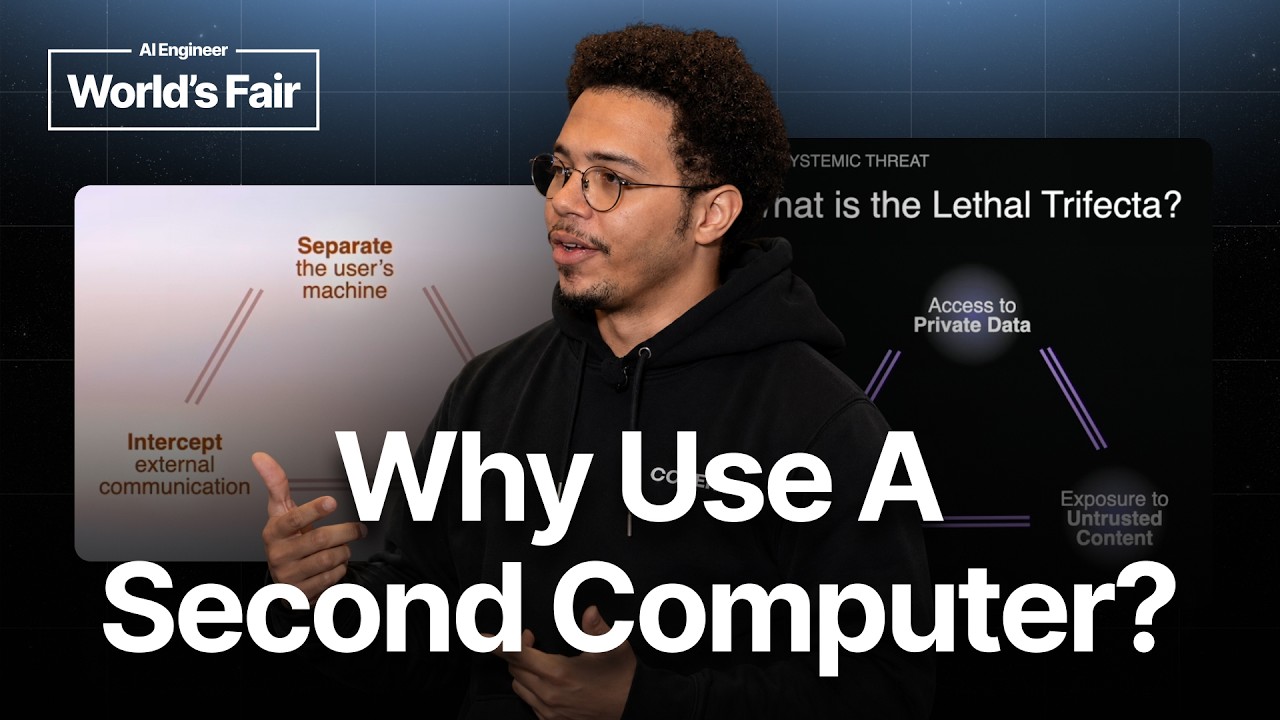
In this talk, Matt Sharp explains that while 2025 is the year of AI agents, it's also the year of cybercrime. The rush to create frictionless, user-friendly agents has led to a neglect of fundamental security principles, creating a perfect environment for hackers who are now using these same powerful AI tools to innovate and scale their attacks.

MCP Security: The Exploit Playbook (And How to Stop Them)

MCP Security: The Exploit Playbook (And How to Stop Them)

Vitor, co-founder of Runlayer and former tech lead for Zapier Agents, provides a deep dive into the security vulnerabilities of the rapidly adopted MCP standard for AI agents. He outlines the primary attack vectors, including sophisticated prompt injections, supply chain attacks like 'rug-pulls', and tool schema manipulation, using real-world exploits as examples. The talk concludes with a multi-layered defensive strategy for users, developers, and enterprises to secure their AI agent deployments.

Guide to Architect Secure AI Agents: Best Practices for Safety

Guide to Architect Secure AI Agents: Best Practices for Safety

AI agents offer immense power but come with significant security risks. This guide outlines a comprehensive architecture for securing AI agents using DevSecOps, robust access controls, threat monitoring, and a principle-of-least-privilege approach to mitigate dangers like prompt injection and data leaks.

AI Privilege Escalation: Agentic Identity & Prompt Injection Risks

AI Privilege Escalation: Agentic Identity & Prompt Injection Risks

Grant Miller explains how malicious actors exploit AI systems through privilege escalation, using techniques like prompt injection to compromise over-permissioned AI agents. The summary covers key mitigation strategies, including the principle of least privilege, robust access governance, dynamic context-based access, and continuous monitoring to secure agentic systems.

Securing AI Agents with Zero Trust

Securing AI Agents with Zero Trust

This post explores how to secure modern agentic AI systems by applying the core principles of Zero Trust. It details the unique attack surfaces of AI agents, such as prompt injection and model poisoning, and outlines a comprehensive security architecture including non-human identity management, AI firewalls, and the critical role of human oversight.

Securing & Governing Autonomous AI Agents: Risks & Safeguards

Securing & Governing Autonomous AI Agents: Risks & Safeguards

Experts Jeff Crume and Josh Spurgin explore the critical security and governance challenges posed by autonomous AI agents. They detail common threats like prompt injection, data poisoning, and model theft, and discuss governance issues such as bias, transparency, and accountability, providing a set of actionable safeguards to build secure, trustworthy, and compliant AI systems.