Observability

Sandboxing, Agent Harnesses, and Agent Teamwork

Sandboxing, Agent Harnesses, and Agent Teamwork

Shahram Anver, CEO of Cleric, details how AI agents for SRE are evolving beyond fast triage to continuous learning and operational memory. He discusses Cleric's architectural shifts, from complex early designs to simpler, sandboxed query agents, and the unique challenges SRE agents face in diverse production environments. A core focus is on human-agent interaction, redefining roles as managers overseeing agents, and how agents learn from unstructured data like Slack to build robust, actionable knowledge for autonomous, self-healing infrastructure. The discussion also touches on the future of software, differentiating between durable systems and rapidly developed "skills" or "vibe-coded" solutions.
Your Agents Need a Save Button - Hamza Tahir, ZenML

Your Agents Need a Save Button - Hamza Tahir, ZenML

Most AI agents lack a "save button" for persistent state, making debugging and optimization challenging. This talk introduces the concept of a durable runtime with checkpointing, allowing developers to replay agent executions, perform "what-if" analyses (e.g., swapping models, mocking tools), and conduct cohort-based evaluations using production data. The open-source tool Kitaru is demonstrated as a solution to build, debug, and improve agents at scale by capturing full execution state, not just traces.

Has AI Finally Cracked Time Series Forecasting?

Has AI Finally Cracked Time Series Forecasting?

Ameet Talwalkar, CMU professor and Datadog's Chief Scientist, traces the journey of time series foundation models from early skepticism to their current impact. He details Datadog's Toto V1 and V2, highlighting breakthroughs in zero-shot performance, scaling, and the crucial role of data mix. The discussion extends to the vision of 'world models' for observability, integrating diverse data for self-healing software systems, and concludes with insights on open-weights models and AI's transformative effect on computer science and academic research.

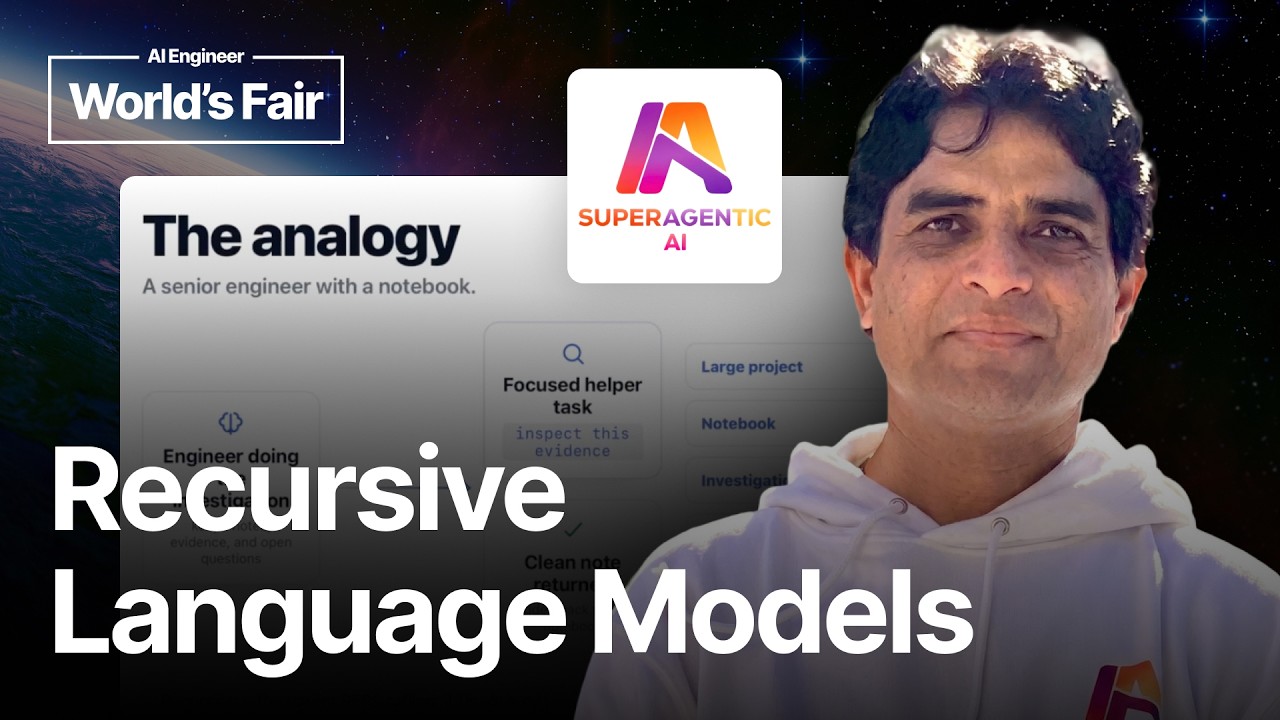
RLM: Recursive Language Models for Large Codebases - Shashi, Superagentic AI

RLM: Recursive Language Models for Large Codebases - Shashi, Superagentic AI

This talk introduces Recursive Language Models (RLM) as a solution for coding agents struggling with large codebases. RLM externalizes context management into a programmable REPL, allowing the model to write code, inspect the repository, and recursively delegate sub-questions via `llm_query` to curate relevant context. The speaker demonstrates `RLM Code`, an independent implementation, showcasing its operational loop, observability features, and practical applications for AI engineers dealing with complex software projects.

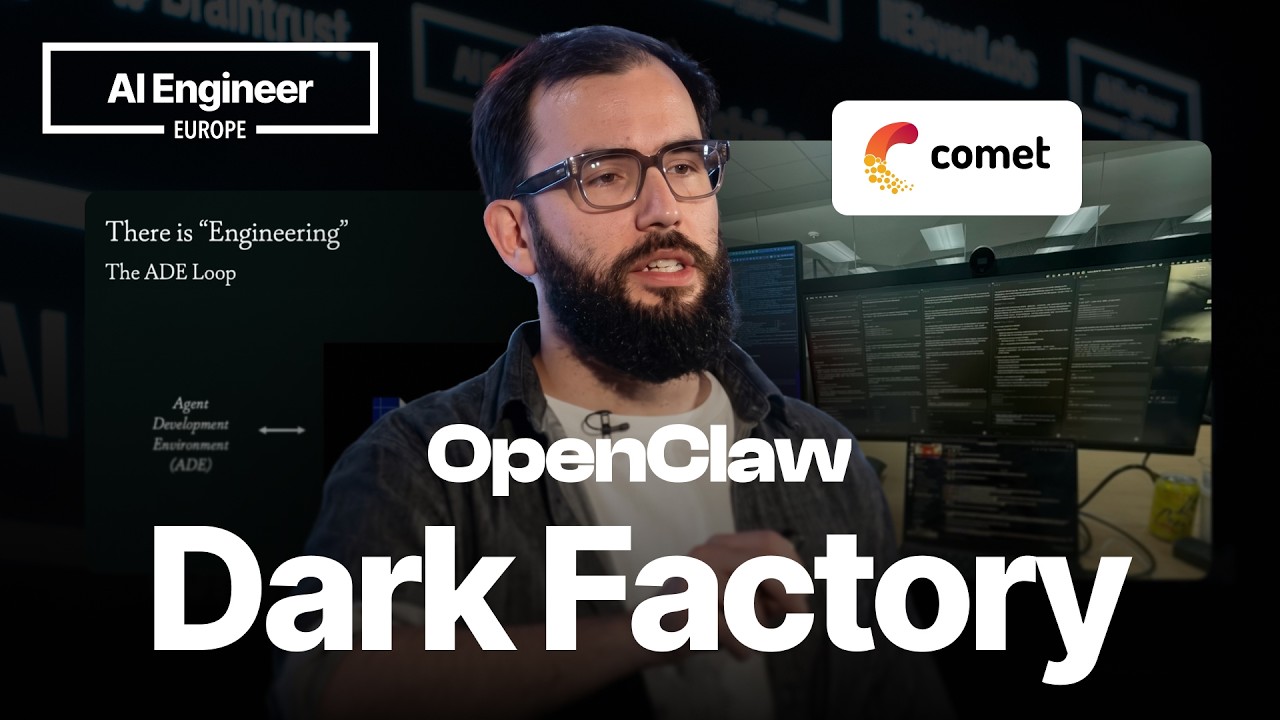
Dark Factory: How OpenClaw Ships Faster Than You Can Read the Diff — Vincent Koc

Dark Factory: How OpenClaw Ships Faster Than You Can Read the Diff — Vincent Koc

Vincent Koc argues that static benchmarks are failing in the era of adaptive AI. He proposes a shift from static testing to 'malleable evals,' where agents self-optimize and curate their own test suites based on user intent and production data, treating evaluation as a living, evolving system.

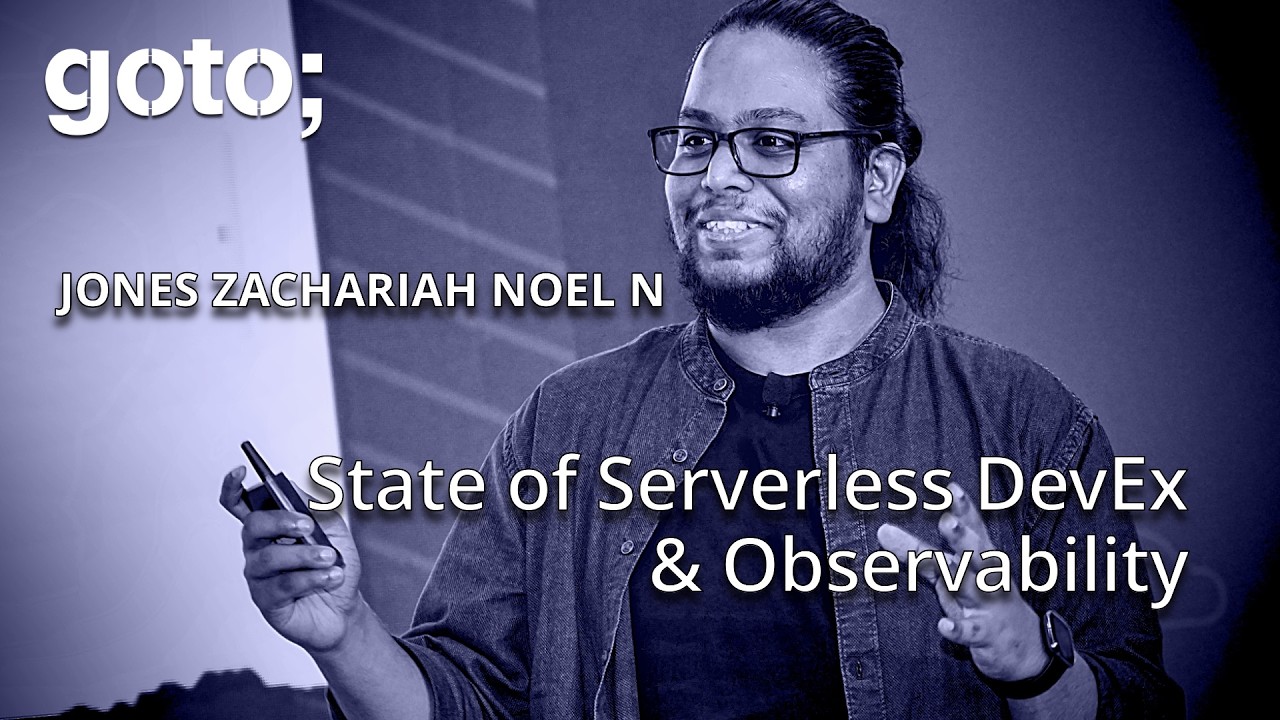
State of Serverless DevEx & Observability • Jones Zachariah Noel N • GOTO 2025

State of Serverless DevEx & Observability • Jones Zachariah Noel N • GOTO 2025

Explore the evolution of AWS Lambda and the serverless ecosystem over the last decade, focusing on the two core pillars that have revolutionized the developer journey: Developer Experience (DevEx) and Observability. This session covers the shift from console-based workflows to modern IDE-integrated development, the role of tools like Lambda Layers and Extensions, and the importance of the broader serverless landscape including AWS Step Functions.