Neurosymbolic ai

World Models Need Causality, Not Pretty Pixels — Christopher Manning, Moonlake AI

World Models Need Causality, Not Pretty Pixels — Christopher Manning, Moonlake AI

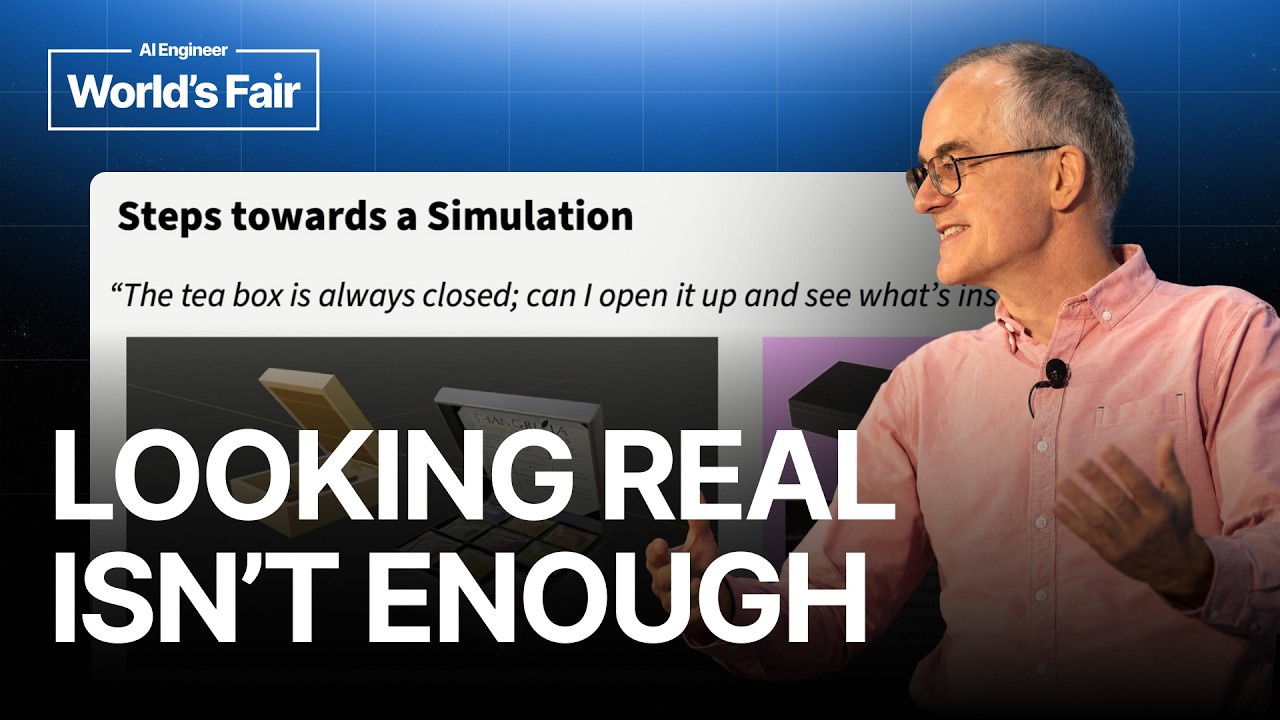
Christopher Manning, Stanford professor and now at Moonlake AI, traces AI history from Dartmouth in 1956 and Shakey the robot through the rise of large language models. He then argues for embodied intelligence built on action-conditioned simulation, and shows how Moonlake turns a photo into a manipulable, code-based world that can close the sim-to-real gap.

Stop AI Agent Hallucinations: 5 Techniques + Production Patterns - Elizabeth Fuentes, AWS

Stop AI Agent Hallucinations: 5 Techniques + Production Patterns - Elizabeth Fuentes, AWS

Explore five research-backed techniques to overcome common AI agent architectural limitations like hallucination, inefficient tool use, and rule violations. Learn how to implement semantic tool selection, Graph-RAG, multi-agent validation, neurosymbolic guardrails, and agent steering through code changes, not prompt engineering, and deploy them using AWS Bedrock Agent Core for robust and cost-effective AI agents.