Machine learning

Machine Learning Explained: A Guide to ML, AI, & Deep Learning

Machine Learning Explained: A Guide to ML, AI, & Deep Learning

A breakdown of Machine Learning (ML), its relationship with AI and Deep Learning, and its core paradigms: supervised, unsupervised, and reinforcement learning. The summary explores classic models and connects them to modern applications like Large Language Models (LLMs) and Reinforcement Learning with Human Feedback (RLHF).
Building Decision Agents with LLMs & Machine Learning Models

Building Decision Agents with LLMs & Machine Learning Models

Large Language Models (LLMs) are unsuitable for building decision agents in complex AI frameworks due to their inconsistency and lack of transparency. This summary explores an alternative approach using dedicated decision platforms and machine learning models to create consistent, explainable, and agile decision-making systems for enterprise automation.

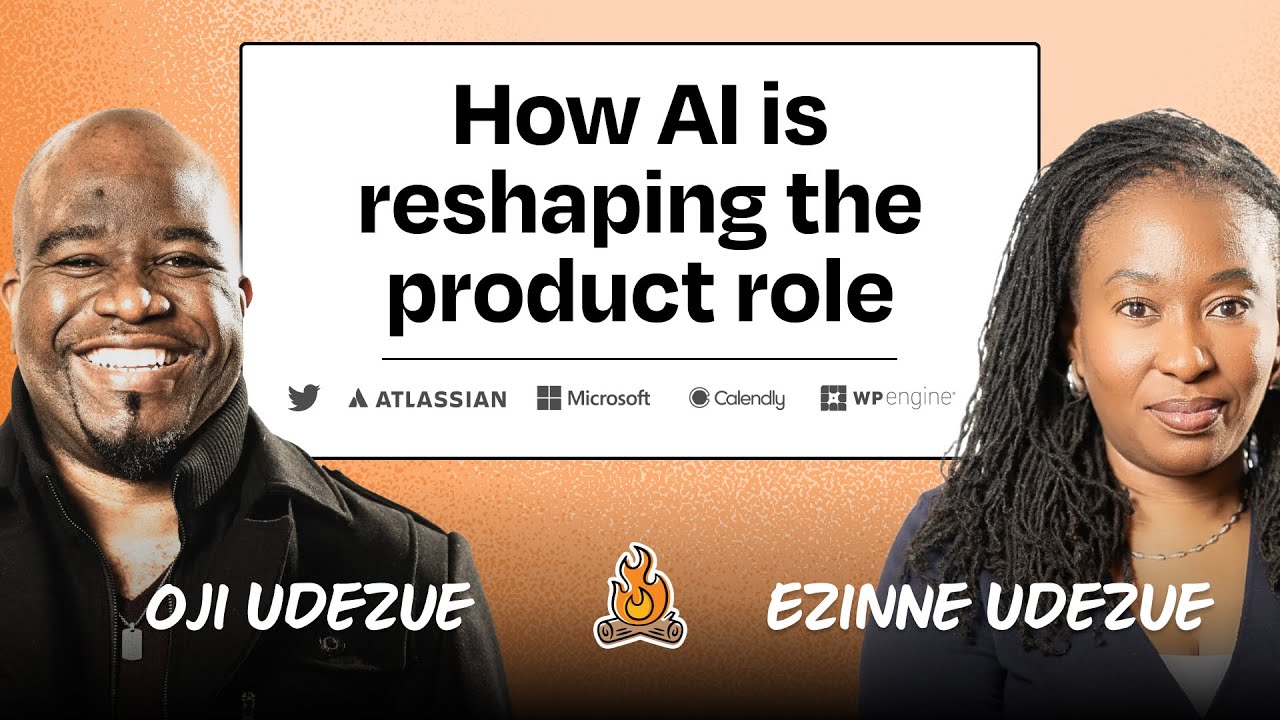
How AI is reshaping the product role | Oji and Ezinne Udezue

How AI is reshaping the product role | Oji and Ezinne Udezue

A deep dive into how AI is transforming the product manager's role, featuring insights from product leaders Ezinne and Oji Udezue. They discuss essential new skills, the "shipyard" framework for development, why hands-on learning is critical, and the difference between companies succeeding and failing with AI adoption.

Self-Driving Storage: AI Agent Automation for Data Infrastructure

Self-Driving Storage: AI Agent Automation for Data Infrastructure

Explore the concept of "self-driving storage," where AI and AIOps autonomously manage data infrastructure. Learn how mobile storage partitions, predictive analytics, and agentic AI are used to automate capacity management, workload placement, and on-demand performance optimization without human intervention.

Interpretability: Understanding how AI models think

Interpretability: Understanding how AI models think

Members of Anthropic's interpretability team discuss their research into the inner workings of large language models. They explore the analogy of studying AI as a biological system, the surprising discovery of internal "features" or concepts, and why this research is critical for understanding model behavior like hallucinations, sycophancy, and long-term planning, ultimately aiming to ensure AI safety.

Encrypted Computation: What if Decryption Wasn’t Needed? • Katharine Jarmul • GOTO 2024

Encrypted Computation: What if Decryption Wasn’t Needed? • Katharine Jarmul • GOTO 2024

An exploration of encrypted computation, detailing how techniques like homomorphic encryption and multi-party computation can enable machine learning on encrypted data. The summary covers the core mathematical principles, real-world use cases, and open-source libraries to build more private and trustworthy AI systems.