Llm

Building AI Agents in Kotlin • Anton Arhipov • YOW! 2025

Building AI Agents in Kotlin • Anton Arhipov • YOW! 2025

Anton Arhipov from JetBrains introduces Koog, a lightweight, Kotlin-native framework for building tool-using LLM agents. This session covers the rationale for using Kotlin in AI, the architecture of Koog agents, and how its graph-based DSL enables the creation of structured, type-safe, and reproducible agent workflows, moving beyond simple prompt-chaining to sophisticated orchestration.
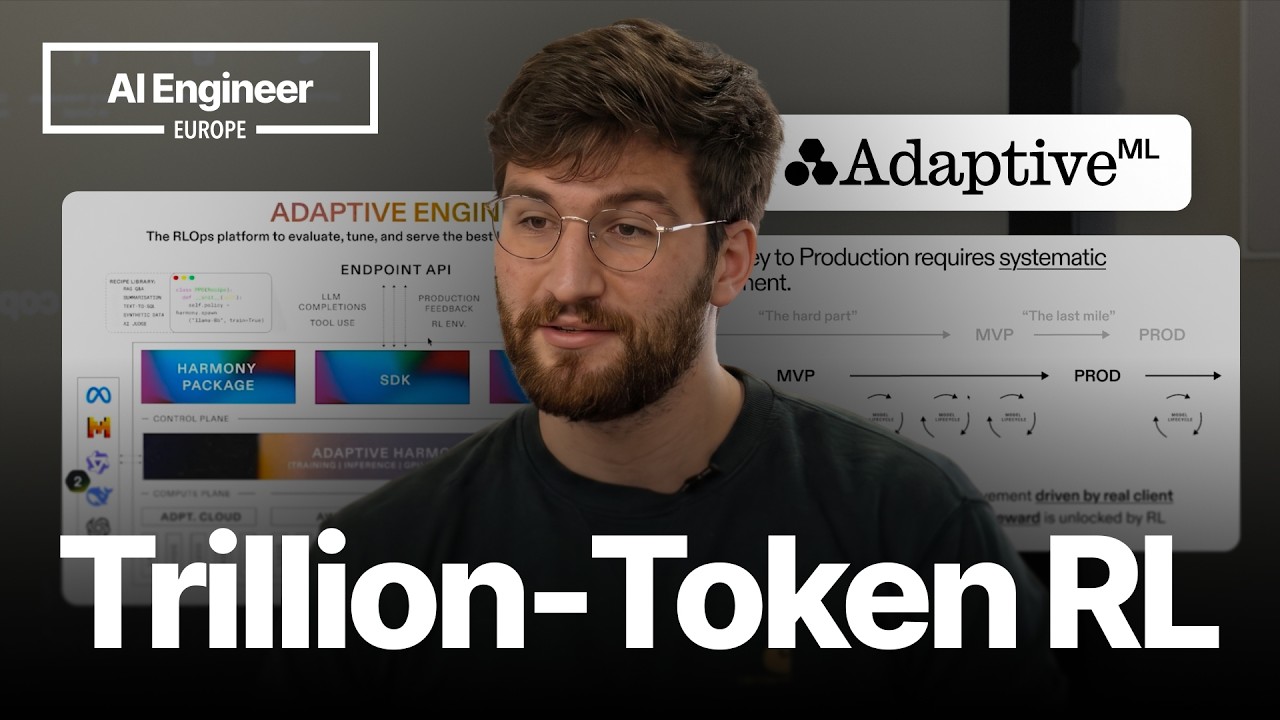
Lessons from Trillion Token Deployments at Fortune 500s — Alessandro Cappelli, Adaptive ML

Lessons from Trillion Token Deployments at Fortune 500s — Alessandro Cappelli, Adaptive ML

95% of GenAI pilots fail due to feedback integration issues, not deployment challenges. Alessandro Cappelli argues that Reinforcement Learning (RL) provides the only systematic way to incorporate business metrics and production signals to continuously improve models, especially for complex agent-based systems.

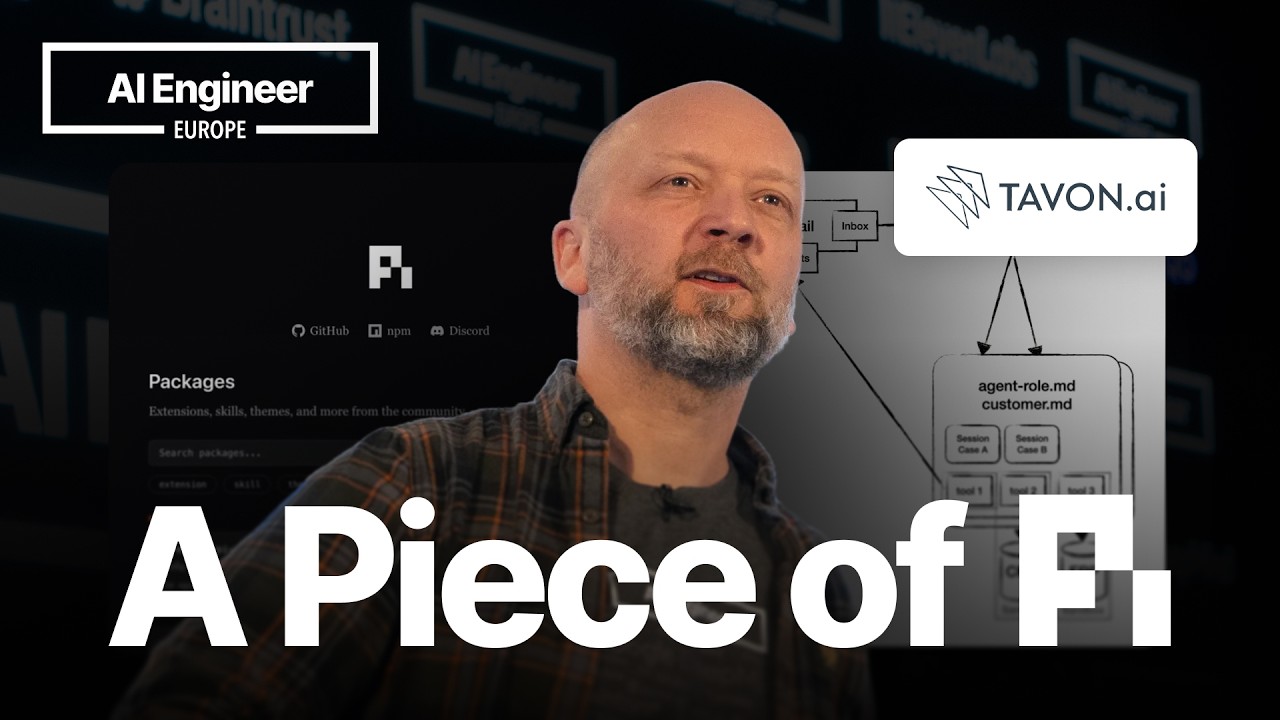
A Piece of Pi: Embedding The OpenClaw Coding Agent In Your Product — Matthias Luebken, Tavon

A Piece of Pi: Embedding The OpenClaw Coding Agent In Your Product — Matthias Luebken, Tavon

Matthias Luebken explains the core principle of building with coding agents: make things easy for them. This talk deconstructs the Pi SDK, showing how a simple loop of an LLM calling CLI tools can lead to emergent capabilities. Luebken presents a real-world B2B sales pipeline built on this principle, where agents handle incoming emails, query CRM/ERP data via simple tools, and generate draft responses, keeping the human in their familiar email client.

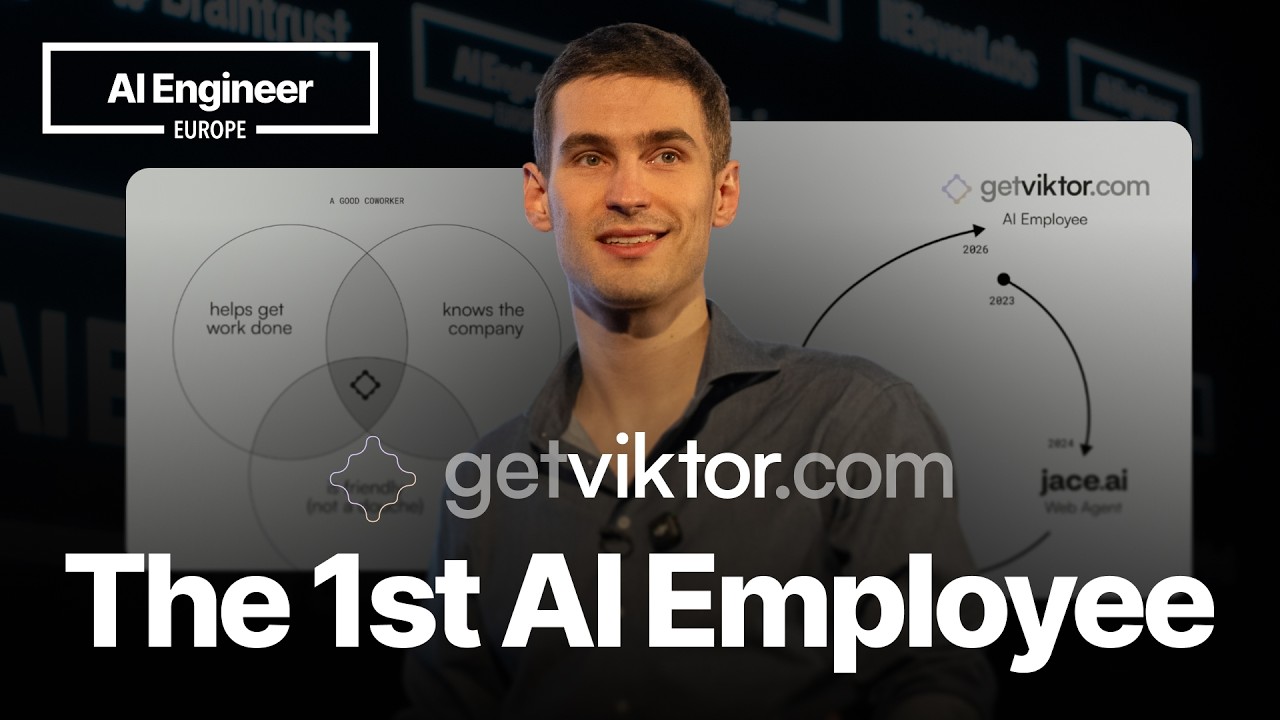
Viktor: AI Coworker That Lives in Slack — Fryderyk Wiatrowski

Viktor: AI Coworker That Lives in Slack — Fryderyk Wiatrowski

This talk explores the journey of building Viktor, an AI employee that lives entirely in Slack. It details the unique challenges of scaling an AI agent from a personal tool to a company-wide coworker, focusing on memory isolation, context management across different Slack interactions (DMs, channels, threads), and the surprising importance of the AI's personality for user adoption.

Predictive vs Generative AI: How They Work and When to Use Each

Predictive vs Generative AI: How They Work and When to Use Each

Predictive AI forecasts what will happen next based on historical data, while Generative AI creates new content by asking what something could look like. This summary explores their fundamental differences in outputs, data types, underlying models like transformers and diffusion systems, and how they can be used together in enterprise applications.

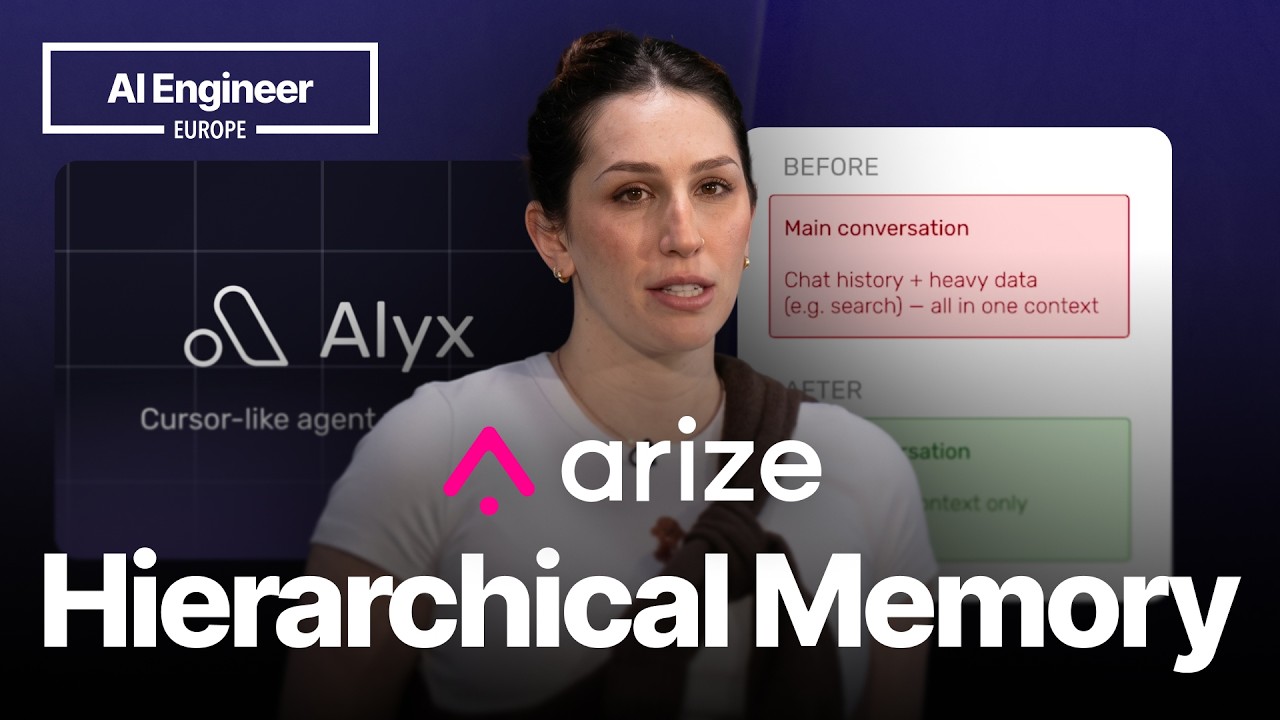
Hierarchical Memory: Context Management in Agents — Sally-Ann Delucia

Hierarchical Memory: Context Management in Agents — Sally-Ann Delucia

The Arize team shares lessons from building their AI agent, Alyx, which analyzes its own trace data. They detail their journey from failed attempts like naive truncation and summarization to a successful strategy combining head/tail preservation with a retrievable memory store and using sub-agents to manage context complexity.