Llm

Multi-Agent Systems for the Misinformation Lifecycle

Multi-Agent Systems for the Misinformation Lifecycle

A detailed overview of a modular, five-agent system designed to combat the entire lifecycle of digital misinformation. Based on an ICWSM research paper, this practitioner's guide details the roles of the Classifier, Indexer, Extractor, Corrector, and Verifier agents. The system emphasizes scalability, explainability, and high precision, moving beyond the limitations of single-LLM solutions. The talk covers the complete blueprint, from agent coordination and MLOps to holistic evaluation and optimization strategies for production environments.
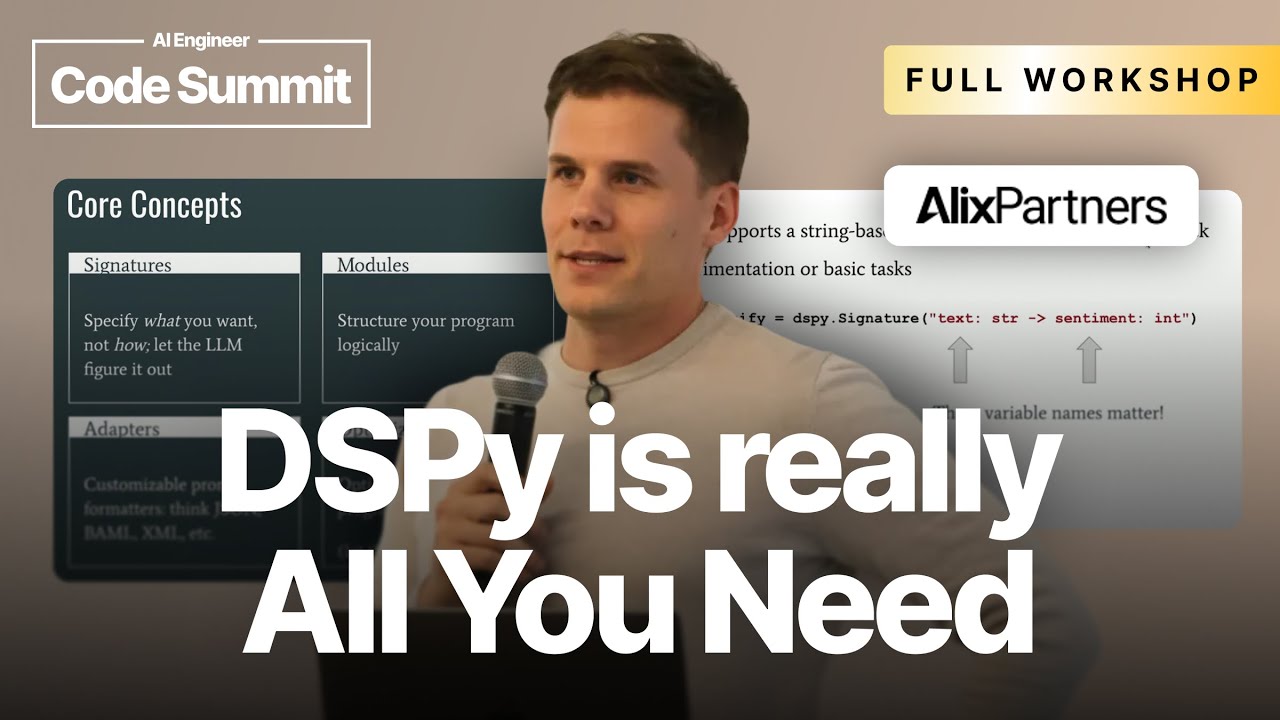
DSPy: The End of Prompt Engineering - Kevin Madura, AlixPartners

DSPy: The End of Prompt Engineering - Kevin Madura, AlixPartners

An in-depth guide to DSPy, a framework for programming with language models, not just prompting them. Learn its core concepts—Signatures, Modules, Adapters, and Optimizers—and see real-world examples of building robust, testable, and transferable AI applications for the enterprise.

Post-training best-in-class models in 2025

Post-training best-in-class models in 2025

An expert overview of post-training techniques for language models, covering the entire workflow from data generation and curation to advanced algorithms like Supervised Fine-Tuning (SFT), Direct Preference Optimization (DPO), and Reinforcement Learning (RL), along with practical advice on evaluation and iteration.

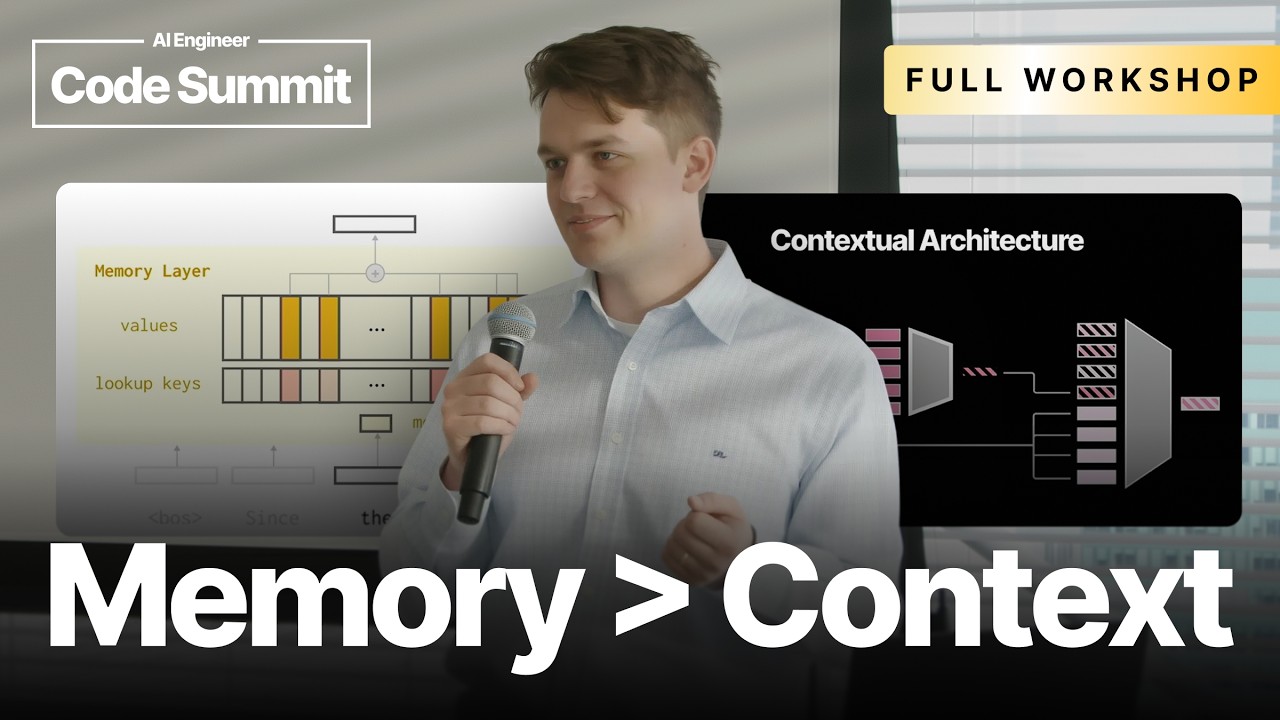
Memory in LLMs: Weights and Activations - Jack Morris, Cornell

Memory in LLMs: Weights and Activations - Jack Morris, Cornell

This talk explores the limitations of current methods for providing knowledge to LLMs, such as large context windows and Retrieval-Augmented Generation (RAG). The speaker argues that the future lies in training knowledge directly into the model's weights. This is achieved through a combination of generating large synthetic datasets from small amounts of source material and using parameter-efficient fine-tuning (PEFT) techniques like LoRA to avoid catastrophic forgetting. The goal is to create more capable, personalized, and efficient models by fundamentally altering how they store and access information.

Agentic Al in SW Development: Evolving Patterns & Protocols • Bhuvaneswari  Subramani • GOTO 2025

Agentic Al in SW Development: Evolving Patterns & Protocols • Bhuvaneswari Subramani • GOTO 2025

Bhuvaneswari Subramani details the "Agentic Shift" in AI by presenting an evolutionary journey through seven foundational system design patterns. The talk progresses from simple conversational clients to sophisticated, multi-agent systems, covering key patterns like Retrieval-Augmented Generation (RAG), Self-Correcting RAG, and the Model Context Protocol (MCP), explaining how each pattern adds new layers of context, action, and autonomy.

How We Built a Leading Reasoning Model (Olmo 3)

How We Built a Leading Reasoning Model (Olmo 3)

A comprehensive overview of the entire process behind building Olmo 3 Think, covering the full stack from pre-training architecture and data selection to the detailed post-training recipe involving SFT, DPO, and a deep dive into the advanced infrastructure for scaling Reinforcement Learning (RL). The summary also includes critical reflections on the challenges and nuances of evaluating modern reasoning models.