Llm

How to Build Execution Layers That Don’t Burn Out // Tanmay Tiwari // Agents in Production 2025

How to Build Execution Layers That Don’t Burn Out // Tanmay Tiwari // Agents in Production 2025

A talk on designing a dependable AI execution layer that handles thousands of operations without constant supervision. The system is built to be precise, responsible, and action-oriented, avoiding common LLM pitfalls like burnout, memory bloat, and overthinking.
Underwriting Assist - A Multi Agent System // Somya Rai | Maria Zhang // Agents in Production 2025

Underwriting Assist - A Multi Agent System // Somya Rai | Maria Zhang // Agents in Production 2025

Maria Zhang, CEO of Palona AI, and Somya Rai, Principal AI Engineer at EXL, discuss the architecture, scaling, memory management, and cost optimization of multi-agent systems in their respective domains of restaurants and insurance. They explore practical challenges, such as real-world bottlenecks and regulatory compliance, and share their technical stacks, including LangGraph, Ray, and NVIDIA platforms, for building robust and efficient agentic solutions.

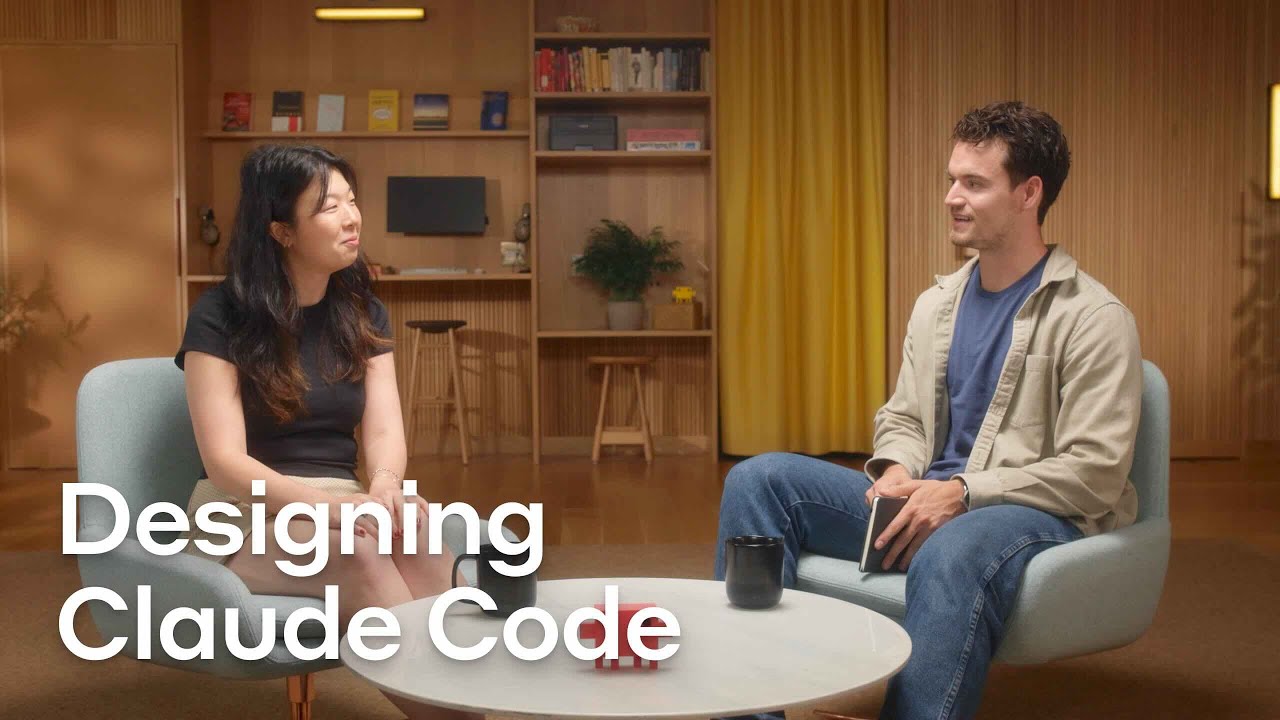
Designing Claude Code

Designing Claude Code

Anthropic’s Meaghan Choi and Alex Albert explore the design philosophy behind Claude Code, discussing its terminal-first approach, the evolution of developer workflows in the age of LLMs, and how agentic coding empowers both engineers and designers.

Building Decision Agents with LLMs & Machine Learning Models

Building Decision Agents with LLMs & Machine Learning Models

Large Language Models (LLMs) are unsuitable for building decision agents in complex AI frameworks due to their inconsistency and lack of transparency. This summary explores an alternative approach using dedicated decision platforms and machine learning models to create consistent, explainable, and agile decision-making systems for enterprise automation.

Fundamentals of Data Engineering • Matt Housley & Joe Reis • GOTO 2025

Fundamentals of Data Engineering • Matt Housley & Joe Reis • GOTO 2025

Joe Reis and Matt Housley, authors of "Fundamentals of Data Engineering," reflect on the book's principles three years after its publication. They discuss how the rise of AI has created both powerful tools and dangerous "bear traps" for engineers, the critical role of expertise in a world of AI-generated content, and why foundational knowledge is more important than ever.

The Death of Classical Computer Science • Matt Welsh & Julian Wood • GOTO 2025

The Death of Classical Computer Science • Matt Welsh & Julian Wood • GOTO 2025

Matt Welsh, former Harvard professor and AI researcher, posits that Large Language Models (LLMs) are not just tools but are evolving into new, general-purpose computers. He argues this signifies the "death of classical computer science," as direct, natural language problem-solving will replace human-written code. This shift promises to democratize computing, moving beyond a "programming priesthood" to empower everyone, while also raising critical challenges regarding job displacement, societal equity, and our adaptation to this powerful technology.