Llm engineering

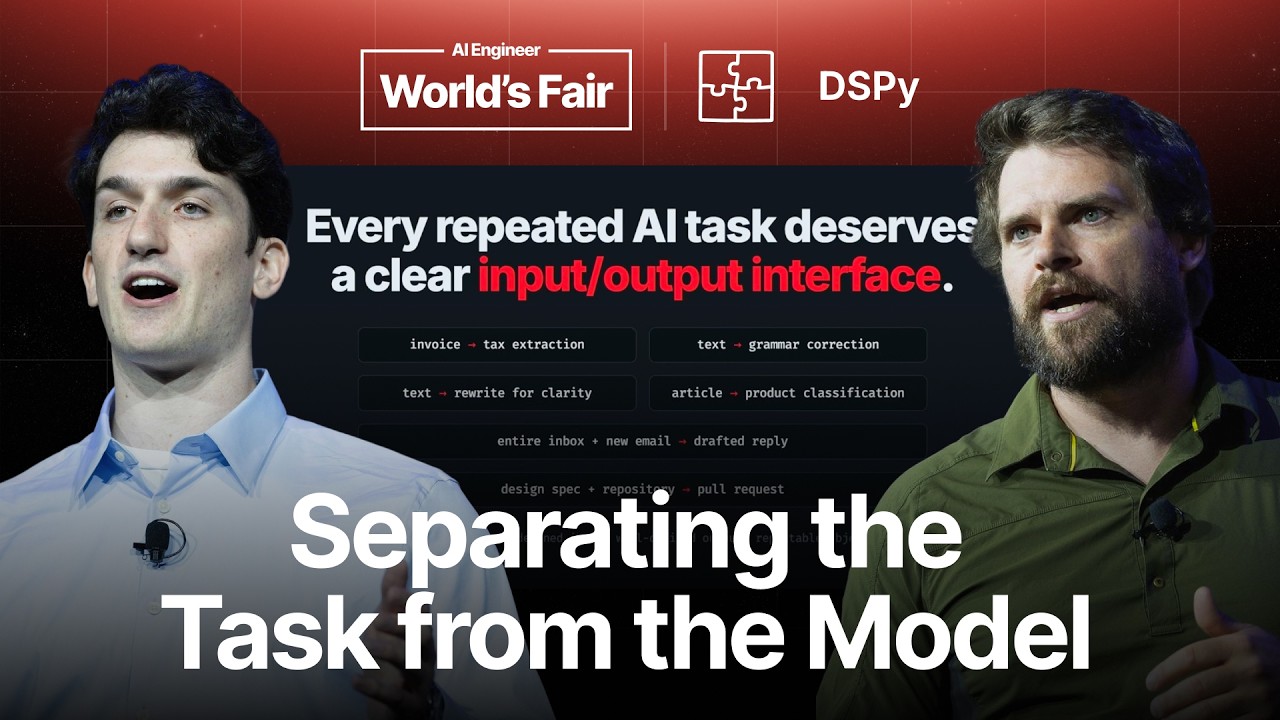
The Unreasonable Effectiveness of Separating the Task from the Model — Maxime Rivest, DSPy

The Unreasonable Effectiveness of Separating the Task from the Model — Maxime Rivest, DSPy

DSPy emphasizes separating task definition from model implementation using a "Signature" (inputs/outputs) to enable flexible, optimizable, and scalable AI programs. The framework relies on three pillars—instructions (specs), hard constraints (code), and examples (evals)—to fully specify tasks. DSPy 4.0 introduces DSPy Flex for learning program harnesses and Qualitative Learning for automated, feedback-driven evaluation refinement, offering significant benefits for enterprise applications and addressing "last-mile learning" for future AI systems.
Turn 10,994 Notes Into Memory - Paul Iusztin, Decoding AI & Louis-François Bouchard, Towards AI

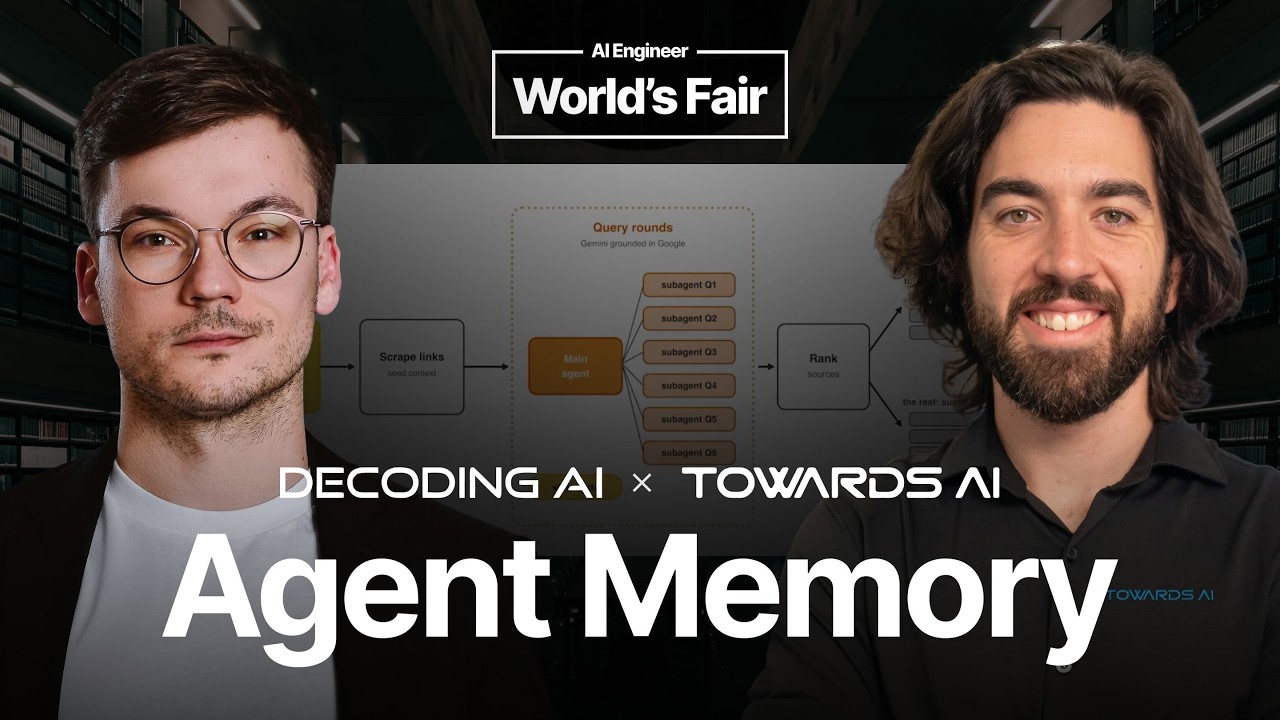
Turn 10,994 Notes Into Memory - Paul Iusztin, Decoding AI & Louis-François Bouchard, Towards AI

Paul Iusztin and Louis-Francois Bouchard unveil their AI Research OS, a powerful system that transforms notes, documents, videos, and code repositories into a dynamic, personalized memory for AI agents. They detail a three-layered architecture (raw files, index, wiki) that efficiently manages context and enables continuous learning and evolution, addressing the limitations of static research and generic AI tools.

IBM partners with Anthropic, plus OpenAI drops AgentKit

IBM partners with Anthropic, plus OpenAI drops AgentKit

A deep dive into OpenAI's AgentKit, the IBM-Anthropic partnership focusing on the Agent Development Lifecycle (ADLC), the mathematical concept of modular manifolds for stabilizing model training, and a critical analysis of AI's real-world impact on professions like radiology.