Llm as a judge

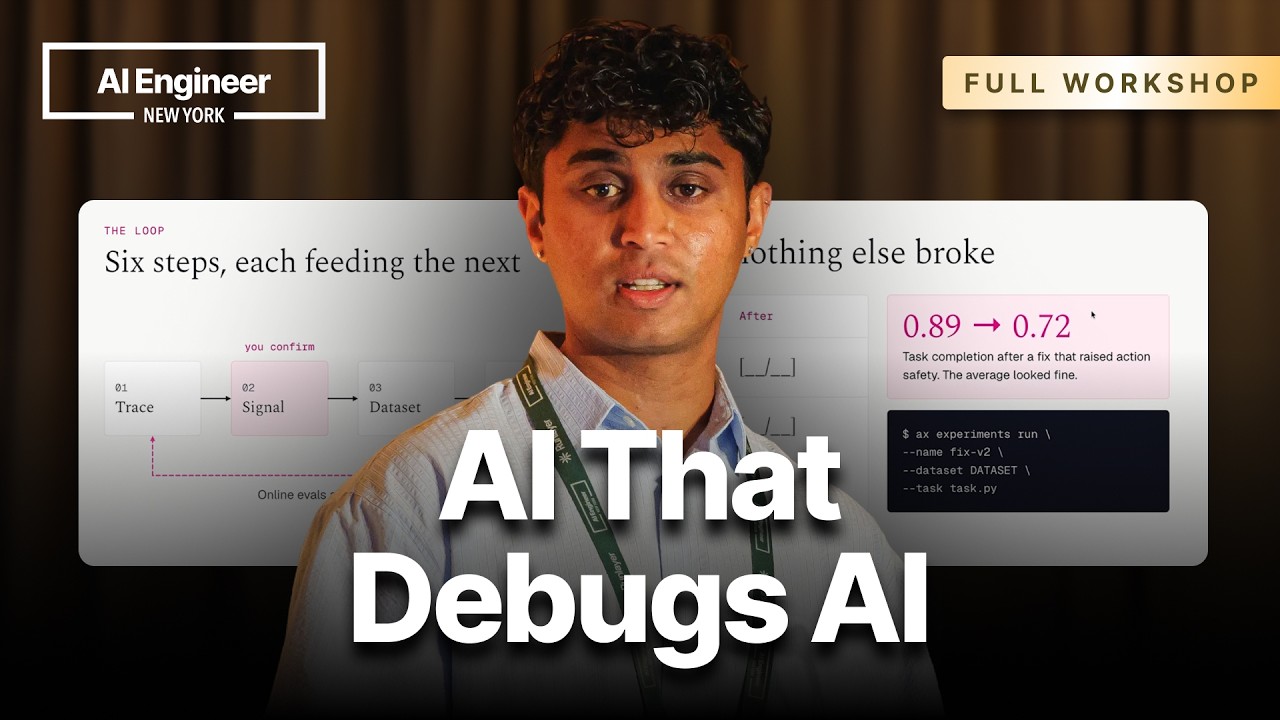
Agents That Self Improve While You Sleep - Fuad Ali, Arize AI

Agents That Self Improve While You Sleep - Fuad Ali, Arize AI

A workshop on building a self-improvement loop for AI agents: tracing production traces, using an always-on agent to file deduplicated issues, turning failures into evals and regression datasets, proving fixes with experiments, and keeping humans at the highest-leverage review points.
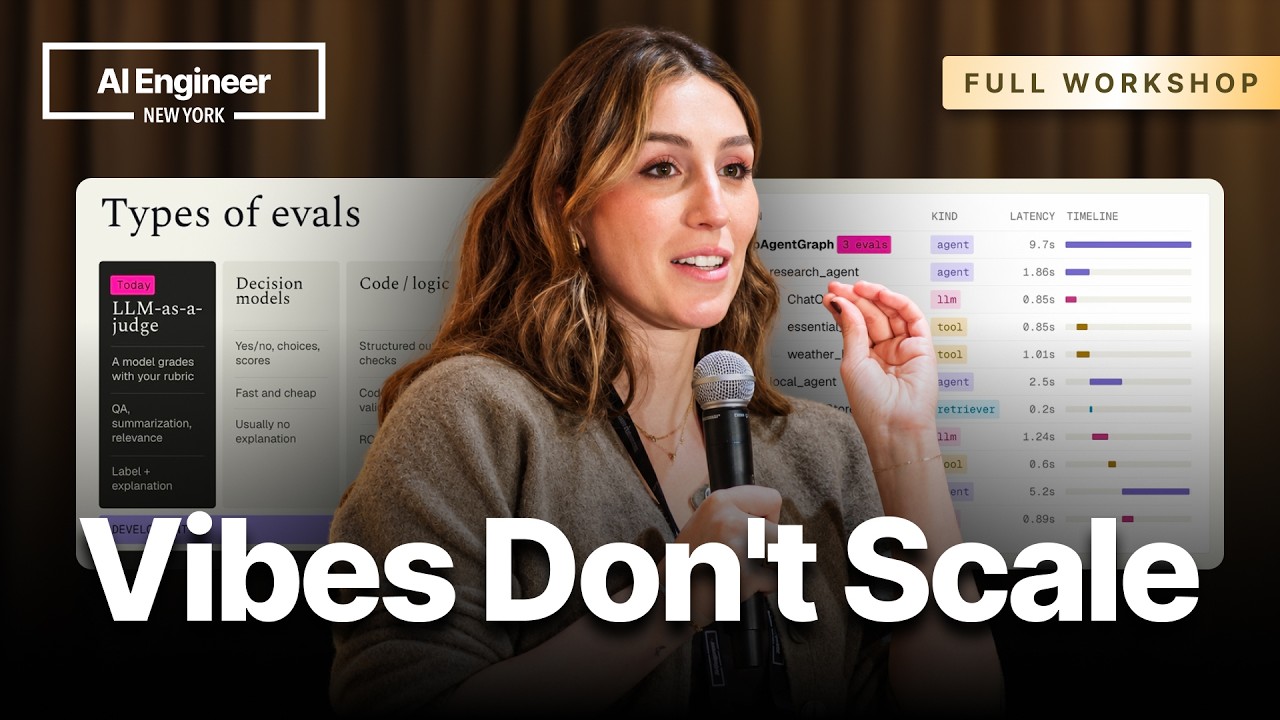
How to Write Your First AI Eval - SallyAnn DeLucia, Arize AI

How to Write Your First AI Eval - SallyAnn DeLucia, Arize AI

A hands-on workshop from Arize AI on moving from vibe checks to real LLM evals. It covers what an eval is and how it differs from a unit test, the main eval types, how to read agent traces, how to write concrete pass/fail criteria, and how to build and iterate on an LLM-as-a-judge in Arize's prompt playground.

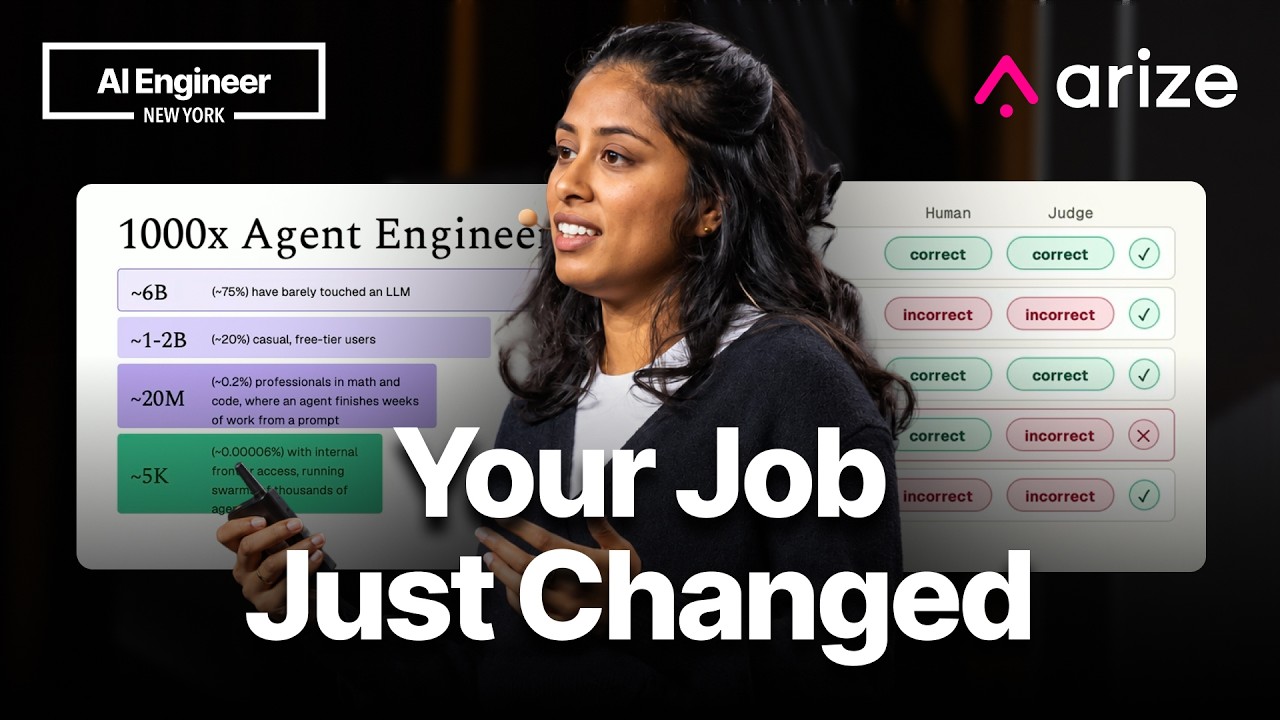
What Does an AI Engineer Do Now? - Aparna Dhinakaran, Arize AI

What Does an AI Engineer Do Now? - Aparna Dhinakaran, Arize AI

Aparna Dhinakaran of Arize AI argues that the AI engineer's job is shifting from writing features to building the loop that builds them: evals that review non-deterministic work, telemetry that agents consume, and always-on agents that act on it. She uses Arize's Signal agent as a case study, covering triggers, sandboxes, durable state, model and harness independence, and evaluating the evaluators.

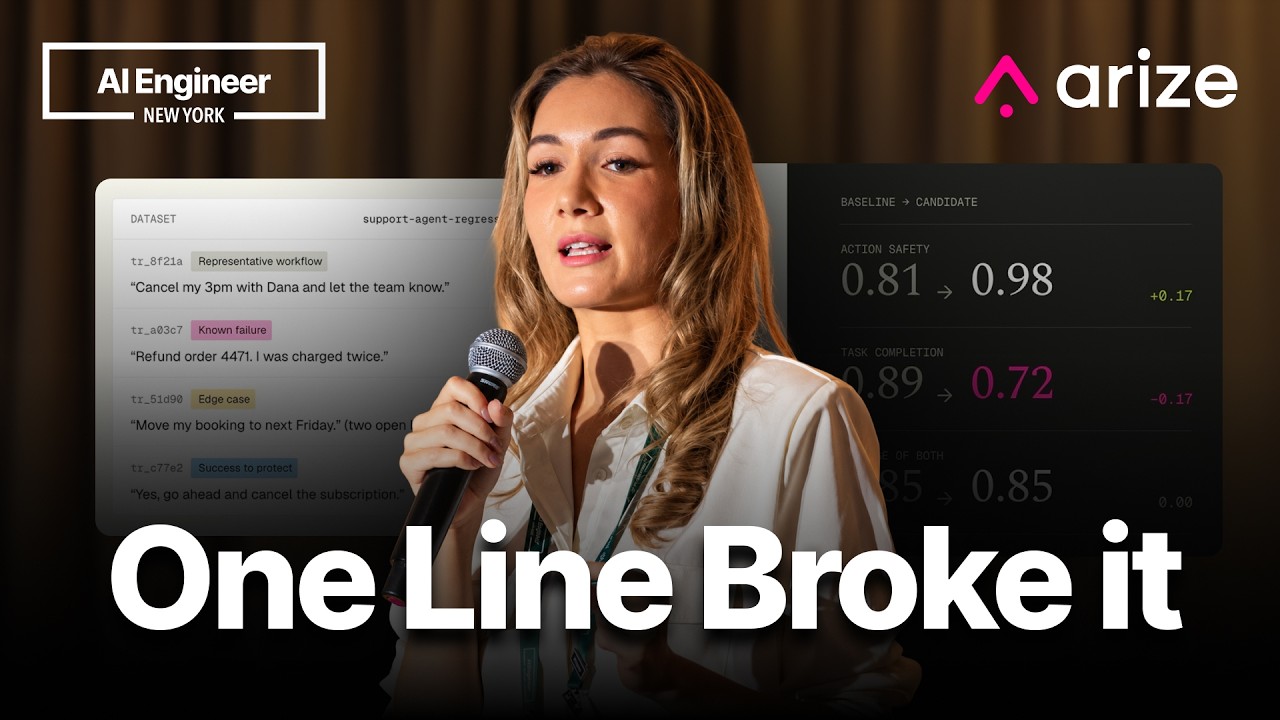
Your Agent Fix Just Broke Something Else - Sofia Jakovcevic, Arize AI

Your Agent Fix Just Broke Something Else - Sofia Jakovcevic, Arize AI

Sofia Jakovcevic, a forward deployed engineer at Arize AI, argues that agents fail at runtime rather than in code, so regressions from a small prompt change can hide behind an improved metric. She walks through a five-step regression loop built on production traces, including dataset curation, LLM-as-a-judge evaluators, baseline experiments, comparisons, and CI merge gates, then shows how coding agents with access to traces can close the loop themselves.

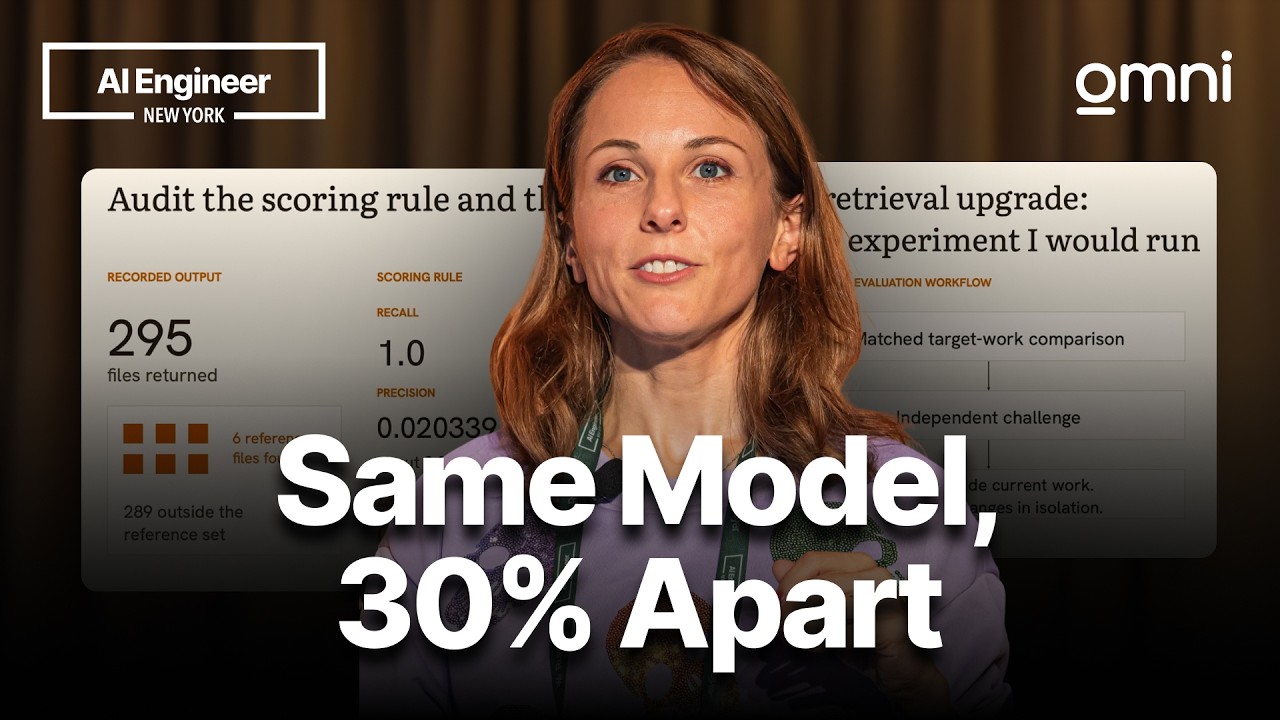
Don't Trust Your AI Agents. Test Them Like a Scientist — Stephanie Jarmak, Omni Analytics

Don't Trust Your AI Agents. Test Them Like a Scientist — Stephanie Jarmak, Omni Analytics

Stephanie Jarmak, who moved from astronomy into building coding benchmarks and agent evals, argues that most agent evaluations are easy to misread. She covers how harness choice can swamp model differences, why public benchmarks serve shortlisting rather than decisions, how to design experiment-style evals with realistic tasks, repeated runs, and full traces, and how to set quality gates, manage human review load, verify agent records, and treat production as the final test.

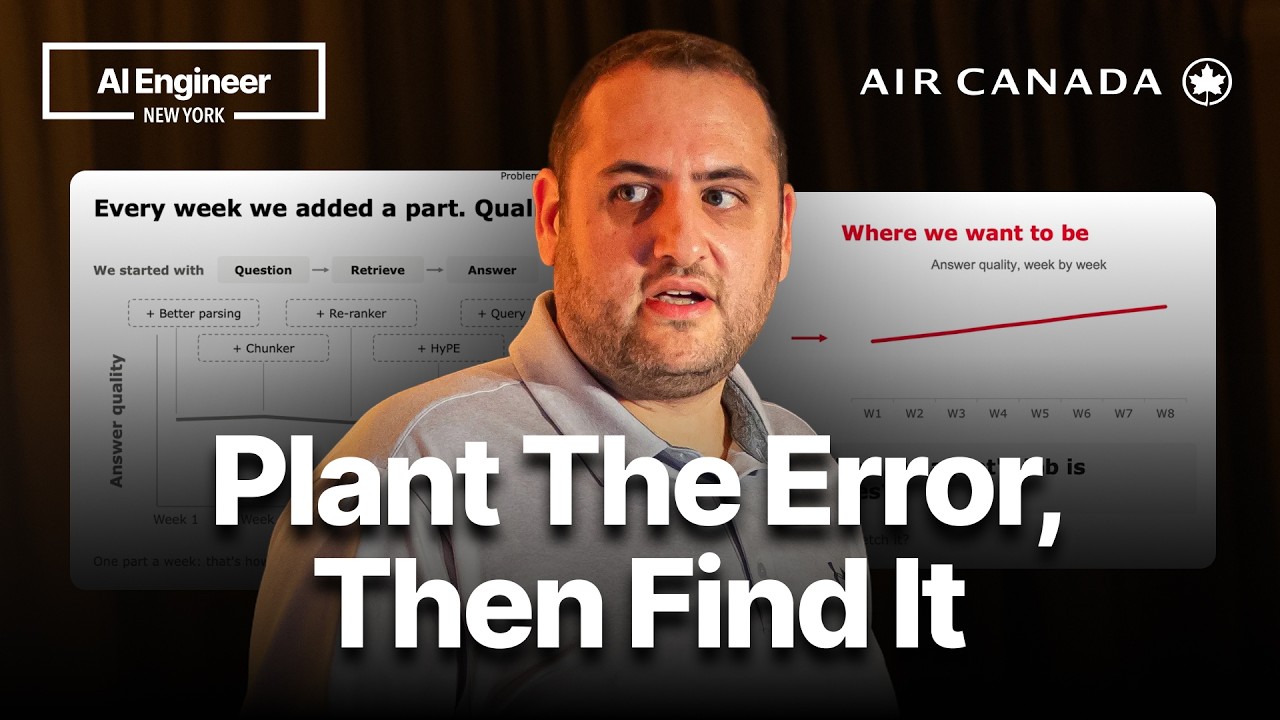
How to Test AI Agents When No Benchmark Exists — Nathanael Weill, Air Canada

How to Test AI Agents When No Benchmark Exists — Nathanael Weill, Air Canada

Nathanael Weill of Air Canada explains how to evaluate AI agents when no public benchmark exists and expert time is scarce: start from a known answer, generate the input from it, and check whether the agent recovers it. He covers lessons from a telecom RAG project that moved from one expert-graded test a week to dozens a day, and five ways to build test sets for a supplier contract review agent, along with why code-based checks are preferred over LLM judges.