Legal ai

$450K TO TRAIN A FRONTIER AI MODEL?

$450K TO TRAIN A FRONTIER AI MODEL?

Thomson Reuters CTO Joel Hron explains why the company built Thomson, a domain-specific frontier model adapted from open-weight checkpoints like Qwen 3.5, using decades of proprietary legal and tax content and expert judgment. The conversation covers the training lifecycle from realignment and continual pre-training to agentic RL, the economics ($450K final run versus roughly $40M total), team structure, CoCounsel orchestration, verification challenges in legal and tax, and the future balance between open-weight and frontier models.
From Raw Documents to AI-Ready Data — Leo Platzer & Jeff Koss

From Raw Documents to AI-Ready Data — Leo Platzer & Jeff Koss

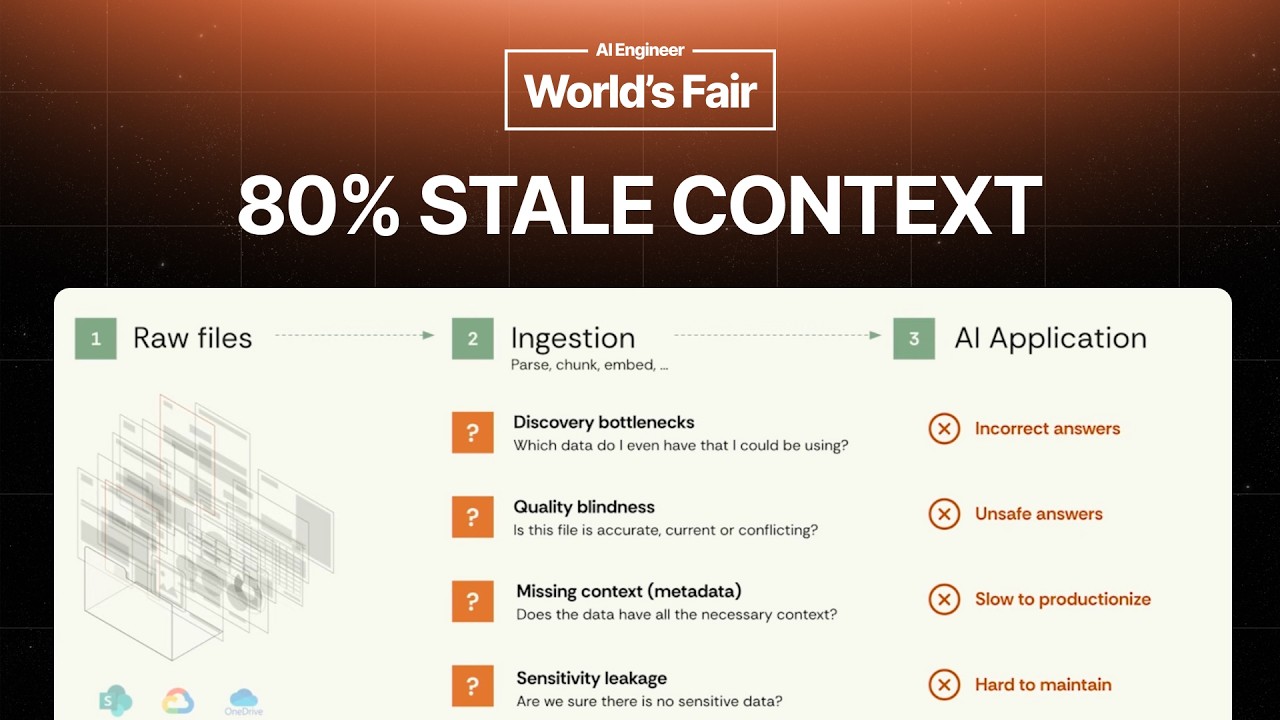
This presentation by Jeff Koss and Leo Platzer from Deasy Labs (now Collibra) tackles the critical challenge of scaling AI chatbots from pilot projects to production with large, messy unstructured datasets. They demonstrate a solution for curating and cleaning 80,000+ SharePoint documents, highlighting the importance of data quality—specifically identifying duplicates, conflicts, sensitive information, and ensuring data freshness—to significantly improve RAG chatbot performance and reduce development time.

How Harvey Built a Research Lab on a Budget | Gabe Pereyra

How Harvey Built a Research Lab on a Budget | Gabe Pereyra

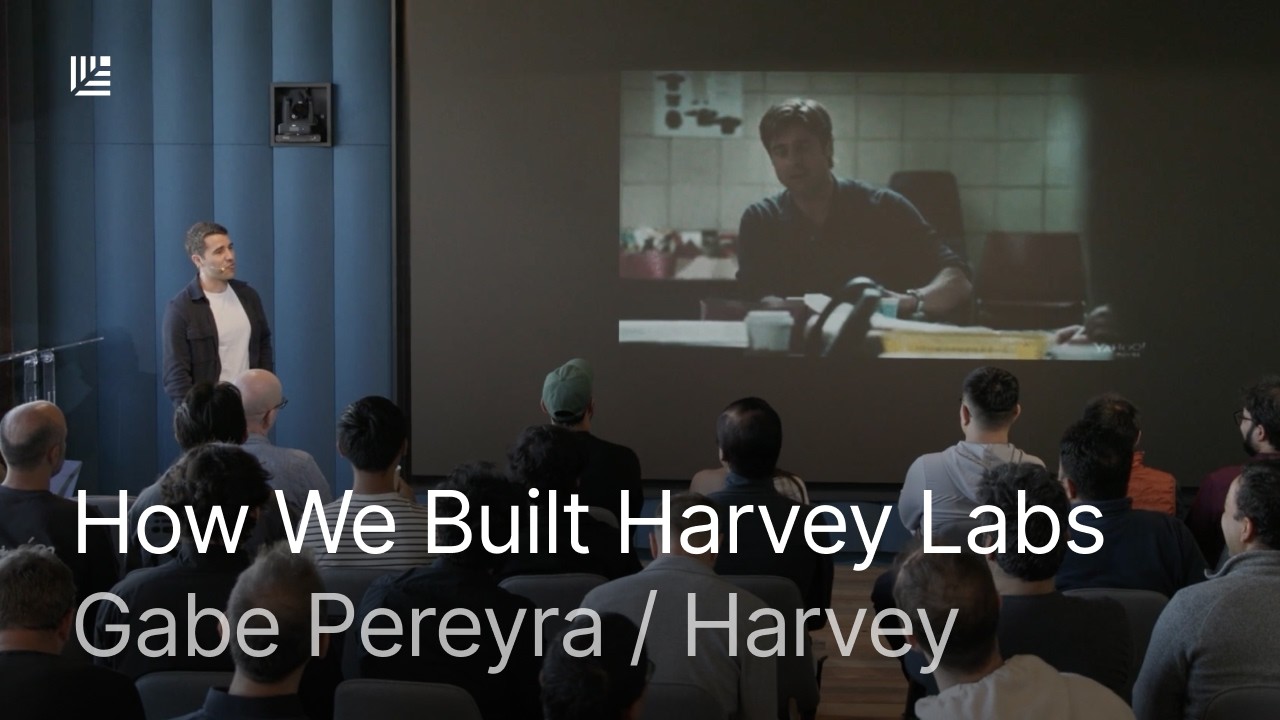
Gabe Pereyra of Harvey details a playbook for application companies to compete with frontier AI labs by leveraging the ecosystem. Key strategies include building specialized benchmarks like Legal Agent Bench, using domain experts for synthetic data generation to overcome sensitive client data issues, partnering with multiple 'neo labs' for post-training, and developing robust model serving and evaluation infrastructure. He emphasizes open-sourcing data for validation and the 'Moneyball' philosophy for success, addressing challenges like talent acquisition and long-context management in the Q&A.

Session on Inclusive AI: Data, Models, Evaluation

Session on Inclusive AI: Data, Models, Evaluation

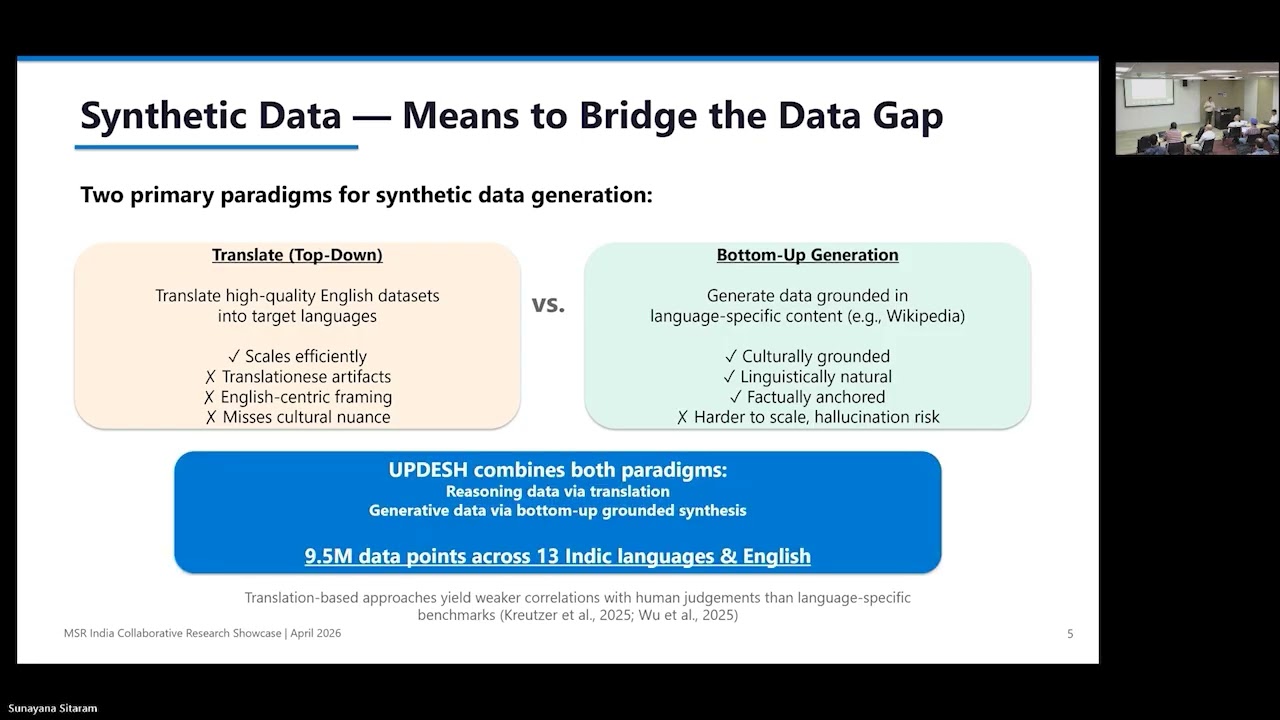
The Microsoft Research India Academic Research Summit 2026 session on "Inclusive AI" explored critical challenges in developing AI that serves diverse linguistic and cultural contexts. Speakers Niloy Ganguly, Danish Pruthi, Sunayana Sitaram, Anoop Kunchukuttan, and Ashutosh Modi addressed data gaps, model biases, and evaluation shortcomings, emphasizing the need for equitable and culturally relevant AI. Key themes included the use of synthetic data for low-resource languages, the impact of tokenization on model performance, geographical disparities in generative AI, and the application of AI for social good in legal and accessibility domains. The discussions underscored the importance of community involvement, open data, and designing AI for multilinguality from the outset, rather than as an afterthought.

How This 25-Year-Old Built A $675M Legal AI Startup (With No Legal Experience)

How This 25-Year-Old Built A $675M Legal AI Startup (With No Legal Experience)

Max Junestrand, co-founder and CEO of Legora, shares insights on building a successful vertical AI company for the legal industry. He discusses their product strategy, the technical stack designed for a multi-model future, the go-to-market motion for conservative industries, and the challenges of scaling from 10 to 100 people in 13 months.